Telangana is developing its own state-backed ride-hailing service as it steps into an emerging space that could be a new competitor to Uber and Ola. It could be a government-backed alternative for passengers and drivers, as well as the state’s role within the rapidly evolving app-based mobility market.
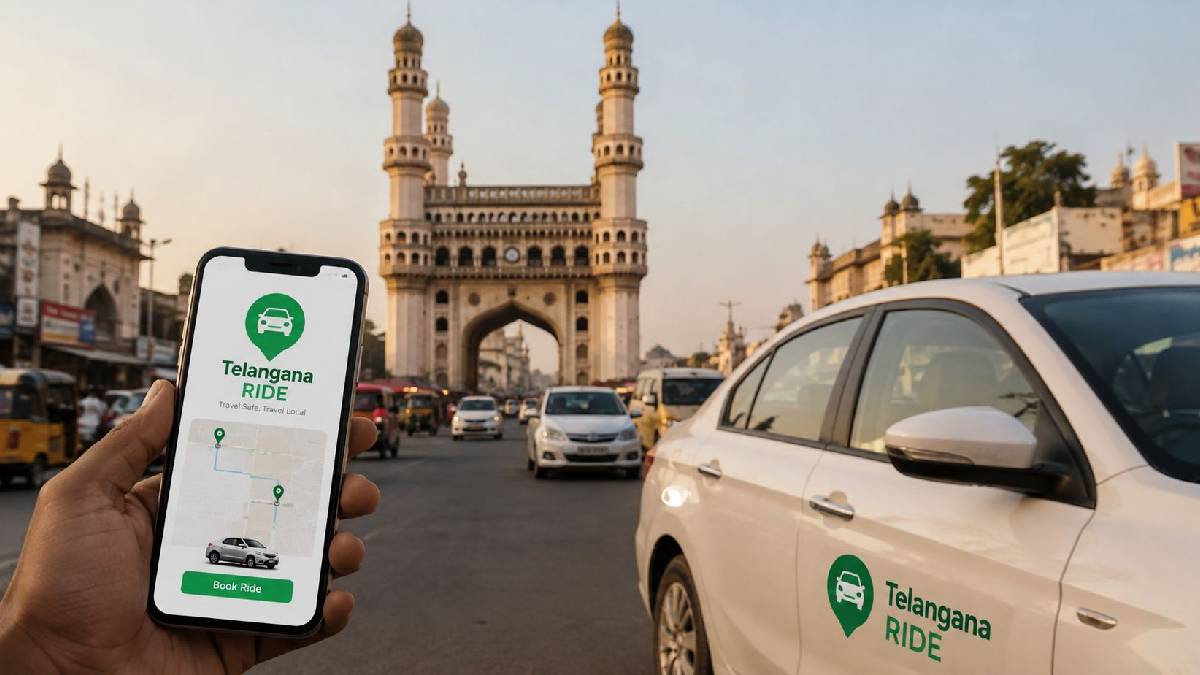
A digital booking system is expected to connect passengers with taxis and other eligible commercial vehicles. If this is implemented successfully, passengers would have access to booking rides, tracking vehicles, and making payments in a single application.
At a time when ride-hailing is becoming an integral part of urban transportation in India, it will be seen as the new way of going. And for Hyderabad, where app-based taxis and autos are common among commuters and a lot of passengers are employed for working from home in the morning, to a trip to the airport, and even to go home for dinner.
For Telangana, a state-backed platform could be a chance to develop a mobility system that is tailored to the needs and requirements of the state.
Pricing and commission structure will be one of the most closely watched aspects of the proposal. Driver earnings and platform commissions have been one of the major topics of discussion in India's ride-hailing industry. Drivers have voiced concerns about commissions, incentives, fuel costs and fluctuations in earnings.
A government-backed platform would be able to differentiate itself with a lower platform fee or a more transparent revenue-sharing model. That might make the service attractive to drivers looking for alternatives to existing private platforms.
There’s a reason passengers could benefit from increased competition: a new platform would give consumers another option when booking taxis or other transport services. Competitive prices, transparent fares and reliable availability could be reasons for users to put the state-backed application forward.
But building a successful ride-hailing platform is much more than creating a mobile application. The big challenge will be to build a sufficiently large driver network.
Ride-hailing platforms heavily rely on network effects. Passengers want an application where there are vehicles readily available, and drivers want platforms where they can tap into a large number of customers in a very short time. Telangana's proposed platform would need to attract a large number of drivers before it can compete with the giants.
Hyderabad will be a crucial market for the proposed initiative. As Telangana's capital and one of India's major technology and business hubs, Hyderabad has huge daily demand for taxis, autos and other forms of app-based transportation.
A successful launch in Hyderabad could be a base for expansion into other cities and towns in Telangana.
The state-backed platform could also potentially improve access to local grievance redressal. Passenger complaints, driver disputes, cancellations and payment-related issues could be handled through a locally administered support system. If implemented well, this could become an important differentiating factor.
One potential advantage is the ability to design the platform around the state’s own transportation ecosystem. The application could eventually comprise different types of public and private mobility services, depending on the government’s plans.
Technology will play a major role in the project. A competitive platform would need accurate GPS tracking, real-time ride allocation, digital payments, driver verification, passenger safety features, and reliable customer support.
Data security will also be important. A ride-hailing application would contain sensitive information such as passenger locations, phone numbers, payment details and travel histories. So strong privacy and cybersecurity protections would be required.
The proposal also fits in with a broader trend in India for home-grown digital platforms and alternatives to global private tech companies. Digital infrastructure is being looked at in state governments as a means to enhance public services and increase competition.
That does not mean competing with Uber and Ola will be easy.
Both companies already have customer bases, massive driver networks and years of experience operating ride-hailing platforms. Telangana’s application would need to demonstrate clear advantages to get users and drivers to switch or even to use another platform for that purpose.
Reliability will be the most important. If passengers frequently struggle to find vehicles or get cancellations, they’ll be on the other platforms very soon. And drivers will be on the new platform only if they can consistently earn.
With that in mind, the proposed app could succeed if it blends competitive fares, fair driver policies, reliable vehicle availability, strong safety measures, and fast customer assistance.
It’s an ambitious project for Telangana to be a driver for the future of urban mobility. Instead of leaving app-based transportation entirely to private companies, the state could create a locally focused alternative designed for passengers and drivers.
If implemented successfully, the platform would increase competition in Hyderabad’s ride-hailing market and could be a model for other states exploring government-backed mobility solutions.
The next major questions will be the application's launch timeline, operating model, participating vehicle categories, fare structure, and the incentives offered to drivers.
For commuters, the development could eventually give them one more option when booking a ride. For drivers, it would give them another platform through which they could also reach customers.
If Telangana's state-run ride-hailing app can really compete with Uber and Ola, whether Telangana's state-run ride-hailing service can actually compete with Uber and Ola will ultimately be decided not based on whether it has government support only, but on whether it can achieve the combination of affordability, availability, safety and convenience that modern passengers expect.