External Affairs Minister Dr. S. Jaishankar met Russian President Vladimir Putin in Moscow on Tuesday in the third major diplomatic exercise between India and Russia. But the meeting comes at a time of constant high-level talks between the two countries and shows how central it is for New Delhi to keep its long-term relationship with Moscow.
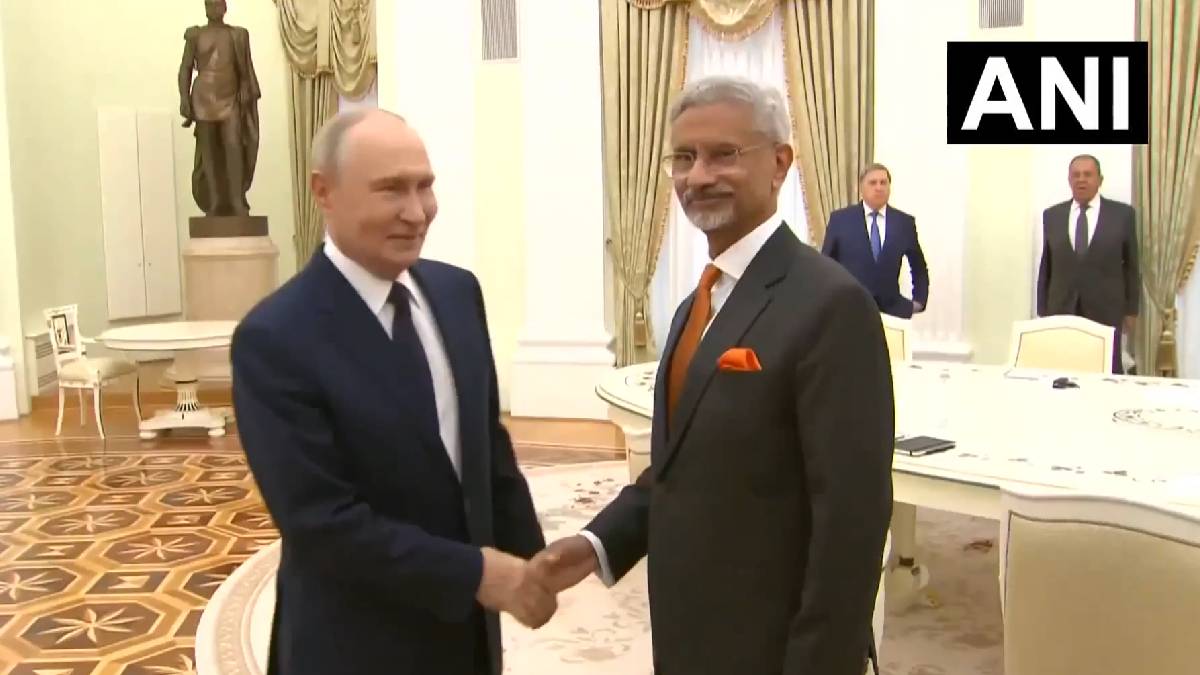
In fact, Jaishankar's meeting with Putin is significant because India and Russia have had good relations for decades in diplomatic, defence, economic and strategic terms. Both countries have continued to keep the political relationship in contact and communication on a daily basis even as the world political landscape is changing.
The meeting in Moscow will allow the two sides to discuss issues of mutual interest and wider international developments. Most high-level interactions between the Indian and Russian leaders have been about defence cooperation, energy, trade, connectivity, technology, regional security and global relations.
Jaishankar has played a crucial role in India’s diplomatic outreach in recent years given that New Delhi has sought strategic relationships with several major powers simultaneously. India’s foreign policy has stressed strategic autonomy and an independent approach to world affairs, so it can work with Russia while also strengthening relations with the United States, European countries, Japan and other partners.
The relationship with Russia is even more important because of the level of cooperation that has been established over several decades.
#WATCH | EAM Dr S Jaishankar meets Russian President Vladimir Putin in Moscow, Russia.
— ANI (@ANI) August 24, 2026
(Source: Russian Pool via Reuters) pic.twitter.com/VrrIirbd7i
Defence has long been one of the main pillars of India-Russia relations. The two countries have worked closely on military hardware, technology and defence production to the best of their ability. India has also been increasing its focus on domestic manufacturing and technology transfer as part of its overall objectives of self-reliance in defence.
Another key element of the relationship is energy. Russia continues to be an important energy partner of India and cooperation in oil, nuclear energy and other sectors has continued to receive attention.
Economic ties are also growing. Both countries have been looking for ways to increase bilateral trade and to improve payment mechanisms, logistics and connectivity. There will always be a need for trade beyond conventional sectors for the policy-makers in Delhi and Moscow.
The Jaishankar-Putin meeting also comes at a time of major geopolitical changes. Developments in Europe, the Indo-Pacific, West Asia and the wider international security environment have made diplomatic communication important for major powers.
For India, keeping an active relationship with Russia is part of a greater strategy of engaging multiple centres of global power. New Delhi has repeatedly stressed that its partnerships are guided by national interests and strategic autonomy.
At the same time, India’s relationship with Russia has evolved considerably from its Cold War-era origins. For instance, cooperation today is increasingly on the basis of energy security, connectivity, space, technology, investment and emerging economic opportunities.
So meetings between senior Indian and Russian leaders not only serve as a means to discuss current world events and to cement long-term relations but also serve as a means to strengthen them.
Jaishankar's relationship with Putin is quite significant because it underscores the importance of bilateral diplomacy at all levels between the Russian President and India's External Affairs Minister. Such conversations can be very good for both sides to communicate their positions and explore areas for cooperation in the future.
The meeting will also receive international attention because India is one of the global leaders in diplomacy. New Delhi has been in dialogue with Russia but has forged closer relationships with Western countries and other large economies.
It is this approach that is indicative of India’s wish to remain flexible in foreign policy and not be bound to one particular geopolitical bloc.
India is still an important partner in Asia and a major economic and diplomatic power for Russia. For India, Russia is relevant in defence, energy, strategic cooperation and other spheres.
So the Jaishankar-Putin meeting tells us that India-Russia relations are still active and strategically important.
So long as the countries are interested in expanding economic cooperation and dealing with the current geopolitical challenges, we expect the bilateral relationship to be very good and there will continue to be high-level dialogue.
The Moscow meeting between External Affairs Minister S. Jaishankar and President Vladimir Putin once again illustrates the deep diplomatic ties between the two countries and India's continuing engagement with Russia at the highest level.