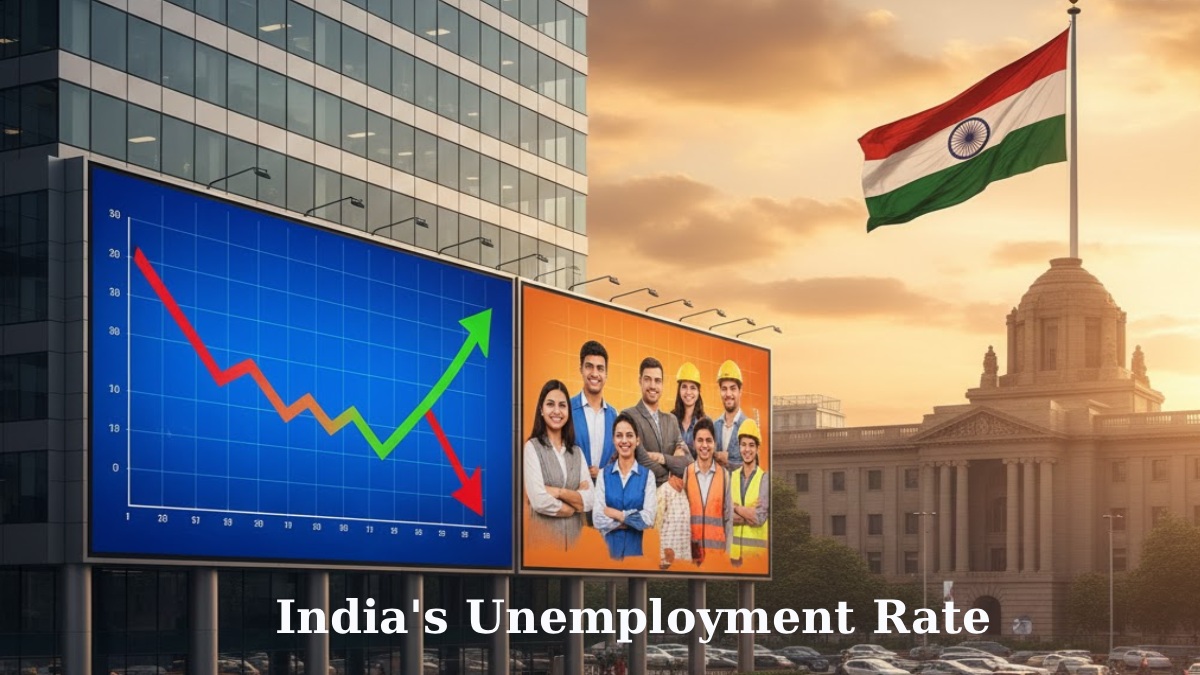
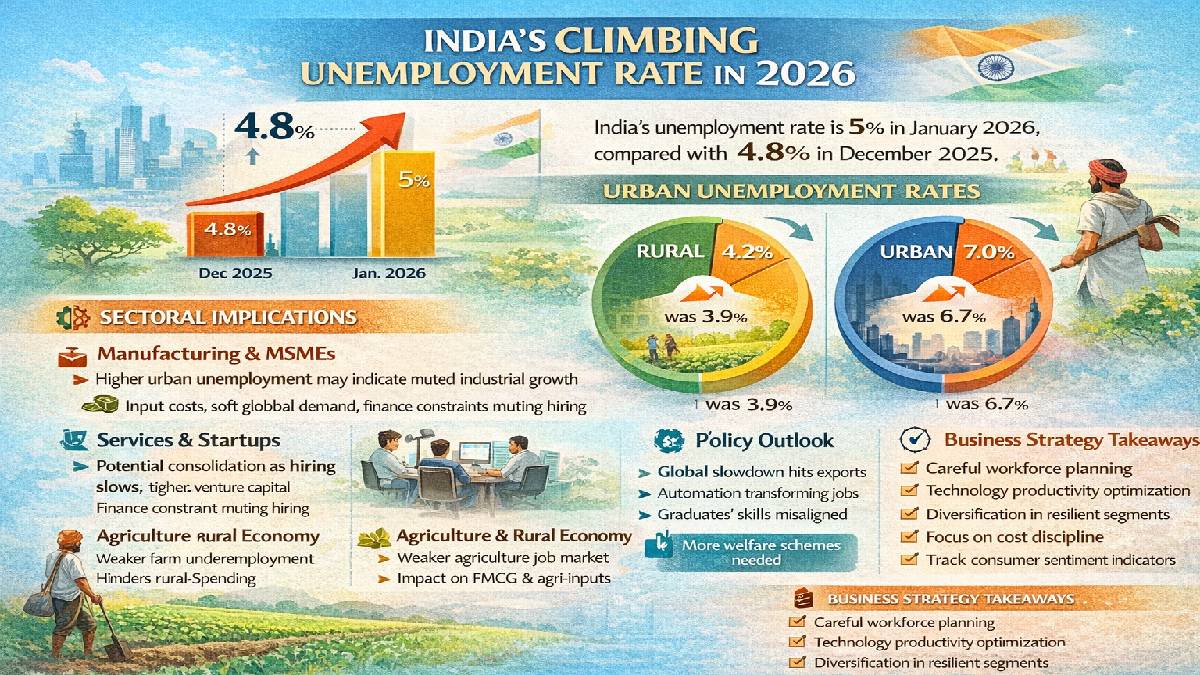
India’s unemployment rate climbed to 5 percent in January 2026, compared with 4.8 percent in December 2025, according to the most recent government survey. While the difference is marginal, the rural and urban dynamics suggest growing pressures in the labor market that the businesses and the policy‑makers cannot keep off.
Reading Between the Numbers
The data shows:
- Rural unemployment rose from 3.9% to 4.2%.
- Urban unemployment increased from 6.7% to 7.0%.
Urban unemployment is still much higher, reflecting slow hiring, especially in services, manufacturing and startup‑led industries. While absolute rural unemployment is lower, it is still increasing, meaning that rural agriculture (and informal employment) activity is likely at times stressed. A key variable to track will be the broader labor force participation rate. A rising unemployment rate coupled with stable or rising participation indicates real job scarcity, but not erratic numbers.
Sectoral Implications
Manufacturing & MSMEs
Higher urban unemployment may indicate muted industrial growth and cautious hiring by MSMEs. Higher costs on inputs, soft global demand, and constrained finance may be holding back jobs.
Services & Startups
India's services sector, traditionally an important employer in urban areas, possibly being consolidated with the post‑pandemic industry could experience a hiring consolidation. Workforce additions might be slowing as venture capital tightens and profit‑oriented strategies converge.
Agriculture & Rural Economy
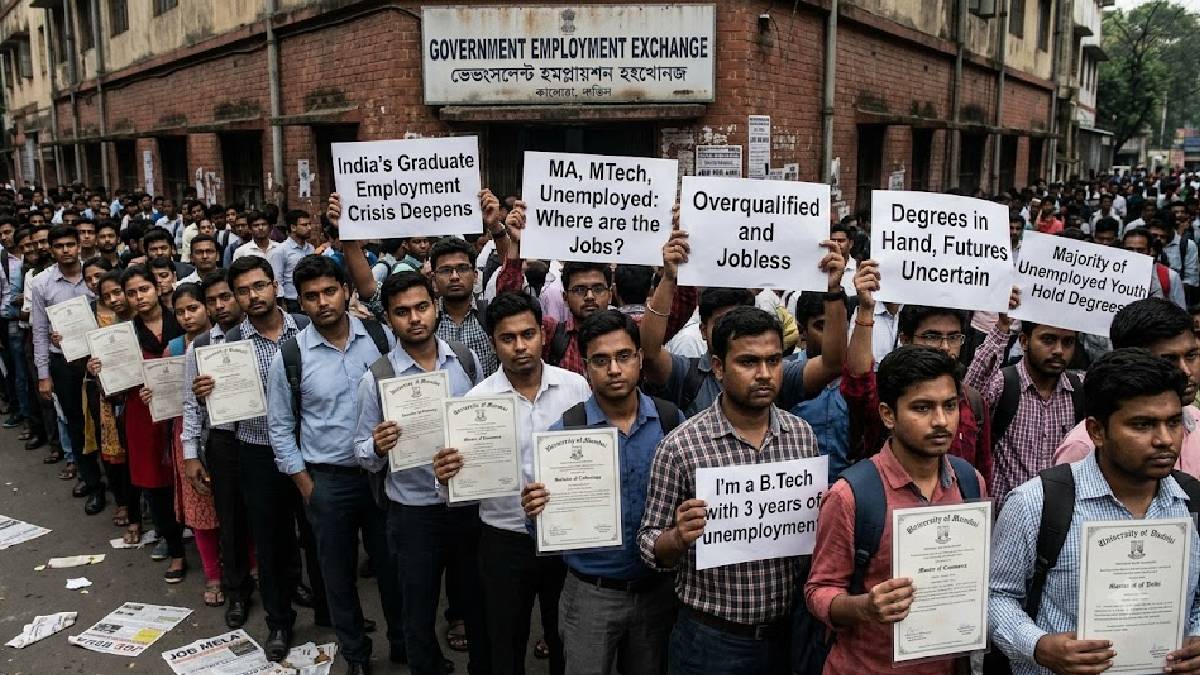
The increased rural unemployment hints at both seasonal shifts and potentially underemployment in farm‑related jobs. A weaker rural labor market can have an immediate impact on consumer spending in FMCG, agri‑inputs and rural oriented sectors.
Macroeconomic Impact
Soaring unemployment, persistent over time may impact the economy in various ways:
- Consumption Slowdown: Lower spending makes retail more difficult.
- Credit Risk: Repayment of debts by the household may weaken and borrowing potential may deteriorate.
- Investment Discouragement: Companies hold back growth with uncertain demand.
- Fiscal Pressure: More need for employment and welfare schemes.
But at 5 percent, India’s unemployment rate is relatively moderate in comparison to a number of global economies. Where the concern is not the level, but the trajectory and the direction of the trend and the durability of it.
Structural vs. Cyclical Factors
Economists attribute it to a combination of cyclical and structural drivers:
- Global economic slowdown hitting exports.
- Automation is dominated by technology transforming employment as a global trend.
- Skill mismatches of graduates with industry needs.
- Seasonal variances in labor force employment in agriculture.
If structural matters predominate, the solution must be deeper reforms — skill alignment, industrial diversification, and the growth of labor‑intensive manufacturing.
Policy Outlook
The government may consider:
- Broader‑reaching skill enhancement and apprenticeship initiatives.
- Enhanced MSME credit support.
- Incentives to labour‑intensive sectors.
- Accelerating infrastructure projects to create jobs.
- Enhancements in rural employment guarantees.
Monetary policy decisions could also consider employment signals in tandem with inflation trends.
Business Strategy Takeaways
For businesses, this environment, then: is a time of great importance:
- Careful workforce planning.
- Optimization of productivity through technology.
- Diversification into demand‑resilient segments.
- Focus on cost discipline.
- Keeping track of consumer sentiment indicators.
In a softening labor market, companies that adjust their workforce strategy in ways that align with productivity gains and at the same time have operating flexibility outperform.