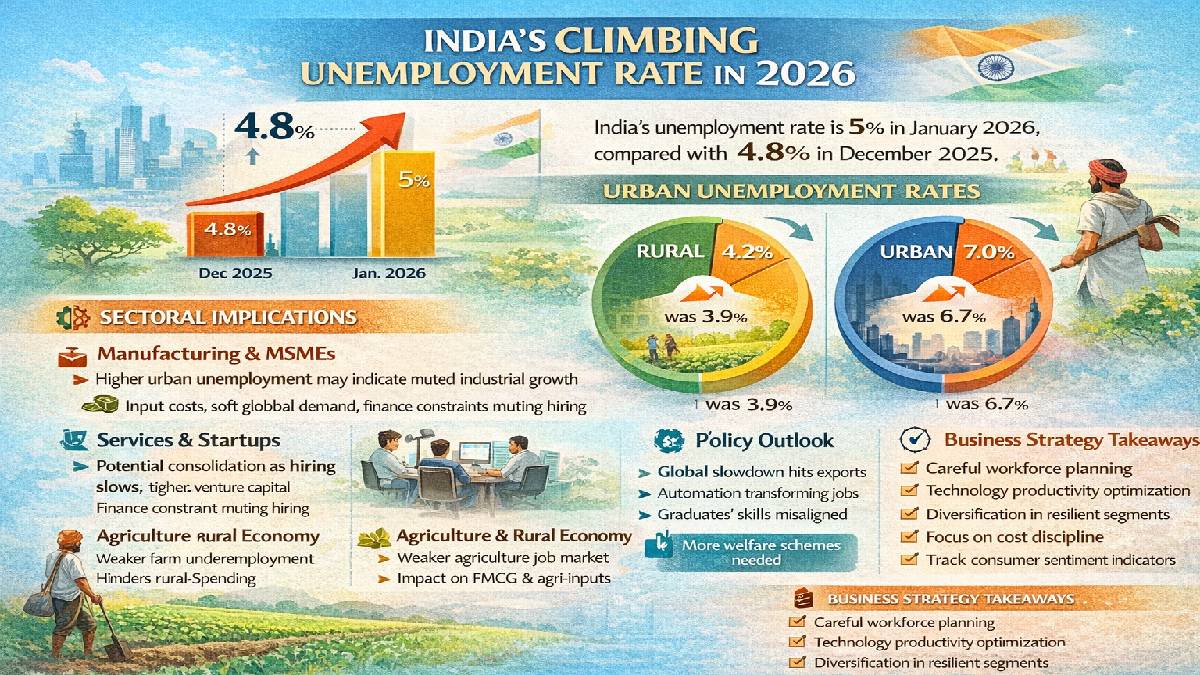
India’s labour market has demonstrated a strong positive trend, with the national Unemployment Rate (UR) for persons aged 15 years and above declining dramatically from 6.0% in 2017-18 to 3.2% in 2023-24. This significant structural improvement, confirmed by the latest Annual Periodic Labour Force Survey (PLFS) data from the Ministry of Statistics and Programme Implementation (MoSPI), is attributed to concerted government initiatives and a robust economic environment.
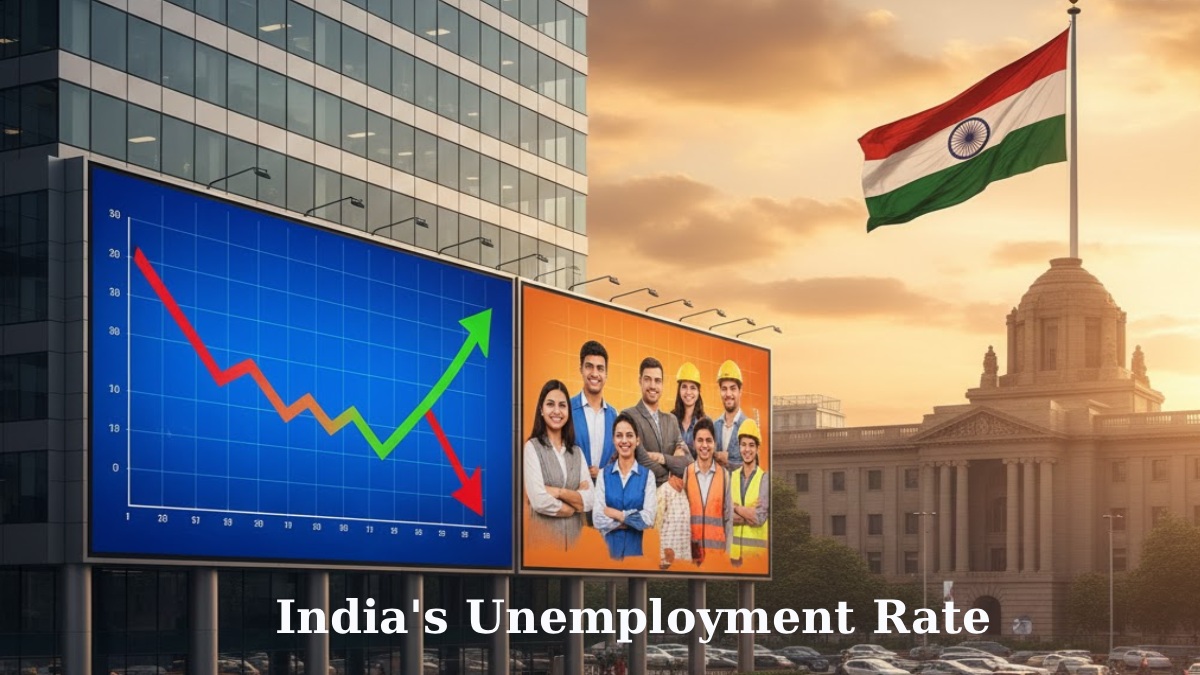
Declining Unemployment: Key Data Highlights
The six-year period shows a substantial reduction in joblessness across the country, reflected in the 'usual status' definition used by the PLFS (which considers a person's primary activity status over the preceding 365 days).
| Region/Category | Unemployment Rate (2017-18) | Unemployment Rate (2023-24) |
| All India (15+ Years) | 6.0% | 3.2% |
| Maharashtra (15+ Years) | 4.8% | 3.3% |
| Maharashtra - Rural | 3.2% | 2.1% |
| Maharashtra - Urban | 7.4% | 5.2% |
The improvement in Maharashtra mirrors the national trend, with its overall UR dropping from 4.8% to 3.3%. Significantly, urban unemployment in the state, while still higher than rural, saw a considerable reduction from 7.4% to 5.2%.
New Monthly Data and Measurement Changes
MoSPI has revamped the PLFS from January 2025, introducing new monthly estimates based on the Current Weekly Status (CWS) approach, which measures unemployment based on the activity status in the last 7 days preceding the survey date.
- The monthly national UR (15+ years, CWS) stood at 5.1% in August 2025 and 5.2% in September 2025.
- Urban unemployment remains higher (6.7% and 6.8% in August and September 2025, respectively) than rural unemployment (4.3% and 4.6% in the same period).
- The Ministry cautions that these monthly CWS estimates are subject to seasonal variations and increased frequency, which may cause short-term fluctuations that do not necessarily reflect the long-term, structural (usual status) trends.
Government’s Multi-Sectoral Employment Initiatives
The government prioritizes employment generation coupled with improving employability through a wide array of schemes tailored for different demographics and sectors:
A. Promoting Entrepreneurship and Rural Livelihoods
A multitude of schemes target self-employment, skill development, and income security across rural and urban India:
- Prime Minister’s Employment Generation Programme (PMEGP): Focused on creating self-employment opportunities through micro-enterprises.
- Mahatma Gandhi National Rural Employment Guarantee Scheme (MGNREGS): Provides a social safety net through guaranteed wage employment in rural areas.
- Deendayal Antyodaya Yojana- National Rural/Urban Livelihoods Mission (DAY-NRLM / DAY-NULM): Aims to reduce poverty by enabling poor households to access self-employment and skilled wage employment opportunities.
- Pradhan Mantri Mudra Yojana (PMMY) & Stand-up India Scheme: Provide financial support and collateral-free loans to boost entrepreneurship, particularly for marginalized communities and women.
- PM SVANidhi: Supports street vendors with working capital loans.
B. Skilling, Technology, and Formal Employment
- Production Linked Incentive (PLI) scheme: Designed to boost domestic manufacturing and attract large investments, thereby creating jobs, especially in the organised sector.
- Pradhan Mantri Kaushal Vikas Yojana (PMKVY): A flagship skill certification scheme providing industry-relevant training.
- FutureSkills PRIME: A Ministry of Electronics and Information Technology (MeitY) initiative to upskill IT professionals in emerging technologies like Artificial Intelligence (AI).
- Pradhan Mantri Viksit Bharat Rozgar Yojana (ELI Scheme): A new Employment Linked Incentive scheme with a massive outlay of ₹99,446 crore, aiming to create over 3.5 crore jobs over two years, with a special focus on manufacturing.
- National Career Service (NCS) Portal: Serves as a single-point digital platform for job search, career counselling, and skills information.
C. Targeted Interventions for Women and Marginalized Groups
Several initiatives are focused on enhancing the participation and safety of women and Scheduled Castes (SC) / Scheduled Tribes (ST) in the workforce:
- Women's Employability: Initiatives include vocational training through Women Industrial Training Institutes and scholarships like PRAGATI and Saraswati for women engineering students (AICTE).
- “AI Career for Women" and “NAVYA” (Nurturing Aspirations through Vocational Training for Young Adolescent Girls) initiatives specifically target vocational training and economic opportunities for girls and women.
- Childcare Support: The expansion of Anganwadi-cum-Creches under the ‘Palna’ component of Mission Shakti and the budget announcement of working women hostels aim to provide crucial childcare support to increase women's labour force participation.
- SC/ST Jobseekers: 25 dedicated National Career Service Centres provide targeted pre-recruitment training and counselling. The PM-DAKSH scheme offers market-linked skill training to various marginalized groups, including SCs, OBCs, and waste pickers.
Progressive Labour Law Reforms
The introduction of the new Labour Codes reinforces the commitment to creating a fair and congenial work environment, particularly for women:
- The Code on Social Security, 2020: Mandates a paid maternity leave of 26 weeks and requires a mandatory crèche facility in establishments with 50 or more employees.
- The Code on Occupational Safety, Health and Working Conditions (OSH), 2020: Guarantees that women shall be entitled to be employed in all establishments for all types of work, lifting previous restrictions on night shifts (with their consent and subject to prescribed safety conditions).
These protective and enabling legal provisions are crucial for increasing women's confidence and sustained participation in the workforce.