The humming sewing machines of Tiruppur have gone silent in thousands of units today. After an emergency session held between the Tiruppur Exporters and Manufacturers Association (TEAMA) and the Coimbatore Textile Manufacturers Association, it was decided to cut production in half in an attempt to reduce mounting financial losses.
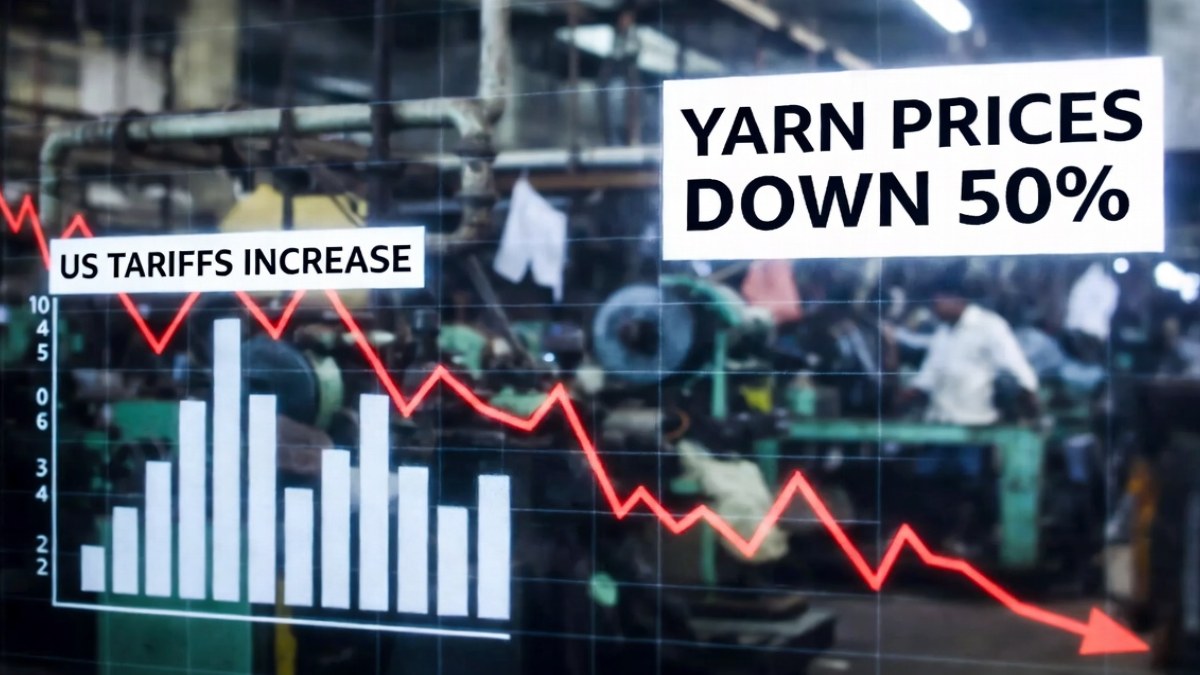
The “Twin Blow” to the Industry
The move arrives as the industry tries to sail through a perfect storm of economic headwinds and difficulties:
- Yarn Expense Surge: Cotton yarn prices have skyrocketed by more than 20% in the past few months. Manufacturers claim spinning mills are artificially raising prices even with steady cotton inflow, making it nearly impossible for MSME units to pay the bills under existing contracts without hemorrhaging cash.
- The trade stalemate: While India-US trade framework recently resulted in tariffs falling, from a high of 50% to 18%, this recovery has come too late for many. Competing countries such as Bangladesh have only now sealed a 0% tariff agreement for clothing manufactured of US cotton, which has placed Indian exporters at a huge 18% price disadvantage in their biggest single country.
Stocking and Financial Pressure
According to the Tiruppur Exporters’ Association (TEA), finished merchandise nearing ₹4,000 crore are currently stuck in warehouses or ports as the canceled orders and delays in payment by US buyers have led to paralysis. “We are simply in survival mode,” said one representative of a big knitwear unit. “Deducing it from 18% tariff, buyers are asking to receive discounts as high as 25% off. Throw in a hike in yarn cost and the cost of electricity now, the bottom of our profit margins just hasn't fallen off the map; it is deeply entrenched.”
Labor and Ancillary Impact
The production cut is projected to set off an ecosystemwide response. Around 2 lakh contract employees and migrant workers have already been cut off from their work hours or fired. Ancillary industries such as dyeing units, embroidery shops and carton box manufacturers continue to operate at a bare minimum. The industry has dispatched an urgent appeal to the Union Finance Ministry to be issued with a 20% EXIM scrip and an interest subvention scheme, to help bridge the tariff gap and ensure that the "Dollar City" does not collapse completely.