A parent has raised serious concerns over the safety of an eight-year-old boy studying at a gurukula associated with Siddaganga Math in Tumakuru, Karnataka, claiming that the child suffered injuries that appeared to have been caused by burning.
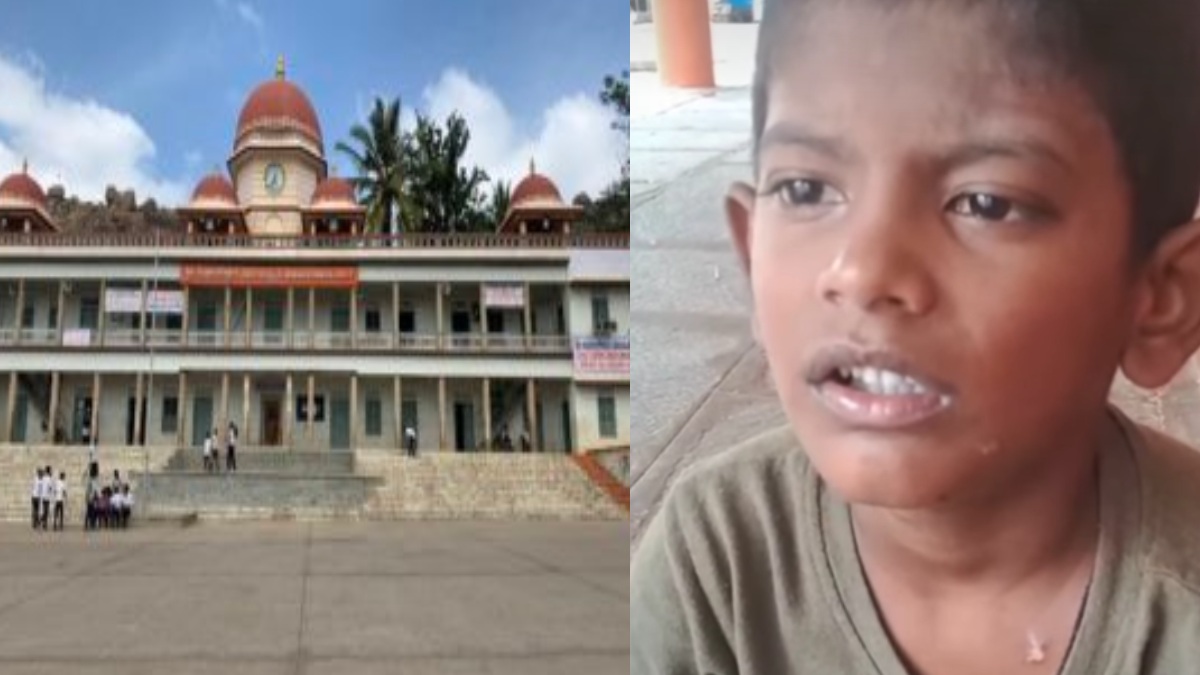
The parent has appealed to the concerned authorities to conduct an immediate and impartial inquiry into the incident and ensure the safety of the child and students living and studying in the institution.
The allegations have raised broader concerns about the methods used to discipline children in residential educational institutions and the responsibility of authorities to protect students from physical harm.
According to the parent, the eight-year-old boy was admitted to the gurukula at Siddaganga Math with the intention to give him education under a residential learning environment. The parent said they saw injury marks on the child’s body and were concerned about the type of injuries and asked the child what had happened. The child also told the parent that he had been physically punished on one previous occasion, the parent said.
The parent said the latest incident was not only a verbal scolding or a warning. The child was burned as punishment for a consequence, as they say, the parent said. The parent has questioned why disciplinary actions such as explaining the mistake, counselling the child, warning him or informing his parents were not taken. An eight-year-old who makes a mistake can be corrected with age-appropriate guidance without causing physical injury, the parent said.
The allegations have not been independently established and the reason for the injury reported will be determined in a proper investigation. The parent has specifically said they are not declaring anyone guilty in advance. Rather, the key is to investigate quickly, impartially and transparently, establish what really happened and take appropriate action if any wrongdoing is found.
Parents have already brought the matter to the attention of the authorities and the child’s parents, she said. Assurances were made that the incident would be looked at but the parents are not yet getting any real action or any progress. We’re calling for the child welfare and institutional leadership to take this matter seriously.
The case has also raised the broader issue of discipline in schools and residential educational institutions. Children, especially young students, depend upon adults and institutions for their safety, care and education. Disciplinary systems need to be in place in schools as a way to keep order but punishment should not put a child’s physical or emotional well-being in danger. Any case of a child being physically harmed as a disciplinary measure needs to be thoroughly investigated.
For an eight-year-old child, mistakes and behaviours are often resolved by talking, counselling and guidance and by age-appropriate consequences. Parents and guardians should be informed if a student is repeatedly breaking rules or needs extra help. Physical punishment that is alleged to cause injury is another entirely different thing and, if present, poses serious legal and child-protection concerns.
The parent’s appeal also concerns the safety of other children that may be living in the same residential environment. The concern expressed by the parent does not only concern one child.
Residential institutions are occupied by groups of students who may spend significant periods away from their families. That is why effective supervision, safeguarding mechanisms and accessible complaint procedures are very important.
If there are child physical abuse allegations, the authorities need to establish facts. This can mean speaking to the child in a sensitive manner, recording statements from the relevant persons, documenting medical records and injury documentation, reviewing institutional records and determining who was responsible for the child’s supervision at the relevant time. Safety of the child should be the primary concern and it should not be too much pressure on the child to be questioned again and again.
The parent has also called for the child to be protected while the matter is being addressed. Children need to feel safe when they report incidents in any safeguarding process. Young children may not be able to describe events clearly, especially if they feel scared or uncertain about what could happen. So investigators have to deal with such complaints with sensitivity while independently verifying the allegations.
The incident also illustrates why there should be clear disciplinary policies in residential schools and gurukulas. Parents of children who are placed in such institutions need to know that disciplinary practices are clear and that the students will not be subjected to inappropriate treatment. On the other hand, institutions need to have formal channels through which parents can report concerns and in which a student is injured or is involved in a disciplinary incident.
At the same time, allegations related to educational institutions should be thoroughly investigated. The purpose of inquiry is to determine the facts, not to assume guilt before evidence is examined. And when there is evidence of wrongdoing, those accused should be allowed to respond through the appropriate process. A transparent investigation can protect the child while simultaneously having a firm foundation of evidence.
The parent’s message ultimately comes down to a simple one: children should be corrected without being physically harmed. The appeal tells authorities to establish whether the alleged incident occurred, determine how the child sustained the reported injuries and take appropriate legal or administrative action if the allegations are substantiated.
The problem can also help push a global conversation about child safety and residential education and responsible discipline. Education is one of the best ways of shaping young people and therefore the duty to them is not only for education but also for their physical safety and dignity.
As the process develops, an official investigation will be essential to determine what happened. Until that investigation has been completed, no conjecture as to the identity of the individuals involved or the reason for the injuries will be taken on board. But the seriousness of an eight-year-old child makes a prompt and unbiased response particularly important.
The parent has also asked the concerned authorities to act immediately to protect the child’s safety, investigate the report and take any appropriate action if there is a breach. The appeal also has a much broader message for institutions with children: discipline should be about correcting behaviour, not physical or emotional harm.
The safety of every child in a residential educational environment is a shared responsibility of parents, teachers, administrators and government authorities. Any physical punishment complaint must be taken seriously, sensitively and with due process. A thorough investigation will allow us to find out what happened and make sure that there are appropriate safeguards to prevent similar incidents in the future.