Union Minister Pralhad Joshi chaired the BRICS Standardisation Bodies Meeting in Bengaluru that brought together representatives of BRICS member countries and businesses on standards, infrastructure, and industrial development, making the meeting the first of many to come. The meeting highlighted the growing need for harmonized standards at the global level to increase trade, technology, and sustainable economic development among emerging economies.
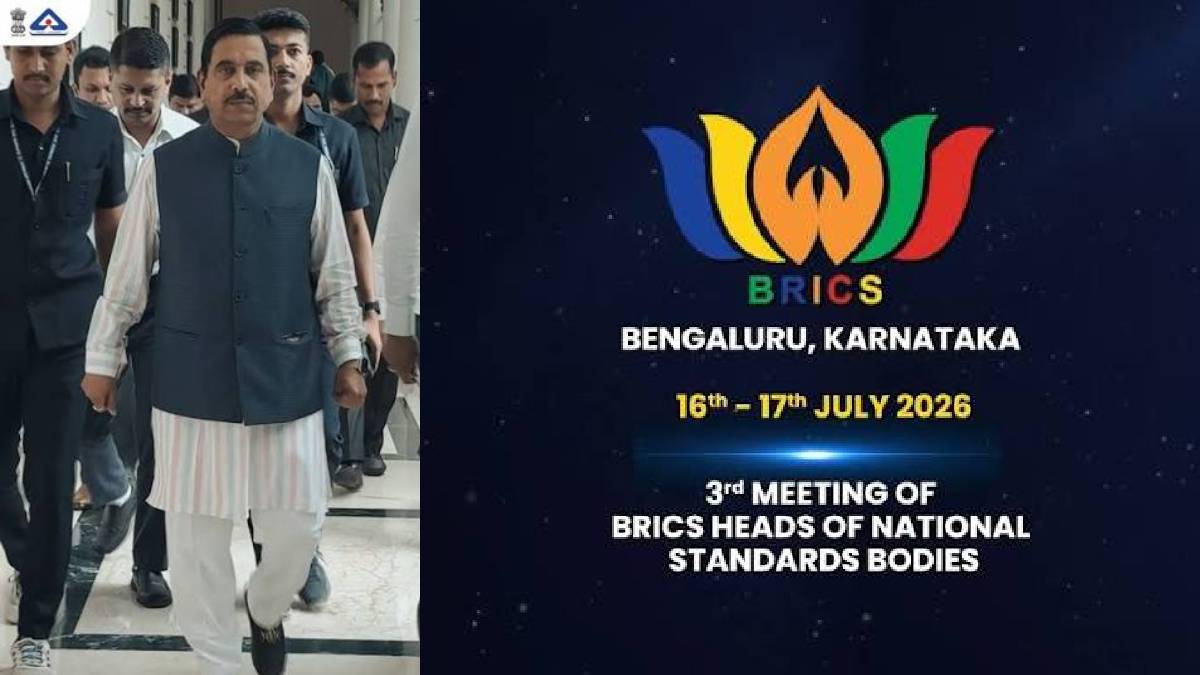
The BRICS group (Brazil, Russia, India, China, South Africa, and others) comprises the majority of the world's population, economic output, and industrial production. As trade and technological cooperation between member countries has skyrocketed, the existence of common standards has become necessary to ensure product quality, safety, interoperability, and market access.
As the Minister of Union, Pralhad Joshi also told the gathering that internationally recognised standards are key to securing resilient supply chains, encouraging innovation, promoting international trade, and building confidence among consumers. He said India will work with BRICS partners and build robust quality systems to ensure that India is competitive so that global manufacturing is sustainable.
The meeting was aimed at improving collaboration among national standardization bodies to exchange technical expertise and make national standardization standards more closely aligned with developing technologies emerging worldwide. Delegates presented the possibility of collaboration in digital technology, artificial intelligence, renewable energy, advanced manufacturing, healthcare, agriculture, infrastructure, and consumer products.
Standardization is critical to the global economy, since it guarantees that products and services meet quality, safety, and performance standards. Harmonized technical standards facilitate cross-border trade, eliminate unnecessary regulatory requirements, and open the doors for manufacturers to access international markets.
India's Bureau of Indian Standards (BIS) has been at the forefront of its engagement with international standard-setting organizations and the country’s overall aim of becoming the global manufacturing and innovation hub. Make in India, Digital India, and Atmanirbhar Bharat have not only pushed India to become a leader in this field but also made it clear world class quality standards are critical in making India more competitive.
The BRICS Standardisation Bodies meeting also gave a forum for member countries to share best practices, discuss regulatory frameworks and investigate research collaborations. As new technologies are coming to market, the common standards will be useful for compatibility, cybersecurity, safety, and interoperability among different markets worldwide.
Sustainable development was another major topic of discussion. Delegates discussed how standards can be used in climate resilience, energy efficiency, environmental protection, and circular economy practices. It is now widely accepted that common sustainability standards are vital for global climate goals to be met and industrial growth to be enabled in this world.
Experts at the meeting felt that more cooperation among BRICS countries in standardization would help to boost innovation and overcome technical barriers to global trade. Shared standards also benefit businesses in terms of lower compliance costs, efficiency in production, and seamless integration into global value chains.
The Bengaluru meeting signals India’s growing involvement in global standardization efforts and India’s commitment to developing international technical standards for the technology solutions of emerging industries. India is one of the world’s fastest-growing economies and is investing in improving quality infrastructure, certification systems, testing laboratories and regulatory institutions.
Industry leaders welcomed the discussions and noted that standard technical regulations are becoming more and more important in electric mobility, semiconductors, digital communications, smart manufacturing, and renewable energy technologies. Greater alignment among BRICS members could open new opportunities for investment, technology transfer, and industrial cooperation.
The meeting ended with a shared commitment to deepening cooperation among BRICS standardization bodies through continued dialogue, knowledge exchange, and joint initiatives. As global industries become more interconnected, collaborative standard-setting is expected to be much more important in the development of innovation, trade, and sustainable economic development.
With India hosting the discussions in Bengaluru, the event underlines the importance of India’s role as a major contributor to global quality standards and a leading player in the future of global industrial cooperation, with a leading voice in setting the standard of quality standards and in the future of industrial cooperation.