The U.S. Ambassador Gor visited the historic Thiksey Monastery in Ladakh on Friday as part of his ongoing tour of the Union Territory. The visit gave the senior US diplomat the opportunity to visit one of Ladakh’s most important Buddhist heritage sites and to see the growing international attention to the strategically significant Himalayan region.
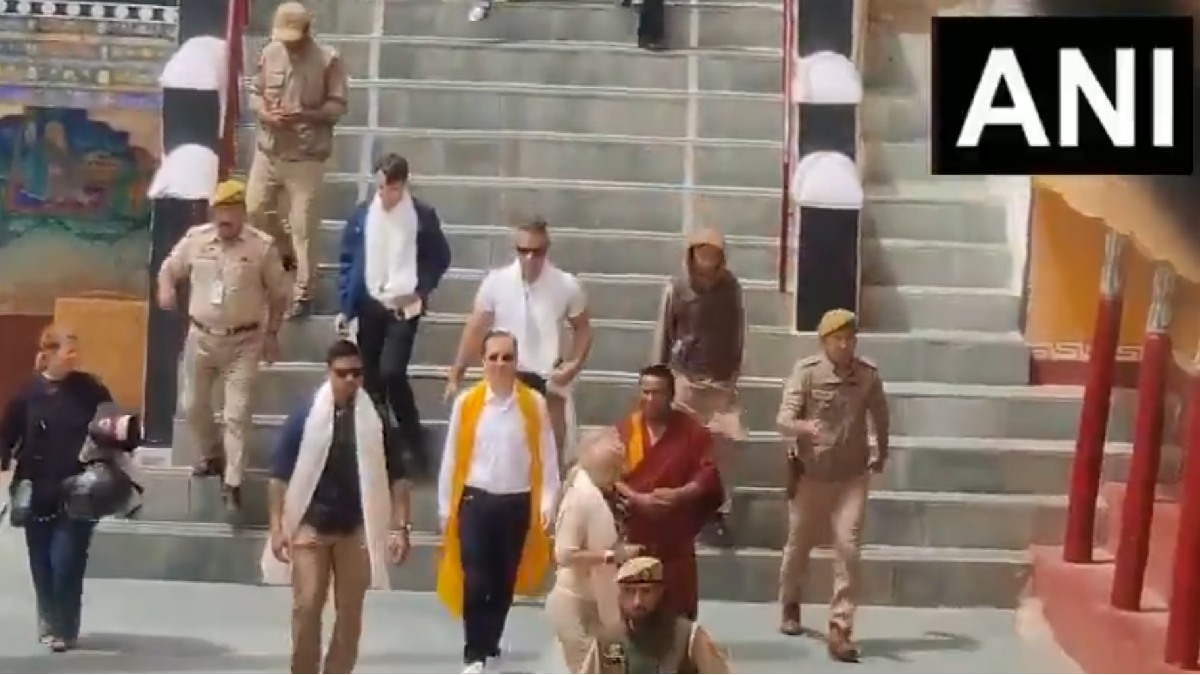
Ambassador Gor visited Thiksey Monastery for about 30 minutes, a landmark located near Leh and noted for its architectural features and religious significance. He learned about the monastery’s ancient Buddhist traditions - the sacred pictures, stupas, scroll paintings and the other religious artefacts. He also saw the monastery’s imposing Maitreya Buddha statue, one of the main attractions.
Thiksey Monastery is considered one of the largest and most architecturally striking monasteries in central Ladakh. It was founded in the 15th century and belongs to the Gelug school of Tibetan Buddhism and is a significant centre of religious and cultural life in the area. The whitewashed structures rise dramatically along the hill and the building is very different from Tibet’s famous Potala Palace in Lhasa.
The monastery’s architecture and its setting have made it one of Ladakh’s most recognisable places. Thiksey is a very beautiful place but has so many Buddhist art and religious traditions to be found in it. And on the wall there are murals, thangkas, scriptures, statues and ceremonial objects to provide a glimpse of Buddhism in the Himalayan region.
The visit came soon after his arrival in Leh and was followed up by a tour in Jammu and Kashmir. Ladakh is of particular significance as it is one of the most strategic areas and is sensitive to the situation on India’s northern border. It is also one of the most high-profile interactions of a senior U.S. diplomat in Ladakh in the years after the 2020 Galwan Valley clashes between Indian and Chinese troops.
The Galwan conflict marked a turning point in India-China relations and attracted more international interest to Ladakh and the rest of the Himalayas. The region has been closely watched for developments in security, infrastructure, connectivity and strategic issues since then. So in that frame it is not only cultural tourism but also for the senior international representatives to visit.
But Ambassador Gor’s visit to Thiksey also focused on Ladakh’s culture. The monastery provided a time for the ambassador to experience the region’s long-standing religious traditions and architectural history. Such visits might even help to increase the awareness of Ladakh in all aspects besides the strategic meaning behind it and its history, spirituality and tourism potential.
The visit also comes at the same time Ladakh is undergoing a series of institutional and infrastructure developments to improve governance and public services. It is also a time of great development in Ladakh to establish a new Jammu and Kashmir High Court bench in Ladakh because of which people living in the Union Territory should be able to access justice.
The expansion of judicial and administrative infrastructure is part of the overall development agenda to support Ladakh. Given that it is a geographically challenging area with communities spread out over remote mountainous areas, better access to the most necessary government and legal services could be a crucial factor in building public institutions.
Ladakh is increasingly seen as a place that has strategic importance and cultural, environmental and tourism importance. Places like Thiksey Monastery attract visitors from all over India and abroad and the mountain ranges, Buddhist monasteries and traditional communities are part of the region’s identity.
#WATCH | Leh, Ladakh: US Ambassador to India Sergio Gor visited Thiksey Monastery in Ladakh, where he explored the historic monastery and experienced its rich Buddhist heritage and cultural traditions. pic.twitter.com/yncPfwgaUk
— ANI (@ANI) August 21, 2026
As for Ambassador Gor’s visit to Thiksey, it was to see a glimpse into one of the cultural pillars of Ladakh. His encounter with the monastery’s heritage and Buddhist traditions showed that the region could be used as a site of historical importance as well as a meeting place for foreign tourists.
As India and the United States continue to deepen their broader partnership, American officials’ visits to different parts of India also provide opportunities to understand the country’s diverse regions. In Ladakh, where history, culture and geopolitics intersect, the ambassador’s visit was also diplomatic and cultural.
The visit of 30 minutes might have slipped by, but it brought to light Thiksey Monastery, and Ladakh’s great Buddhist history. For the region, such high-profile visits can only help to further promote its attention on the world stage and to help develop its world’s attention to the importance of keeping its ancient monasteries, religious traditions and cultural identity.