A video showing a bride and groom sharing a kiss during their Hindu wedding ceremony has gone viral on social media, in a debate about changing traditions, cultural values, and the impact of modern lifestyles on Indian weddings.
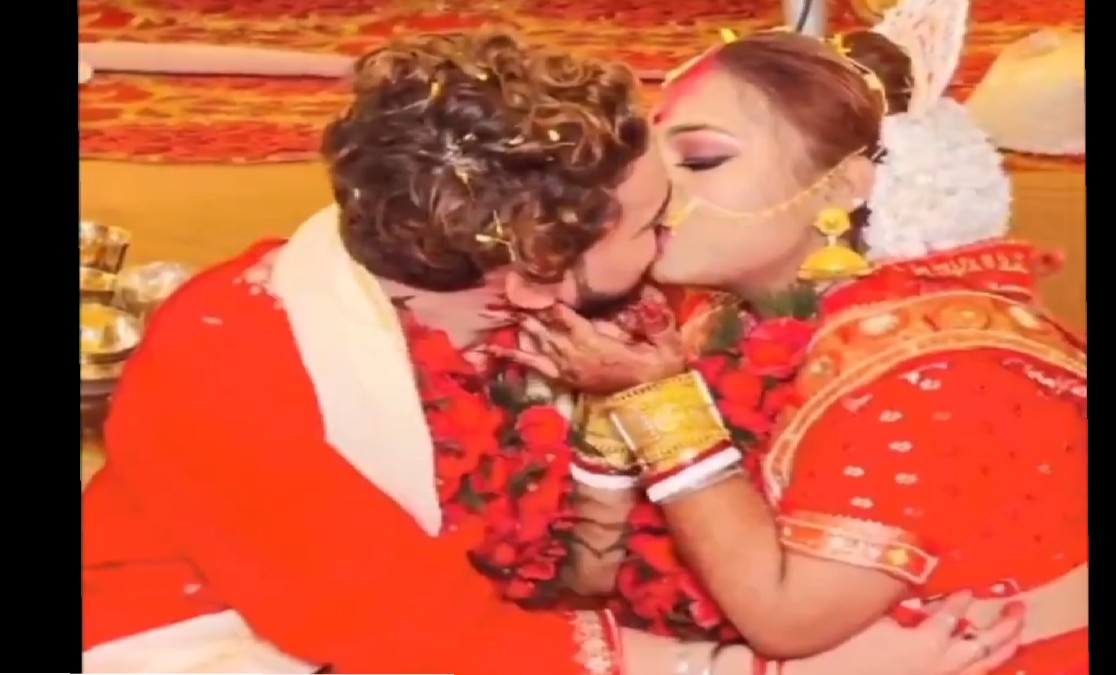
The short video, which was recorded during the wedding rituals inside the mandap (the sacred wedding altar), shows the couple exchanging a kiss while family members and guests look on. The video accumulated millions of views in a few hours on different social media platforms, and many users weighed in with sharp differences.
While many people praised the couple for openly celebrating their love and saw it as a natural act of love, others felt that it was not appropriate in a Hindu wedding ceremony (in which religious rituals are of high importance) to show displays of love in a Hindu wedding where people are more religious.
The contrasting responses have once again brought up the debate regarding tradition and personal expression in India’s fast-changing social landscape.
Social Media Divided
The viral video quickly became one of the most discussed topics online, with thousands of users sharing their perspectives.
Supporters of the couple said a wedding is a celebration of love and commitment, and a right. And if families of both sides are cool with that, they shouldn’t be seen as rude or controversial.
Younger generations are now mixing traditional customs with contemporary expressions of affection, people said in the comments on the site.
I think people are more aware of public displays of affection between married couples in urban India, among younger people influenced by global cultures and social media trends.
But critics were very much against it.
Some users argued that the mandap is one of the holiest areas in a Hindu wedding, where sacred rituals are conducted before the holy fire (Agni) and in front of priests, family elders, and deities. They also argued that romantic acts such as kissing should be kept for private moments rather than when the religion is being performed.
Some social media users saw it as the result of a haphazard effort to generate viral content, and others said it reflected the increasing influence of Western wedding customs on traditional Indian ceremonies.
Tradition Meets Modernity
India’s wedding culture has undergone a massive transformation over the past decade.
Cinematic pre-wedding shoots, choreographed dance performances, personal vows, and social media-oriented celebrations of weddings for couples with unique experiences are common in destinations.
Wedding planners note that most modern couples want ceremonies that reflect both their cultural roots and their personal identities. This often results in a blend of old-school traditions and modern practices.
Such debates are inevitable in India's diverse society, sociologists say, since customs differ greatly in regions, society, and generations.
The family can adapt traditions to modern lifestyles, to some degree, and others feel religious ceremonies should be kept the same in order to protect the spiritual significance.
Experts Call for Respect and Balance
Cultural observers think the incident is one of many examples of the larger problem of balancing individual freedom with respect for religious and cultural sentiments.
They stress that personal expressions of affection are entirely a matter of individual choice, but one should be aware of the traditions for sacred ceremonies, often religious.
Legal experts also point out that there is generally no law prohibiting consensual affection between adults in a wedding ceremony. The debate, then, is more cultural than legal.
The Power of Viral Content
The incident also demonstrates how social media can rapidly transform private celebrations into national conversations.
Wedding ceremonies that used to be shared only with relatives are now shared with millions of strangers online, and much of this has come under intense scrutiny and polarized opinions.
Algorithms increase emotionally charged content so that such videos reach people far beyond the communities from which they are made.
In this way, couples are now found in public debates on a lot of issues, from tradition and religion to individual freedom and social values.
Feminist Indian Girl and Simp husbands have now brought Western kissing culture into Hindu traditional weddings.
— Sharroh (@Sharroh45) June 29, 2026
Imagine how uncomfortable the guests and Relatives must have felt. pic.twitter.com/5WNSIrArWy
A Reflection of Changing India
The viral wedding video has become an emblem of Indian culture.
The discussion reflects broader questions about how traditions must adapt in a modern society, where younger generations increasingly want to personalize old customs with little regard for their cultural heritage.
The video continues to spread online and serves as a reminder that weddings in India are not only family events but also big cultural events, and can be a catalyst for national debates on identity, tradition, and what contemporary relationships look like.