A wild male elephant was found dead in an arecanut plantation at Bommanjikeri Thota in Kolakeri village near Napoklu in Kodagu district, raising concern among the local people and leading the Forest Department to launch an investigation into its death.
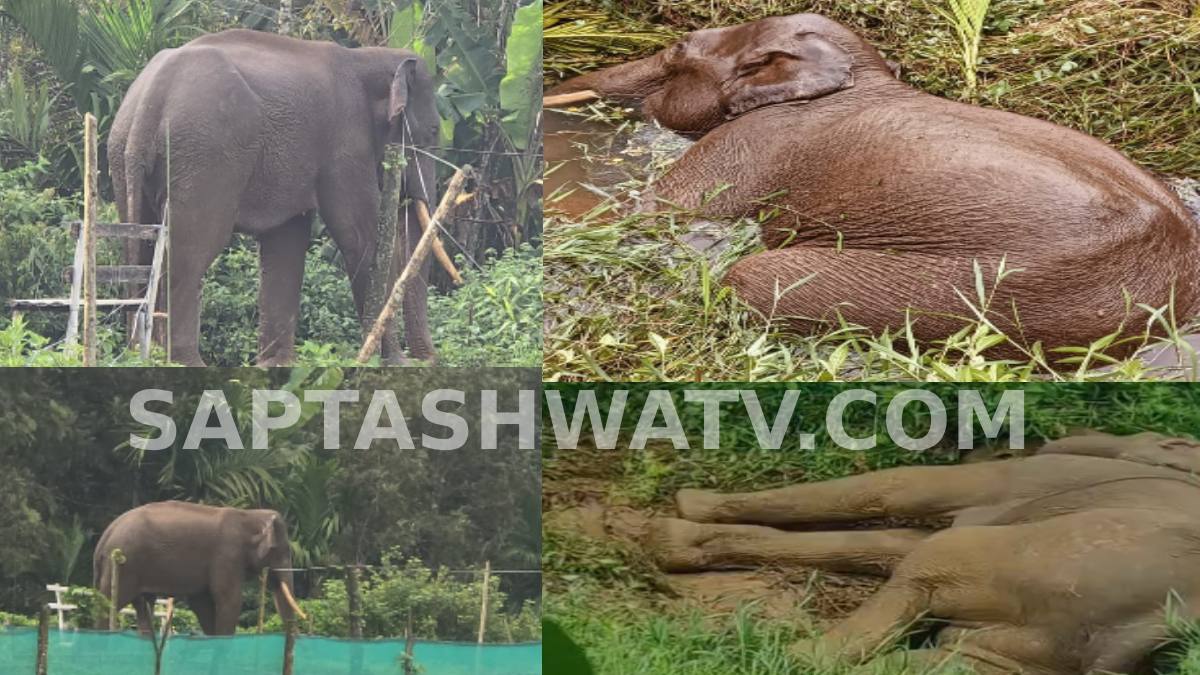
According to information available, the elephant was seen moving around the village area for the past two days. Residents had seen the animal in and around the village on multiple occasions, including on the morning of the day it was found dead. And then the elephant was found dead in a family-owned arecanut plantation later that afternoon.
The sudden death of the elephant has worried residents because the animal had been seen in the area just before it died. Local people immediately reported the carcass to the Forest Department.
Forest officials then visited the site to assess the situation and collect some initial information. The inspection was under the direction of RFO B.M. Shankar. Forester K. Kalegowda and staff member Firoz Khan visited the plantation and investigated the circumstances of the elephant’s death.
Officials are also looking into the possibility that the elephant might have died of illness, but the exact cause of death is not yet established. More post-mortem examination will take place to find out what caused the death and other investigations are likely to be carried out, officials said.
The post-mortem examination will give a much better picture of the elephant’s health and the cause of death will help to determine whether it was a natural illness, injury, poisoning, or the other. Obviously, the death will be hard to determine until the examination and investigation are complete.
So the presence of the elephant in the village for two consecutive days had already attracted attention from local residents. Wild elephants move throughout forests and agricultural fields in search of food and water, and their movement through plantations can be hazardous to people and wildlife.
Kodagu has a forested landscape and agricultural farms and plantations in the area, including large coffee and arecanut plantations. The district has also seen human-elephant interactions, and wildlife monitoring and conflict prevention is one of the Forest Department's key responsibilities.
So the elephant’s death has triggered concerns among residents about its health and what brought it to the village. The animal’s recent movements and condition will be studied; officials will surely probe.
Forest Department employees will collect all necessary information during the examination. Details such as visible injuries, the animal’s physical condition, and other evidence at the location may help determine the circumstances surrounding the death.
The authorities will also need to make sure that the investigation is conducted very carefully, as identifying the cause of death is of greatest importance in the present case and also for understanding the possible dangers to other elephants moving through the region.
If the post-mortem examination confirms that the elephant died from illness (or some other natural cause), then officials can use the findings to better understand the health condition of elephants in the region. If there is any external connection, further studies could be launched following the conclusion.
The incident has brought new attention to the delicate relationship between wildlife and communities living around forested areas for local residents. While elephants are an essential part of the ecosystem, moving them into agricultural areas can be challenging and difficult for farmers and residents.
The Forest Department has begun the necessary procedures to find the cause of death. Officials will be able to give more clarity after the post-mortem examination and further investigation.
The death of the wild elephant at the Kolakeri plantation is being closely watched by residents and wildlife authorities. There is no firm conclusion as of now on why the animal died until an official investigation is complete.
Kodagu wildlife monitoring is also important because elephants often cross over forests and agricultural land in Kodagu. In this case, effective monitoring, timely reporting of such incidents, and inter-governmental coordination between the local communities and the forest department can help forest officers to quickly respond to wildlife-related incidents in time.
The post-mortem examination is expected to play a very important role in establishing the specific cause of death of the male elephant found near Napoklu in the future, and more details will emerge once officials have completed the examination and assessed the results.