In India, living on rent will soon change and there will be new rules going into effect in 2026. The rules are meant to keep tenants protected, to make rental arrangements more transparent and to pressure landlords to be considerate. As India’s urban population has boomed, there is no escaping the fact that rentals are a basic element of city living. The framework aims for a balance between landlord and tenant rights by avoiding disputes.
Security Deposit Limit
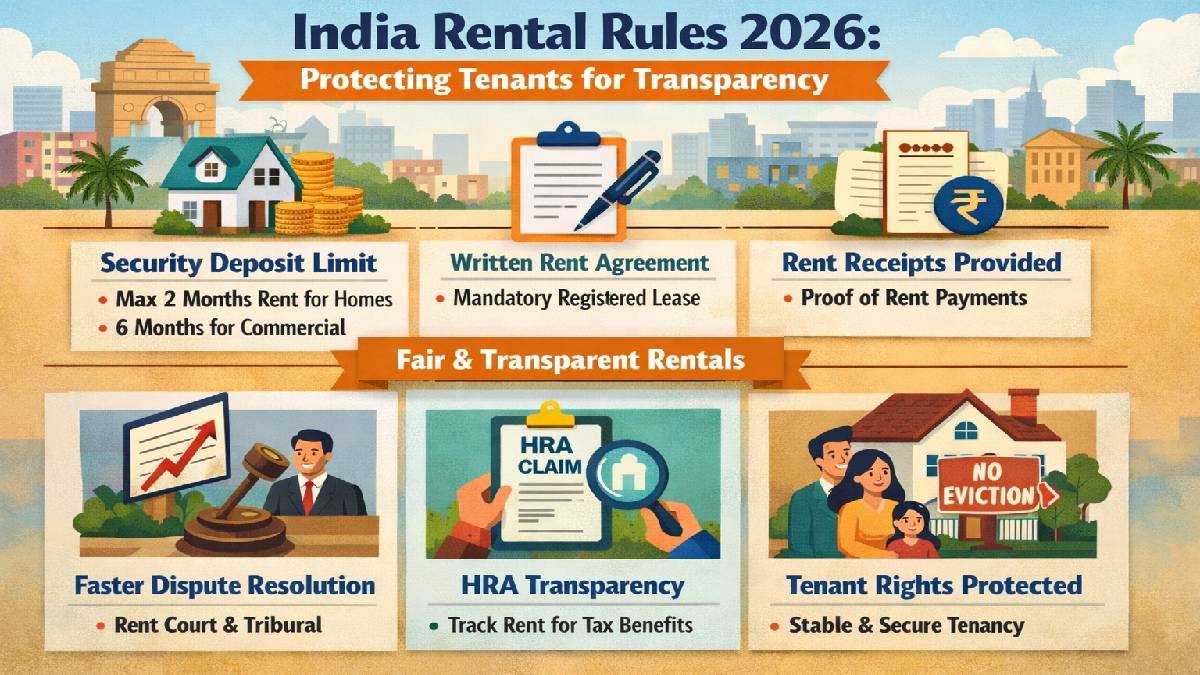
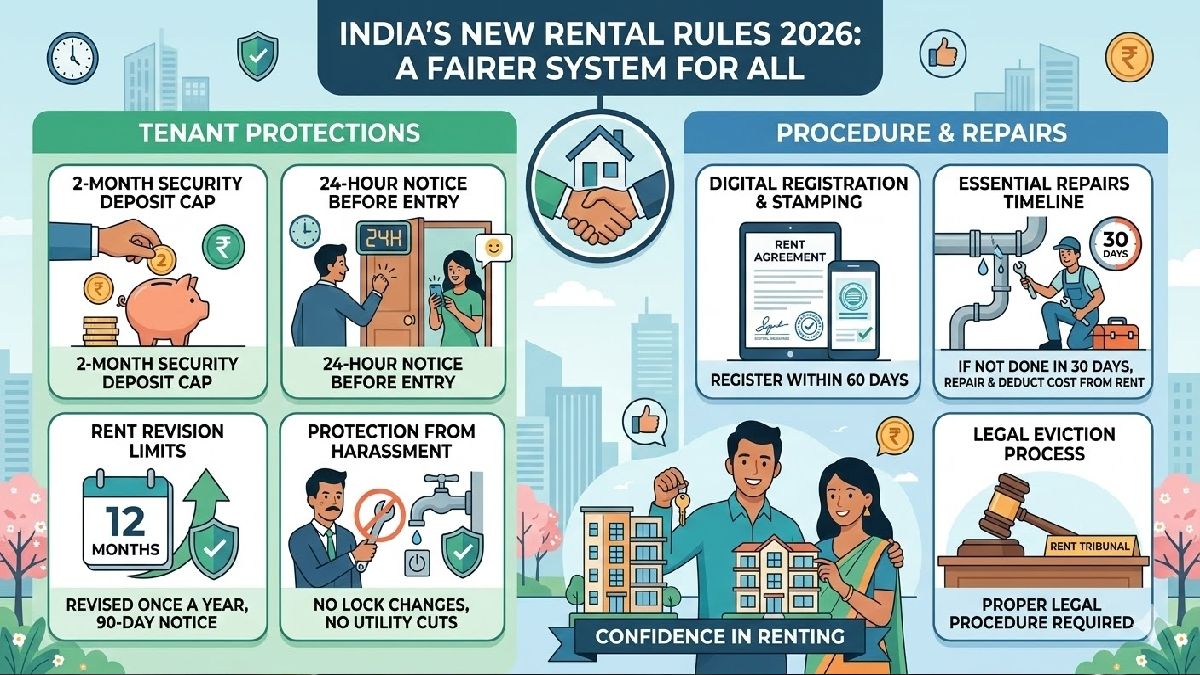
The new cap on security deposits is one of the biggest changes. Landlords can now ask a deposit for no more than two months’ rent on residential houses. For commercial space, the limit is six months’ rent. This rule prevents landlords from insisting on excessive deposits by tenants, which often cause financial strain on those tenants.
Written Rent Agreement
Under the law, landlords and tenants are required to have a rent agreement that is clearly written. The rent authority needs to register this agreement. A registered document provides clarity of terms and limits abuse and sudden changes.
Rent Receipts and Proof
Landlords are also now forced to make rent receipts or payment documents. This allows tenants to keep track particularly when seeking the HRA the House Rent Allowance for tax purposes.
Rent Increase Rules
Rent can’t be raised suddenly. Any increase must comply with the terms of the agreement or be notified with notice given in advance. That shields tenants from unexpected financial shocks.
Clear Eviction Rules
Landlords cannot suddenly invite tenants out of property. There is a limit to when eviction can be enforced:
- Long periods of unpaid rent.
- Property damage from the tenant.
- Breach of Terms of Consent.
- Owner in need of the property for use.
This means tenants have stability and are not arbitrarily kicked out.
Faster Dispute Resolution
Rental conflicts will be dealt with by the Rent Authority, Rent Court and Rent Tribunal. This system is expected to quickly resolve disputes and reduce the workload of the normal courts.
HRA Transparency
Tenants filing an HRA claim need to share housing information and landlord details (including those pertaining to paying rent to parents). This process leads to transparency and prevents misuse of tax advantages.
These new rent regulations for 2026 are a major move for fair housing in India, for the Rental rules of 2026. By enforcing written agreements, fixing down fees in deposits, enforcing written contracts on a written basis, controlling rent hikes and speeding up dispute resolution mechanisms on disputes, the government should all aim at stabilizing the balance of rents in the rental market. More transparent, secure, and tenant‑friendly rent levels and to ensure that landlords have clear legal protections, these changes will also contribute to making rent safer and thus make renting more transparent as well as tenant‑friendly.