The Indian rupee has consistently declined against the U.S. dollar on the back of fears that it is headed for the symbolic point of ₹100. Starting in 2026 at some ₹89.89 per dollar, by May it has dropped to about ₹97, indicating a steep fall.
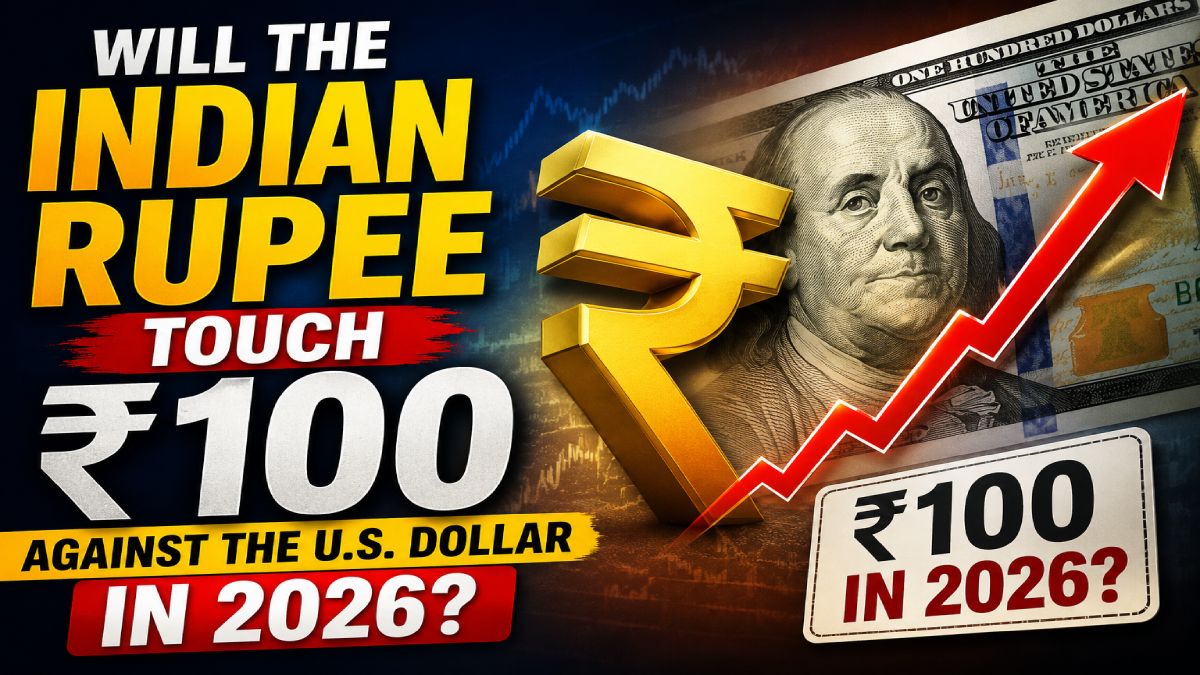
This depreciation has been driven primarily by ongoing foreign portfolio investor outflows, high crude oil prices and a stronger U.S. dollar globally. Hit ₹100 is not necessarily going to happen but analysts say it is becoming more realistic if such trends persist. India’s dependence on imported oil implies that sustained prices above $110–120 per barrel can pull the rupee further down. Geopolitical tensions in West Asia and the Iran crisis have aggravated energy supply issues, and capital outflows have increased the strain on the currency.
From the financial sector outlook appears conservative. DBS Group Research forecast a range of rupee in the ₹95–100 range in 2026 with issues around stagflation. Kotak Mahindra AMC reported that the current account deficit could be above 2% of GDP in FY2027 leaving rupee highly at risk.
The economy experts at Bank of Baroda say if oil prices become more expensive reaching toward $150 a barrel price the rupee could test the ₹100 range sooner than anticipated. The Reserve Bank of India has intervened to counter market volatility, pushing for greater forex exposure norms for banks and selling dollars to stabilize the market.

The government has also increased customs duties on gold and silver as well as modified fuel prices to combat outflows. But a host of analyses warn that if these measures are taken, they will only slow down depreciation more than it is actually undoing; especially when world pressures remain great.
Under the baseline scenario, most analysts have the rupee sitting at around ₹92 to ₹95 looking ahead. ₹100 is, of course, not quite assured of being reached, but this remains an ever-present risk and an indication of the degree to which India’s external balances and reactions to its policy issues are shaping the currency’s direction.