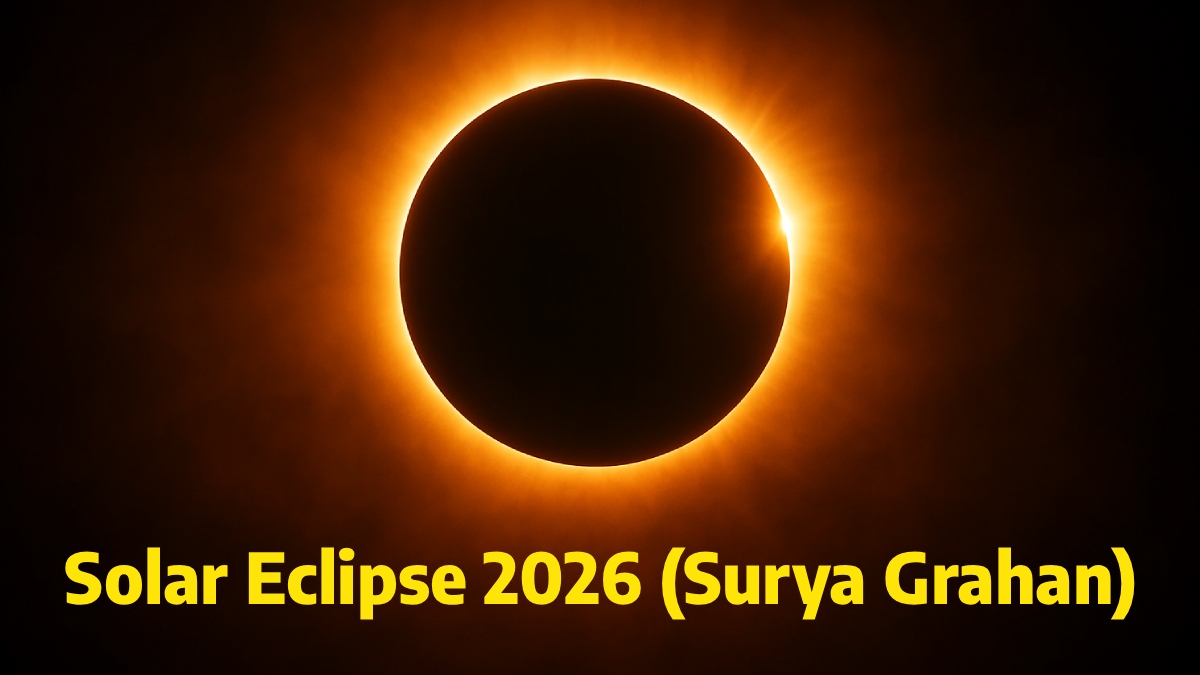
The year 2026 will unquestionably be one of the most thrilling years regarding astronomy and sky watching. In a year, we expect four eclipses altogether, including two solar eclipses and two lunar eclipses.
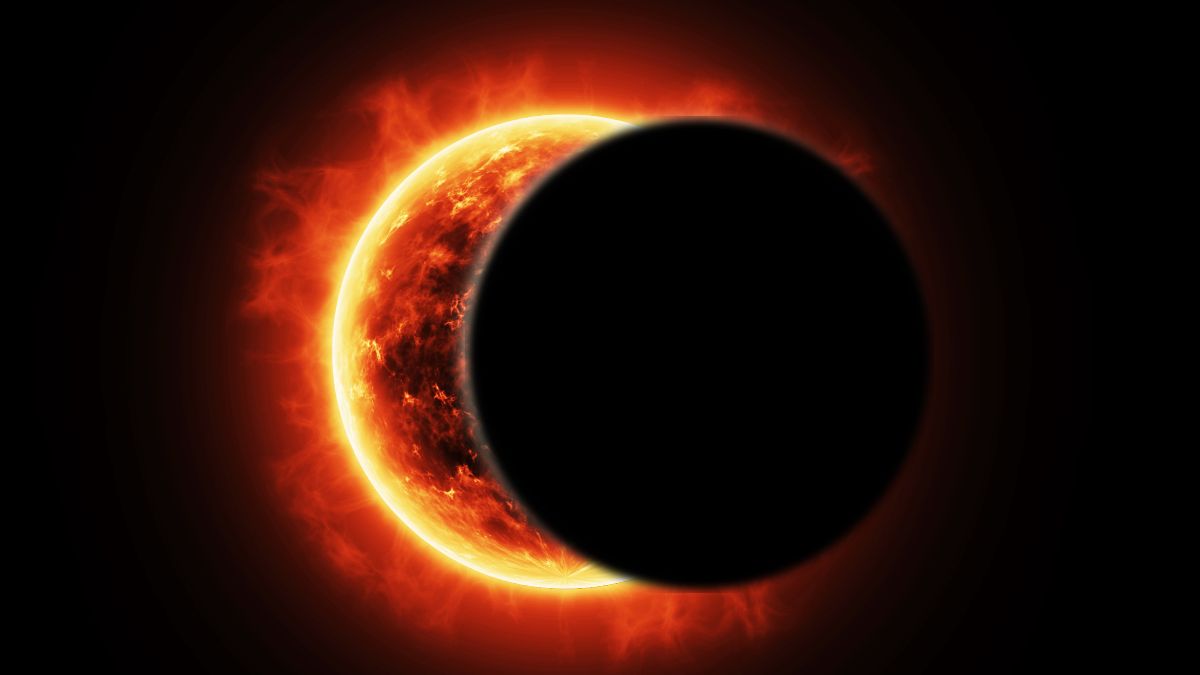
While a few heavenly events took place earlier in the year, the global fascination will be turning towards the year's second and greatest solar eclipse on 12 August 2026. That will be a small, yet expected, moment, a total solar eclipse and astro-tutors and their friends and family are excited to see it happen live up close and personal, unlike most other celestial events.
The eclipse will also involve a complete lunar eclipse, where the Moon will cover the Sun completely, sending parts of the Earth into the night sky for about 1 minute and 53 seconds. Astronomers classify total solar eclipses as one of the most spectacular of nature’s phenomena to be caught by Earth, and thus to be appreciated by the Earth’s eyes as a marvel for a natural phenomenon. Not only is it eye-catching, but scientists also gain a chance to investigate and observe the Sun’s atmosphere and its space environment.
Where The Eclipse Will Be Visible?
The August 12 solar eclipse could mostly be seen in Northern Hemisphere nations. The regions that will see the last eclipse are parts of the Arctic, Greenland, Iceland and parts of Spain. People in these places might be privy to the dramatic instant when the Moon completely blocks the sun, making day disappear into night for a brief moment.
At the same time, part of the solar eclipse will still be seen in most parts of Western Europe and North America. A “Ring of Fire” phenomenon, viewers in some climates may notice a shimmering circle surrounding the Sun.
What Are The Typical Elements Of a Total Solar Eclipse?
A total solar eclipse is when the Moon moves between the Earth and the Sun, directly, preventing sunlight from touching parts of the Earth’s surface. In the natural world, there are a lot of amazing changes that will occur when this time comes. The sun quickly turns to night, the temperature may plummet, and stars and planets may shine into the daytime sky.
Birds and animals sometimes behave as though the night has entered. Perhaps the most significant scientific achievement of a total solar eclipse is that scientists can now view the Sun’s outermost atmosphere, that was its corona. Typically obscured by the sun’s intense brightness, the corona is exposed during a complete eclipse and helps scientists gauge solar winds, magnetic activity and other cosmic events.
Why Is This Eclipse So Special?
Total solar eclipses occur on Earth every 18 months or so from some place, but rarely visit crowded locations. But the August 2026 eclipse is already especially relevant to scientists, tourists, photographers and observatories. That has great historical significance on a European scale!
There will be the first total solar eclipse in much of Europe for the first time across Europe since 1999. It will also be the first such event in Iceland since 1954, allowing the country to have this unusual highlight of starry-eyed astronomy for the first time in almost 72 years. So the conclusion is that there’s an exponential amount of international travel interest in eclipse-watching sites, and astronomy enthusiasts are already going to places such as Iceland, Greenland or Spain.
Will eclipses ever be visible in India?
The August 12, 2026, solar eclipse would never cross the border of India. When the eclipse occurs in any country around the world (including America), it will be at night in India, and thus, the sun is already behind the horizon. Because the eclipse could not be viewed directly from India, no one in the country could observe it without online broadcasts or travelling overseas to witness the eclipse firsthand.
Will The Sutak Period Work in India?
The Indian religious and astrological principles would have regulated observed rites of the eclipse and ”Sutak” periods, which only occur where the solar eclipses are visible. But here, the Sutak period and the religious prohibitions do not apply as India’s solar eclipse will not be visible anywhere in India.
People can go on with their daily lives, cooking, eating, praying, going to temples, etc. Astrologists and religious scholars have also written that the eclipse is not expected to have a direct spiritual or astrological effect on people in India.