
The Supreme Court has ordered Chhattisgarh government to pay ₹30 lakh compensation to a man who was in prison for more than seven years even after he was acquitted of murder case because his acquittal order wasn’t communicated to the prison authorities. The court said that by not informing prison officials about the acquittals order he was illegally detained for so long and violated his fundamental right to personal liberty.
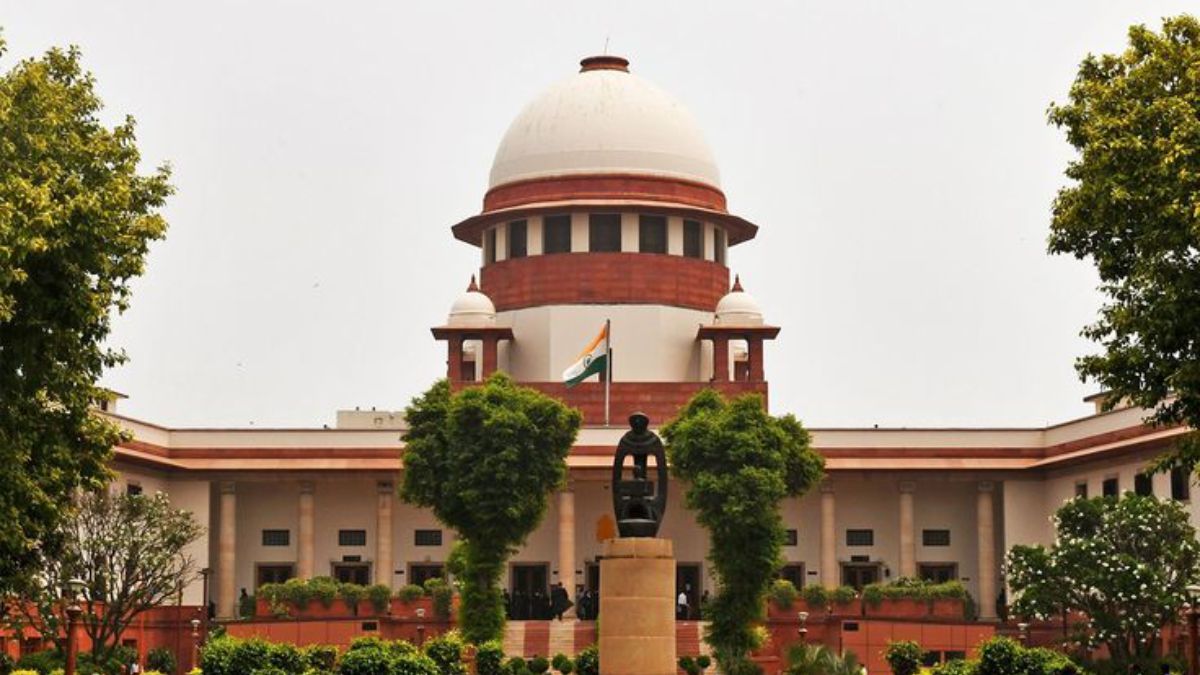
Devilal Gond was acquitted by Chhattisgarh High Court in January 2018 but he remained behind bars till May 2025. A Supreme Court bench of Justices Augustine George Masih and Sanjeev Sachdeva increased the compensation from ₹2 lakh awarded by Chhattisgarh High Court earlier to ₹30 lakh.
The judgment was delivered on November 16, 2026.
Who Is Devilal Gond and Why Was He in Jail?
Devilal Gond was arrested on 7 December 2012 in connection with a murder case registered under Section 302 of the Indian Penal Code.
In August 2013, a Sessions Court in Rajnandgaon, Chhattisgarh convicted him of murder and sentenced him to life imprisonment.
Gond challenged the conviction in Chhattisgarh High Court. On January 20, 2018 the High Court allowed his appeal; set aside conviction and sentence and acquitted him of charges.
However, he was not released because of the acquittal order. He remained in prison because the order was not communicated to the jail authorities concerned.
How did he stay in prison seven years after being acquitted?
The Supreme Court held that the High Court’s acquittal order was not implemented because of communication and coordination failure between authorities.
The jail superintendent had reportedly written to the concerned legal aid panel lawyer in April and June 2018 asking for an update on Gond’s appeal but information about his acquittal never reached prison authorities.
The problem was brought to light on May 15, 2025 in connection with verification of records of convicted prisoners lodged at Central Jail.
A release warrant was issued on May 19, 2025 after the discovery and Gond was released that day.
The Supreme Court said that he had been held illegally for more than seven years after his acquittal.
Why did the Supreme Court increase compensation to ₹30 lakh?
After his release Gond approached Chhattisgarh High Court for compensation of ₹50 lakh for the illegal detention period.
On 1 May 2026 the High Court awarded him ₹2 lakh as recognition of his violation of his fundamental right to personal liberty under Article 21 of the Constitution.
Gond then went to Supreme Court for an increase in compensation.
The Supreme Court said the State’s explanation showed serious administrative failures and coordination among authorities was lacking.
The bench said Gond had lost important years of his life as well opportunities for employment, education skill development and better future earnings.
The court said money could not bring back the years he had lost but it could help him get financial independence again and rebuild his life with dignity.
It raised the compensation to ₹30 lakh later.
How Will the ₹30 Lakh Compensation Be Paid?
The Supreme Court also said how the compensation amount had to be managed in order to protect Gond’s financial interests.
Under the directions:
- Chhattisgarh government must pay ₹30 lakh in four weeks (adjusting any amount already paid under the earlier High Court order).
- The money has to be transferred directly into Gond's bank account.
- ₹5 lakh will be transferred to his savings account.
- The remaining ₹25 lakh will be kept in an interest bearing fixed deposit with auto renewal facility.
- The monthly interest on the fixed deposit will be credited to his savings account.
The fixed deposit cannot be withdrawn or closed prematurely or used to obtain a loan without the permission of the Secretary of the concerned District Legal Services Authority.
Permission can be granted under certain circumstances such as a medical emergency or the creation of long term income generating asset.
Supreme Court Calls for Better Coordination Between Courts and Prisons
The judgment also highlighted the lack of a system to ensure that acquittal and release orders reach prison authorities without delay.
The Supreme Court asked all High Courts to consider introducing measures similar to those taken by Madhya Pradesh High Court.
It also asked them to consider setting up an integrated Online Criminal Justice Ecosystem connecting different stakeholders (e.g.:)
- Police departments
- Courts
- Prisons
- Prosecution agencies
- Forensic departments
- Hospitals
A system like this could improve sharing of criminal justice records and help to prevent people from remaining in custody because of administrative or communication failures.
Supreme Court Highlights Absence of a Law on Compensation for Wrongful Incarceration
Another important point in the judgment was that the Supreme Court said India does not have a specific legislative framework prescribing compensation for people who suffer wrongful incarceration.
The court then discussed the constitutional remedies under Articles 32 and 226 which allow Supreme Court and High Courts to award monetary compensation for established violations of fundamental rights.
It said that the right to personal liberty under Article 21 must have an effective remedy when violated by State authorities.
The judgment also referred to the principle that the State may take appropriate action against officials responsible for such violations in accordance with the law.
Final Thoughts
Devilal Gond’s case shows what happens when administrative failures occur in the criminal justice system: he was acquitted in 2018 but remained in prison until May 2025 because authorities did not follow the court order.
By increasing compensation to ₹30 lakh the Supreme Court acknowledged how long illegal detention had affected his liberty, livelihood and future prospects.
The court’s directions to High Courts to look at better digital coordination systems also highlight the need for stronger safeguards so that no one is left behind in prison after a valid release or acquittal order is made.



Comments