
JMM spokesperson Manoj Pandey, speaking to ANI in Ranchi, said that Parliament is a place for discussion and debate, and that healthy debate is necessary for the functioning of a democracy. However, he argued that the government has failed to facilitate meaningful discussions in recent days, with the Prime Minister and Home Minister allegedly absent when important questions were expected to be answered.
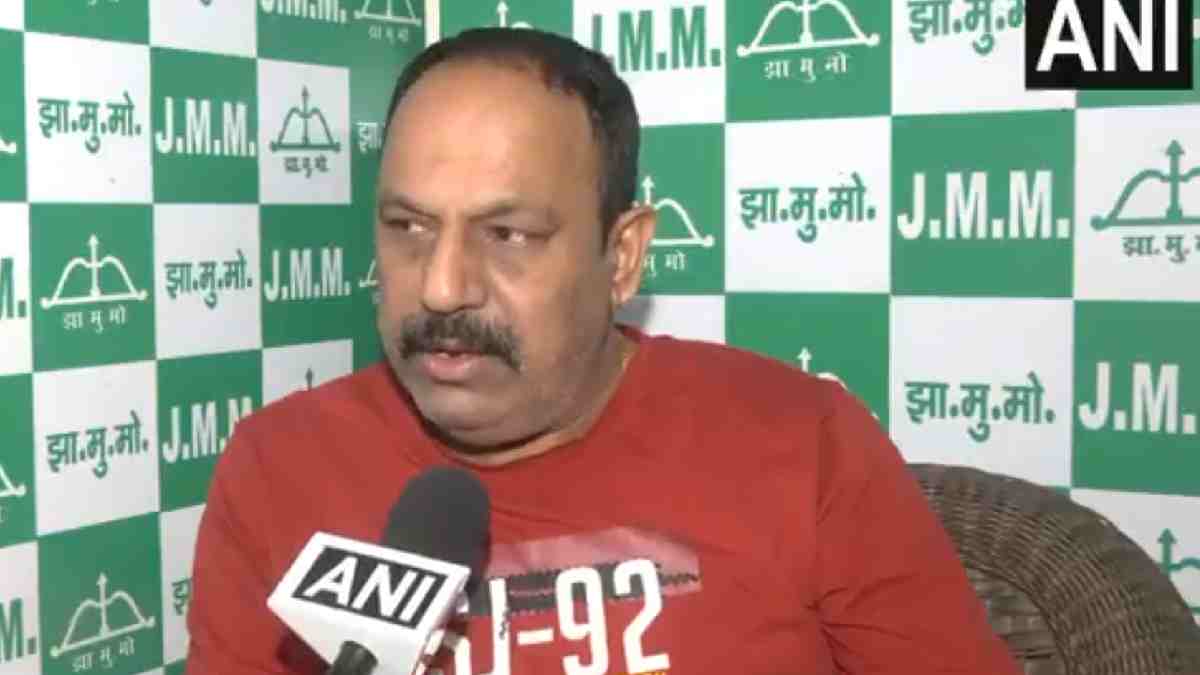
He further alleged that whenever discussions become heated, the Leader of the Opposition's microphone is switched off, members are prevented from speaking, and some are suspended from the House.
He said, "...Parliament is indeed a place for discussion and debate, but that debate must be allowed. In recent days, we have seen the Prime Minister and the Home Minister absent when answers were expected. Whenever discussions become heated, the Leader of the Opposition’s mic is switched off, members are not allowed to speak, and some are suspended... This is not the way democracy should function. If healthy debate is not allowed in Parliament, it will take place on the streets."
All this comes ahead of dates to be scheduled for the winter session
Recent suspensions and actions inside Parliament
In a recent controversy, Leader of the Opposition Rahul Gandhi challenged Prime Minister Narendra Modi to participate in an open debate on several issues, including alleged foreign influence, the Adani controversy, the economy, the India-US trade deal and the Jeffrey Epstein controversy.
Gandhi proposed that the discussion take place at a venue of the Prime Minister's choice, with the media and young people present.
The challenge came after the Prime Minister accused the Opposition of having connections with foreign forces. Gandhi asked Modi to address these allegations through an open discussion.
The proposal was met with a response from Union Home Minister Amit Shah, who said that the government was prepared to discuss issues such as the Special Intensive Revision (SIR) of electoral rolls and electronic voting machines in Parliament. Shah also accused the Opposition of disrupting proceedings and challenged it to participate in parliamentary discussions.
Finance Minister Nirmala Sitharaman separately argued that Parliament was the appropriate venue for such a debate, questioning why Gandhi was seeking another platform when he was the Leader of the Opposition.
Earlier, in Feb 2026, eight Opposition MPs were suspended from the Lok Sabha for the remainder of the Budget Session over alleged misconduct, including shouting slogans and throwing papers towards the Chair. The suspended members included seven Congress MPs and one CPI(M) MP.
Their suspensions were subsequently revoked on Mar 17, following an agreement among political parties to maintain parliamentary decorum.
The 2026 Monsoon Session, which began on Jul 20 and concluded on Aug 13, was also marked by repeated disruptions. Opposition members demanded discussions on alleged excessive use of force by Delhi Police and the CRPF against student protesters, as well as allegations surrounding the theft of donations from the Ram Mandir.
#WATCH | Ranchi, Jharkhand: JMM spokesperson Manoj Pandey says, "... Parliament is indeed a place for discussion and debate, but that debate must be allowed. In recent days, we have seen the Prime Minister and the Home Minister absent when answers were expected. Whenever discussions become heated, the Leader of the Opposition’s mic is switched off, members are not allowed to speak, and some are suspended... This is not the way democracy should function. If healthy debate is not allowed in Parliament, it will take place on the streets."
— ANI (@ANI) November 6, 2026
During the session, Prime Minister Narendra Modi and Home Minister Amit Shah were largely absent from Lok Sabha proceedings. Shah entered the House for the first time on August 13, only for the proceedings to be adjourned sine die within approximately four minutes.
The Opposition had repeatedly demanded that Shah respond to questions concerning the police action against student protesters. Shah maintained that he was prepared to answer the questions if the Opposition allowed Parliament to function.
Despite the claims of disruptions by the government against the opposition, the government continued with its legislative business. According to the Ministry of Parliamentary Affairs, 12 Bills were passed by both Houses during the session. However, PRS Legislative Research reported that the Lok Sabha functioned for only 15% of its scheduled time, while the Rajya Sabha functioned for 33%. Question Hour operated for just 1% of its scheduled time in the Lok Sabha and 12% in the Rajya Sabha.
Another controversy emerged over Rahul Gandhi's allegations that his microphone was switched off when he attempted to raise various issues in Parliament. The Speaker's office rejected the allegation, maintaining that microphones are not switched off at the direction of the Chair in the manner alleged. The government also disputed Gandhi's claim, with ruling-party representatives alleging that he had switched off his own microphone.
Cost of each Parliament session
According to an old estimate frequently cited in discussions about parliamentary disruptions, running Parliament costs approximately ₹2.5 lakh per minute. The figure has been attributed to former Parliamentary Affairs Minister Pawan Kumar Bansal, who cited it in 2012.
All parliamentary expenditure is ultimately financed through public funds, making the efficient functioning of the institution an important matter of public accountability.
A Member of Parliament currently receives a monthly salary of ₹1.24 lakh, along with a daily allowance of ₹2,500 for eligible days of official duty. MPs are also entitled to a constituency allowance of ₹87,000 per month and an office expense allowance of ₹75,000 per month, which includes provisions for secretarial assistance and office-related expenses.
They are also entitled to official accommodation in Delhi, subject to the applicable parliamentary rules, along with other facilities and travel benefits. These facilities should not be confused with a guaranteed cash payment of ₹2 lakh per month for not using government accommodation.
Cabinet ministers receive additional remuneration and facilities under separate rules governing ministers. Their entitlements vary according to the applicable provisions and cannot be represented by a single universal annual allowance.
Recent questions about MPs' pensions have also drawn attention to the benefits available to former parliamentarians. Under the Salary, Allowances and Pension of Members of Parliament Act, 1954, former MPs can receive their parliamentary pension even if they are also entitled to a pension as former MLAs or MLCs.
Under Section 10(17) of the Income Tax Act, 1961, parliamentary daily allowances and specified constituency allowances are exempt from income tax.
All these expenditures come from public funds, not from any king, and elected representatives are expected to remain accountable to the people they represent.
Whether a member belongs to the ruling government or the Opposition, their responsibility is to answer questions, participate in discussions, and represent the public's interests.
If Parliament is unable to provide space for meaningful debate, and elected representatives are not held accountable for their actions, questions arise about the institution's ability to fulfil its constitutional and democratic responsibilities.
The Prime Minister, Home Minister, Cabinet ministers and Opposition leaders are all accountable to the people. Parliamentary proceedings are not merely political confrontations between parties. They are part of the democratic process through which the government is questioned, and public concerns are addressed.
Comments