Tennis has produced many players who were destined for greatness but fell short. Some weren’t able to achieve the consistency that you need to win at the top level, others had injuries, motivation or the huge pressure of professional sport. Ernests Gulbis belongs to that category.
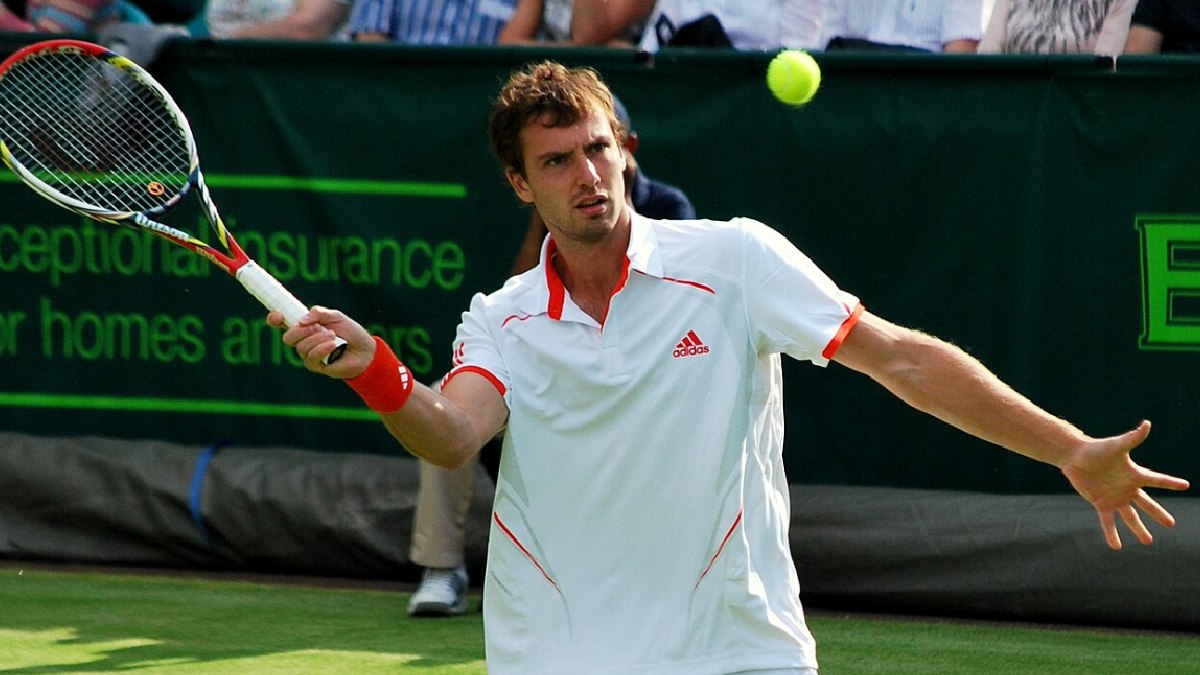
The Latvian had the ingredients of a world-class tennis player. He had a powerful serve, a strong baseline game and a fearless backhand that could cause serious problems for the biggest names in the game. Gulbis reached the top 10 as much as world No. 10 at his peak and won a few matches that showed how dangerous he could be when everything clicked.
He defeated Novak Djokovic, beat Roger Federer twice and repeatedly pushed Rafael Nadal hard on clay. But Gulbis never developed as a regular member of tennis's elite.
The Teenager Who Trained With Djokovic
Gulbis and Djokovic knew each other long before they became well-known players on the ATP Tour. They trained together as teenagers at the Niki Pilic Academy in Munich, where they shared courts while developing their respective games.
They moved on in very different directions but Gulbis was able to win a memorable match-up against Djokovic in the beginning of his career. In January 2009, he faced the reigning Australian Open champion in the first round of the Brisbane International.
Djokovic was world No. 3 and was set to defend his Australian Open title. Gulbis, however, took one of the biggest wins of his career, defeating the Serbian 6-4, 6-4.
It was a remarkable result and remains Gulbis' only victory over Djokovic in eight career meetings.
Gulbis Stuns Federer In Rome
Gulbis made a bigger statement one year later. He was ranked as high as No. 40 in the world and faced Roger Federer at the Foro Italico in Rome in 2010.
Gulbis stunned the Swiss superstar in three sets and Federer was out of the tournament early. Federer's opening round defeat in Rome was the first time in eight years and it showed that the Latvian was able to compete with the best.
Gulbis then faced Nadal in the semi-final. Against one of the greatest clay-court players ever, he pushed the Spaniard to three sets before eventually losing 6-4, 3-6, 6-4.
Nadal soon realized Gulbis' potential and he described him as a player who could reach the top 10. At the time, it seemed to be a prediction that could easily become true.
French Open Breakthrough
Gulbis eventually proved that he could perform on the biggest Grand Slam stage. He had already reached the French Open quarter-finals in 2008, but his most memorable run was in 2014.
During that tournament, Gulbis defeated Federer in a five-set fourth-round thriller. He then defeated Tomas Berdych to make the semi-finals and secure the biggest Grand Slam run of his career.
It also helped him to achieve a career-high ranking of world No. 10.
His run ended at Djokovic, but reaching a Grand Slam semi-final seemed to confirm what many had figured for years: Gulbis had the ability to compete with the very best.
The Nadal Rivalry And A Memorable Exchange
Gulbis also had a few memorable encounters with Nadal, especially on clay. One of the most dramatic came at the 2013 Rome Masters.
Gulbis took a 5-0 lead over Nadal in the first set before he completed a 6-1 win in 34 minutes. He then moved ahead 5-3 in the second set and Nadal had very little chance of winning.
Nadal, however, fought back and eventually won 1-6, 7-5, 6-4.
The match ended with an entertaining exchange between the two players. Gulbis openly declared that he had been the better player while Nadal’s champion mentality took the edge.
Nadal responded by advising Gulbis to be calm and spend less energy if he was to realize his potential.
Controversy Followed Gulbis Everywhere
Gulbis’s personality was almost as unpredictable as his tennis. He also had a reputation for his fiery temperament and frequent racket-smashing incidents.
He also made his comments out of the court very public. He criticized the dominance of the sport’s greatest players in 2013, and said tennis had become too polite compared to sports such as boxing and basketball.
Some of his statements later caused controversy, including comments about women pursuing professional tennis. His career was also affected by a 2009 arrest in Sweden of Gulbis for soliciting a prostitute during the tournament week. Gulbis said it was a misunderstanding and paid a fine.
His ability to speak with such abandon and without great restraint only added to his already unstable public image.
What Went Wrong?
The biggest question in Gulbis’ career was not whether he had enough talent. He clearly did. But the question was if he had the consistency and motivation to make the most of it.
Injuries played a part as did fluctuating form. Gulbis could beat a Grand Slam champion one week and then suffer a disappointing loss against a far lower-ranked opponent soon after.
His ranking eventually collapsed. By 2017, he had fallen out of the top 500. He still displayed some flashes of his former brilliance, like a memorable Wimbledon victory over Juan Martín del Potro that stunned the Centre Court crowd.
But those moments were increasingly rare as he moved through Challenger-level competition.
Gulbis confirmed his retirement in 2024, more than a year after his last competitive match. He left the sport with a career that could easily have been much greater on paper.
He beat Federer twice, defeated Djokovic, pushed Nadal to the limit on clay and reached a Grand Slam semi-final. But his tale remains one of tennis’s great “what if?” careers— a player with extraordinary ability whose performances never quite matched the enormous talent he had.