South Africa seam bowling all-rounder Marizanne Kapp has stirred a debate in cricket after she has strongly criticised the decision Cricket Australia made to clear transgender cricketer Anaya Bangar. Kapp took to Instagram to say she took issue with the clearance given to Anaya, who has been in communication with Cricket Australia about the eligibility to play community cricket in Australia.
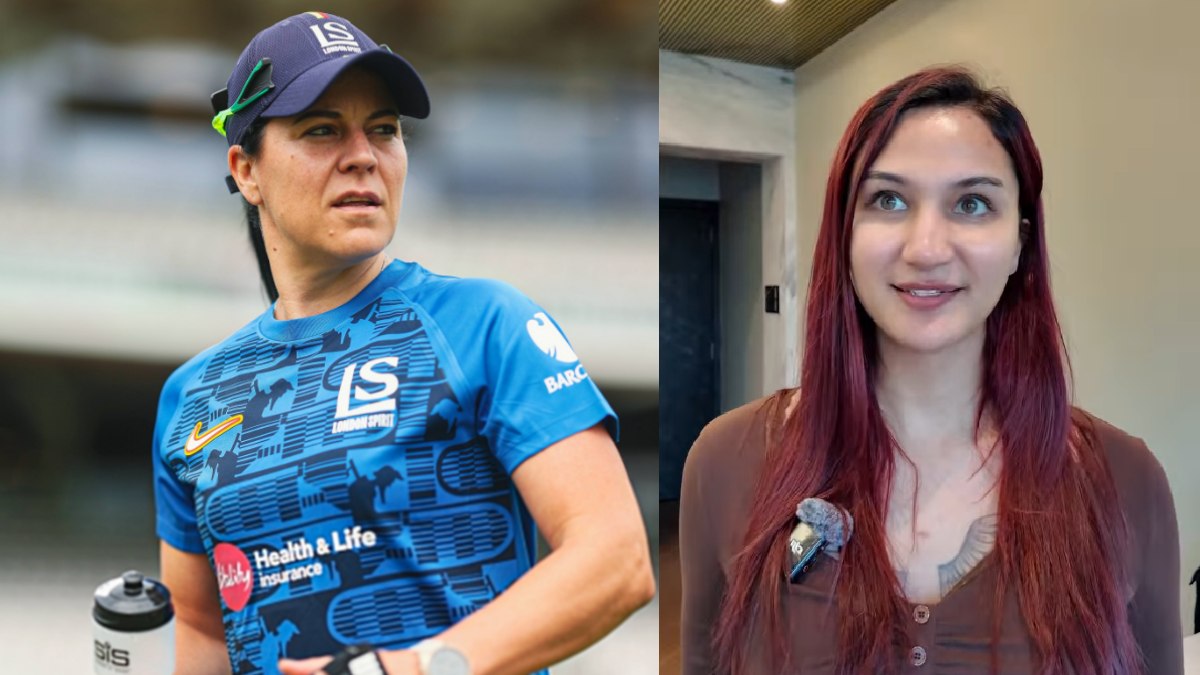
Kapp posted a screenshot of a report about the development, writing: “Absolutely ridiculous, this should NOT be allowed!” She also tagged WBBL’s official Women’s Big Bash League (WBBL) account in her post. Her comments have brought further attention to the complex and often highly debated issue of eligibility and participation in women’s cricket.
The decision comes after Anaya Bangar, the child of former India cricketer and batting coach Sanjay Bangar, confirmed that Cricket Australia had formally communicated its stance about her participation. The decision also allows Anaya to play at the Premier Cricket competitions until March 2027 as these competitions are community cricket rather than elite cricket in Cricket Australia’s current policy.
Anaya sees the decision as a chance to get back into the sport after some time away from it. She has previously said she wants to continue playing and Cricket Australia’s response was a big moment in her life. She said at one stage she thought she might never play cricket again, but is thankful she was able to get back in the game again.
Marizanne Kapp VS Ananya Bangar 😳
— Venky Mama (@venkymama100) August 28, 2026
- Marizanne Kapp has put a story opposing the allowance of Ananya Bangar in big bash league Australia.
- Marizanne Kapp who has married to women cricketer Dane Van Niekerk.
- First in my bloodline to see a lgbeti opposing lgbeti 👀 pic.twitter.com/FWidWI7TmR
However, her eligibility for elite cricket from March 2027 will be subject to additional conditions. As communicated by Cricket Australia Head of Integrity Jacqui Partridge, Anaya will need to take a blood test after arriving in Australia. The test will confirm that her serum testosterone concentration is below 10 nmol/L, and she will need to continue to meet the other requirements under Cricket Australia’s eligibility policy.
The distinction between community and elite cricket is at the heart of the decision. Anaya can play Premier Cricket competitions for the time period specified by Cricket Australia, but should she move into elite-level competitions (in the case of the WBBL) she would have to meet the policy requirements.
The issue also shows differences in regulations at different levels of the sport. The International Cricket Council (ICC) currently has rules that prevent transgender women who have experienced male puberty from playing international women’s cricket. Domestic cricket boards, however, can have their own policy for competitions that are outside international cricket.
In India, Anaya had also approached the Board of Control for Cricket in India (BCCI) but had not been given a reply regarding her case. She then went to Cricket Australia to be given some clarification and now that has attracted some players and cricket fans.
Anaya is not new to competitive cricket. Before she transitioned, she played age-group cricket with India batter Sarfaraz Khan and his brother Musheer Khan. She also played club cricket in England. Her background in the sport has made it a lot more fun to return to competitive cricket.
Kapp’s criticism has thus given another prominent international voice to a debate that extends beyond one player or one competition. The discussion revolves around eligibility policies, competitive balance, inclusion and the multiple regulations governing community, domestic elite and international cricket.
For Cricket Australia, the decision is a new one and means the eligibility criteria of Aussies for women’s cricket will be under greater scrutiny in the future as Anaya’s path to elite women’s cricket may be clearer after March 2027. For Anaya, the immediate focus is returning to the cricket field through community competition.
Cricket authorities are going to be under growing pressure to clearly communicate how their policy is applied at all levels of the game, and why. The divergent opinions around Anaya’s case show both the sensitivity of the subject and the difficulty cricket bodies face when attempting to determine eligibility rules for an ever-changing sport.