China’s teenage swimming sensation Yu Zidi continued her remarkable run at the Asian Games 2026 and won her second gold medal in as many days at the Tokyo Aquatics Centre on Monday. The 13-year-old schoolgirl won another gold medal in the women’s 200m individual medley, and once again became one of the world’s fastest young swimmers this year.
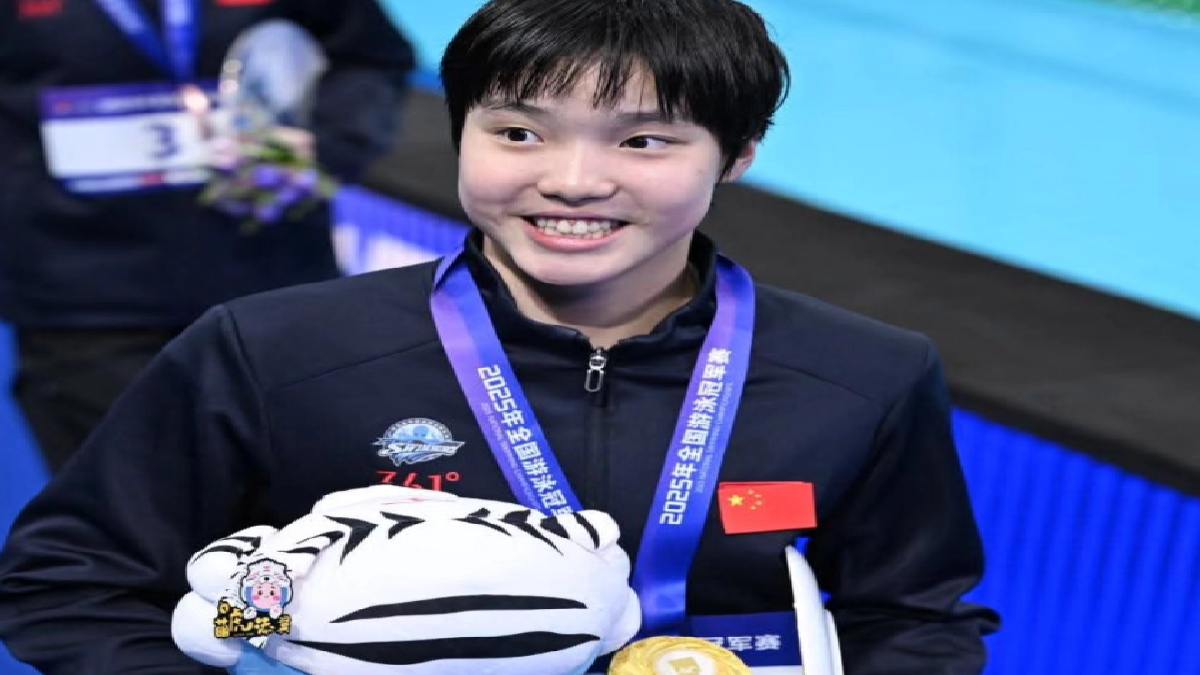
Yu clocked 2 minutes and 6.10 seconds to win the 200m individual medley gold medal. She won the gold just 0.40 seconds behind the world record of 2:05.70 set by Canadian Olympic champion Summer McIntosh. It also added another Asian Games record to Yu’s growing list of achievements after she broke a Games record in the women’s 200m butterfly on Sunday.
The 13-year-old Chinese swimmer has attracted attention because of her age and the level of competition she has already faced. Yu is now 13 and competing against experienced international swimmers, and her times are some of the best. Her back-to-back gold medals have made her one of the central talking points of the swimming program at the Asian Games.
Yu said she was even more pleased with her second gold medal than her first. “I feel even happier winning this second gold medal than I did with the first one,” she said after her victory.
Her performance has also raised hopes for her future. At the Los Angeles Olympics in 2028, Yu could potentially be one of the youngest main contenders on the global swimming stage. She will continue to develop as she competes against the world’s top swimmers and gains experience at major international events.
The 200m individual medley requires swimmers to contend with four different strokes (butterfly, backstroke, breaststroke, and freestyle), which makes it one of the most demanding events in the pool. Yu’s ability to excel in all of the disciplines is one of the reasons why she has gained so much attention.
Dramatic Tie In Men’s 100m Breaststroke.
The swimming programme also produced a dramatic result in the men’s 100m breaststroke where Japan’s Shin Ohashi and China’s Dong Zhihao finished with exactly the same time. The dead heat resulted in both swimmers being awarded gold medals.
Ohashi, who was competing in front of a home crowd, said he was pleased to win gold but felt that the tie caused him to be conflicted. The Japanese swimmer said his feelings were “50-50” because he was pleased with the gold medal, but he had wanted to be ahead of his rival.
The result was another remarkable moment in a contest already marked by many tight racing contests. The shared gold also showed just how close great swimming events can be— and races are usually separated by a few hundredths of a second.
Siobhan Haughey Defends 200m Freestyle Title.
Siobhan Haughey also continued her Asian Games success by winning the 200m freestyle in Hong Kong. The experienced swimmer has become one of Asia’s top competitors in the event and once again finished on top of the podium.
Haughey’s victory added another major result to Hong Kong’s swimming campaign, and Yu and the other top swimmers’ performances once again demonstrated the depth of competition at the Games.
So the swimming competition has been a combination of champions, young competitors, and dramatic finishes. Yu’s performances have attracted particular attention because of her age, and the Chinese teenager already has times that place her among the world’s leading swimmers.
For Yu, however, the focus will be on continuing to compete and gain experience at the Asian Games. Her two gold medals and two Asian Games records in two days have been a remarkable start to her career. She will be in for more international competitions to develop her skills and be among the best in the world, and as a teenager, she will be a top swimmer.
Her second gold medal also ensures that Yu Zidi will be one of the athletes to be watched as the Asian Games swimming programme continues. At only 13, she has already produced performances that have caught the world’s attention, and her progress over the coming years will be closely followed by swimming fans around the world.