As climate change changes weather patterns across the Himalayan region, architects, engineers, and local individuals are going back to old-school building techniques that have been built over the years.
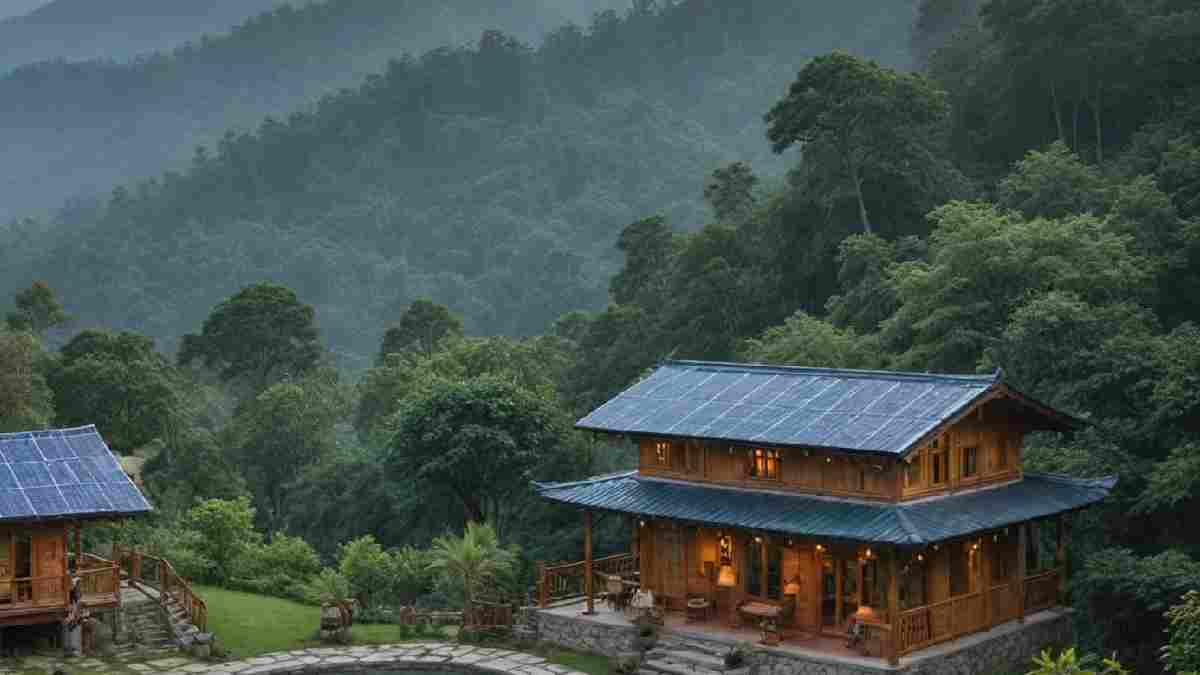
Climate-responsive mountain architecture that was once regarded as obsolete by people in the past is now being considered as the best solution to modern day living in the Himalayas.
Traditional homes in Himachal Pradesh, Uttarakhand, Sikkim, Arunachal Pradesh, and Jammu & Kashmir have been built for centuries to withstand harsh winters, heavy snowfall, earthquakes, and fluctuating temperatures.
They are built from locally available resources like stone, timber, mud, bamboo, slate, etc. that would keep indoor temperatures natural and harmonize with the surrounding place.
Most of these traditional homes are being replaced today with fast urbanization and concrete construction. But in mountainous areas, experts say, modern cement buildings don’t do well. They require more energy to heat and cool, stress fragile ecosystems, and may not be as resilient to earthquakes as traditional buildings.
Climate-responsive architecture is about adapting buildings to local environmental conditions. In the Himalayas that means maximizing natural sunlight in winter, promoting cross-ventilation in summer, insulating walls using local materials and designing sloped roofs that can cope with snow and rain effectively.
One of the best-known examples is the Kath-Kuni style of Himachal Pradesh, where wood and stone are mixed together to create earthquake-resistant structures. Thick mud-brick housing in Ladakh has excellent thermal insulation to keep the interior warm in freezing winters and cool in summer.
In northeastern Himalayan areas, raised bamboo houses shelter residents from moisture, landslides and heavy rainfall.
Architects are now marrying these traditional practices with modern engineering. New mountain homes often have solar panels, rainwater harvesting systems, energy-efficient windows and eco-friendly insulation while still retaining the characteristics of indigenous architecture. This hybrid approach will reduce carbon emissions and promote sustainable tourism.
The revival has also been good for local economies. Local materials provide employment for artisans, carpenters and traditional craftsmen whose skills are being rapidly lost.
People in communities are starting to realize that it is also one of the main reasons that eco-conscious tourists are coming for the authentic Himalayan landscapes.
Environmental experts say the Himalayas are still one of the world’s most climate-sensitive regions. Rising temperatures, glacial retreat, erratic rainfall and recurring landslides all make resilient construction more urgent than ever. Climate-responsive buildings cut energy consumption, improve disaster preparedness and reduce environmental impact.
Sustainable mountain construction is also being kept up to date by governments, conservation boards and education institutions through research and policy-based restoration.
Climate-responsive architecture is slowly emerging as a tribute to traditional wisdom and as the practical approach for building safer, greener and more resilient Himalayan communities.
Recovering these ancient architectural practices shows that innovation does not always take a whole new set of ideas and does not always require a whole new approach.
And sometimes the best solutions are the ones that are rooted in centuries-old knowledge that is still useful for people and nature.