India's railway network is more than a means to get from one city to another. It is also a moving history of the country, connecting places, culture, landscapes and generations.
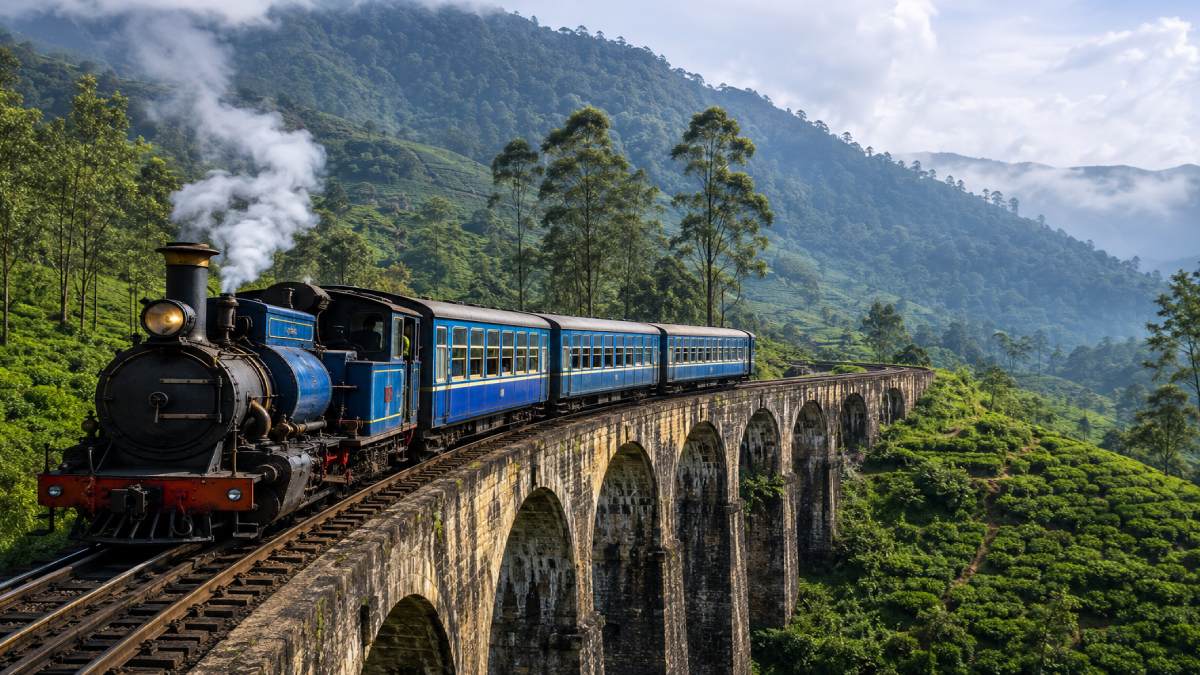
As India prepares to celebrate Independence Day on August 15, travellers looking to have a meaningful holiday experience can take a look at several historical railway lines that date back to colonial times.
Many of the railway lines were constructed under British rule for administrative, commercial or strategic purposes. But the routes came to be important to India's social and economic development. Today, some old lines still work and others have been heritage railway experiences for travellers to recognize engineering accomplishments from another era.
From mountain railways winding through the Himalayas to narrow gauge trains in the Nilgiris, these train trips are quite different from regular train travel. They combine history, natural beauty and the romance of railway culture and are ideal for an Independence Day respite.
1. Darjeeling Himalayan Railway
One of India's most famous heritage railways is the Darjeeling Himalayan Railway, commonly known as the Toy Train. In the late 19th century, the railway links New Jalpaiguri to Darjeeling through a spectacular mountain landscape.
The route is famous for its narrow-gauge tracks, sharp curves, mountain views and historic locomotives. The train passes through settlements and hillside landscapes while gradually climbing toward Darjeeling.
The Darjeeling Himalayan Railway is part of the Mountain Railways of India UNESCO World Heritage property, so it is particularly important to railway enthusiasts and heritage travellers.
A trip on this railway is a good opportunity to realize both the engineering challenge of constructing a railway through mountainous terrain and the changing landscapes of the eastern Himalayas.
2. Nilgiri Mountain Railway
Southern India offers another iconic heritage railway experience through the Nilgiri Mountain Railway. This line connects Mettupalayam with Ooty and passes through the picturesque Nilgiri Hills of Tamil Nadu.
The railway has historic technology, mountain views, tunnels, bridges and steep gradients. Some of the journey offers beautiful forests, valleys and hill settlements.
Nilgiri Mountain Railway is also included in the UNESCO-listed Mountain Railways of India. The journey is particularly attractive for travellers who want to combine heritage with the natural beauty of the Western Ghats.
3. Kalka-Shimla Railway
The Kalka-Shimla Railway is another well-known mountain railway of India and one of India’s best-known heritage railway destinations. The colonial period railway was constructed in order to link the plains to Shimla, which was the summer capital of British India.
Hiking along the Himalayan foothills, many curves, bridges and tunnels, the route has been described for its beauty. And as travellers to Shimla can enjoy a slower and more peaceful way of traveling.
The railway is another part of the UNESCO-listed Mountain Railways of India and is an attraction for tourists to Himachal Pradesh.
4. Kangra Valley Railway
The Kangra Valley Railway is the most beautiful and peaceful way of moving through Himachal Pradesh. The narrow-gauge track passes along the toes of the Himalayas and offers views of mountains, valleys and rural villages.
In contrast to the more famous heritage routes, the Kangra Valley Railway is more subdued. The attraction is in the landscape and the possibility of travelling the traditional railway route in northern India’s mountainous terrain.
5. Matheran Hill Railway
Maharashtra's Matheran Hill Railway provides another unique heritage journey. The narrow-gauge railway links Neral with the hill station of Matheran.
The route gradually climbs through forested ground and gives passengers a view of the surrounding area. Matheran has restrictions on motor vehicles in the hill station, so the place is quieter compared to many other popular hill stations.
The railway may be an attractive option for a heritage-based short trip around Mumbai and Pune.
6. Kalka-Shimla's Historic Railway Experience
The Kalka-Shimla route is of particular interest because of the extraordinary engineering involved in its construction. While the railway passes through hundreds of curves and many tunnels and bridges as it crawls across the plains toward Shimla.
For modern travellers used to fast trains, the slower pace of a heritage railway is completely different. The journey helps passengers to take in the culture, rather than to consider the train as just transport.
7. Kashmir's Railway Landscapes
Though India’s railway history in the Himalayan region has evolved, train trips through Jammu and Kashmir allow us to see the mountain landscapes in such a way.
The modern railway infrastructure in the region is a very different chapter from the colonial-era mountain railways. Including these routes in an Independence Day travel plan can highlight the contrast between India’s historic railway legacy and its modern infrastructure achievements.
8. Heritage Experiences Around Rajasthan
Rajasthan is another place railway travel can be combined with heritage tourism. Some luxury and heritage train experiences travel through the state’s historic cities and landscapes.
While these trains are not necessarily colonial-era services in the same way as India's mountain railways, they represent the evolution of rail travel into a major part of Indian tourism.
You can mix railway trips with visits to forts, palaces, historic cities and cultural places to have an itinerary that connects India’s railway history and its wider architectural heritage.
9. Steam Locomotive Heritage Experiences
India also stores several old steam locomotives and railway heritage assets. From time to time, special heritage runs and railway events give the people of the past the atmosphere of an earlier era of train travel.
Such services are especially attractive for railway photographers and history enthusiasts. We have the traditional locomotives and railway stations and the old coaches in the picture, which is a visual reminder of India’s railway times.
Such services may be available in a variety of places; so if a trip is being planned in a specific heritage run, one must check official railway announcements.
10. India’s Railway Stations as Heritage Destinations
A railway heritage journey does not necessarily have to begin and end on a heritage train. As a few historic railway stations in India are destinations in their own right.
Mumbai railway stations like Chhatrapati Shivaji Maharaj Terminus combine railway history and great architecture. It was formerly a railway station called Victoria Terminus and is now a UNESCO World Heritage Site and is still a major railway center.
Historical railway stations can add another dimension to an Independence Day travel experience. These buildings tell us how railway infrastructure became closely connected with the growth of India’s major cities.
Why These Journeys Matter on Independence Day
Travelling on historic railway lines on Independence Day is more than a holiday. India's railway network has seen immense social and economic changes over generations. Routes constructed during colonial times are now part of the history and heritage of an independent country in the country’s transport and heritage landscape today. The transformation is particularly visible on mountain railways. Infrastructure built for purposes associated with colonial administration has been preserved, maintained and incorporated in modern Indian tourism and heritage conservation.
For young travellers, these trips may also be a great way to learn about history. Rather than reading about railway development in a textbook, passengers will see tunnels, bridges, stations and landscapes which shaped India’s railway history.
Plan Before You Travel
When making the heritage railway journey during the Independence Day period, it is a good idea to work out train schedules, ticket availability and timetable of train services. During holiday periods the roads may be busy and heritage services may not be frequent.
Weather should also be considered, especially on mountain routes. Monsoon conditions can affect railway operations, road connectivity and sightseeing plans in some regions.
When traveling they should be respectful of historical buildings, railway property and local communities as well as the history they are trying to learn.
India’s railway heritage is a story of transformation. Tracks and stations that have been around for more than a century continue to carry on serving new generations of passengers. And with Independence Day on the horizon, it is a time to go back in time and then look at India’s past and the diversity of it today.
Whether it is the Toy Train climbing toward Darjeeling, the Nilgiri Mountain Railway winding through the hills of Tamil Nadu or the historic route to Shimla, those railway experiences tell us how travel can become a journey through history itself.
A heritage train journey on this Independence Day can, therefore, be much more than a holiday. It can be a chance to see India’s landscapes, get to understand India’s railway history and see how an infrastructure network from another era has become so much of India’s heritage.