One Indian traveller’s complaint about a train ride in Italy has prompted a heated debate online after he said the public transport facilities he experienced were nothing compared to those in India. Binny posted a video of the trip (a video he filmed on Instagram) in which he called the journey frustrating, but claimed India had a better experience.
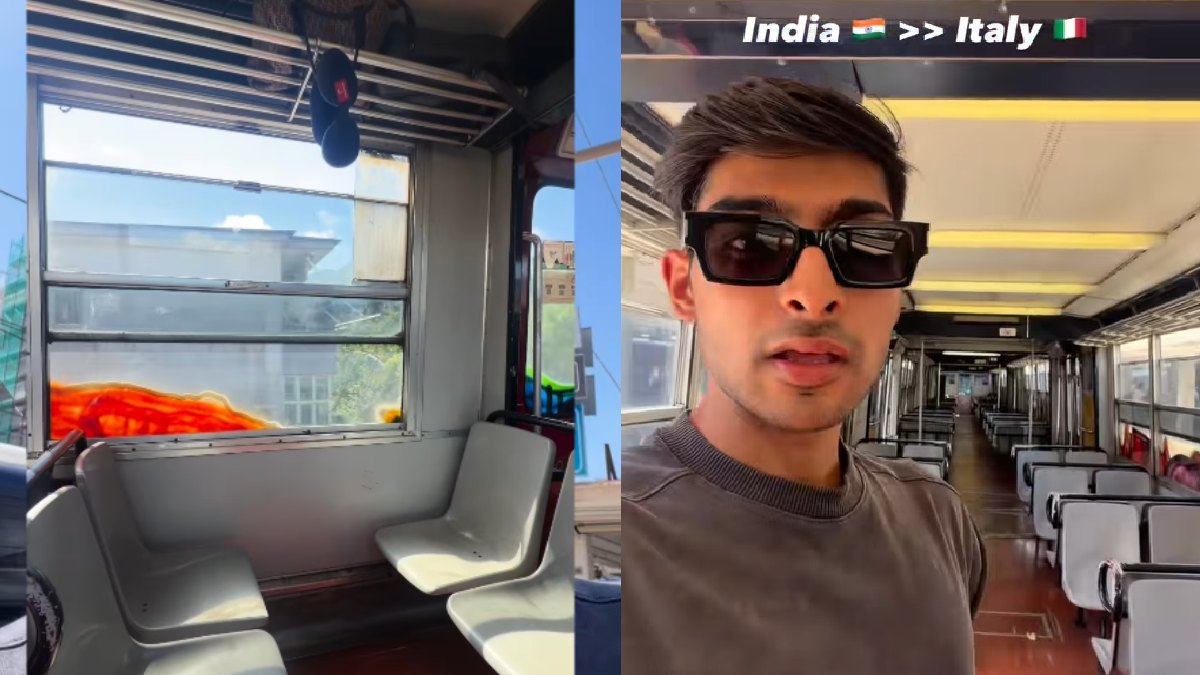
The video was posted on August 25 during his trip to Italy. Binny is seen at a railway station and inside a train in the video, talking about the conditions he and other passengers faced in their trip. He mentioned air conditioning and fans were turned off and temperatures were high.
Binny said he and several other passengers were traveling from Sorrento to Naples when the train stopped halfway through the journey. The passengers were stuck at a station for nearly an hour while dealing with the heat. For instance, neither the train nor the station platform had air conditioning or fans to provide relief.
The traveller expressed his frustration while recording the surroundings and comparing the experience with public transport in India. He said India is “far far superior to Italy” and criticized what he described as inadequate facilities on the train and at the station.
“India is better than Italy. It is so hot right now, but there is no AC or fan anywhere,” Binny said in the video. He looked around and pointed at the passengers who were trying to beat the heat with handheld wooden fans.
The train was not comfortable, the traveller said, and the infrastructure was poor.
“Look at the train, no fan, no AC, nothing. This is their train, it is so disgusting,” he said while showing the interior of the train in the video
.
The post quickly gained attention because of the strong comparison between India and Italy. Although the video was simply a personal account of an unpleasant travel experience, Binny’s comment that India was better created discussion about the quality of public transportation in both countries.
The railway and public transportation infrastructure in India has changed dramatically in the last few years, and even more trains and train stations these days have air-conditioned coaches and better passenger facilities. At the same time, the facilities can vary considerably depending on the train, route, city and type of service.
Italy has a robust railway network connecting cities and tourist spots, but passenger experiences differ between services and regions. A disruption or stoppage on a particular journey does not necessarily reflect the overall standard of public transport across the country.
Binny’s video has turned an individual travel complaint into a larger conversation about expectations from public transport abroad. Air conditioning for many travellers is an issue, especially in summer trips in southern European destinations where temperatures can become uncomfortable.
The incident also illustrates how tourists often compare everyday infrastructure in foreign countries with what they are used to at home. What seems rather inconvenient or uncomfortable to one traveller can be completely normal in another country because of the climate, infrastructure, operating practices and passenger expectations.
Binny's comments have thus received more than a little attention beyond the train journey. His blunt declaration that “India is far far superior to Italy” has become the central talking point around the video, and viewers question whether the experience reflects real infrastructure problems or just a matter of luck.
The video does not prove that all trains in Italy lack air conditioning or that Indian public transportation is universally better. Instead, it records a traveller’s experience during a disrupted journey between Sorrento and Naples and his reaction to the conditions he encountered.
As the video continues to get circulated online, the debate has gone from a delayed train journey to a larger question about public transport standards, passenger comfort and the differences between travelling in India and Europe. But for Binny, it’s enough to make him appreciate the facilities that he is used to in India—and his home country’s transport infrastructure as the clear winner.