Chhattisgarh’s Indravati Tiger Reserve is to reopen as a tourist destination after nearly four decades of being largely closed. It is in the Bijapur district in the Bastar region of Chhattisgarh, and it will be open to tourists from November 1, 2026, allowing wildlife lovers to visit one of the remote forest environments in central India’s most remote areas.
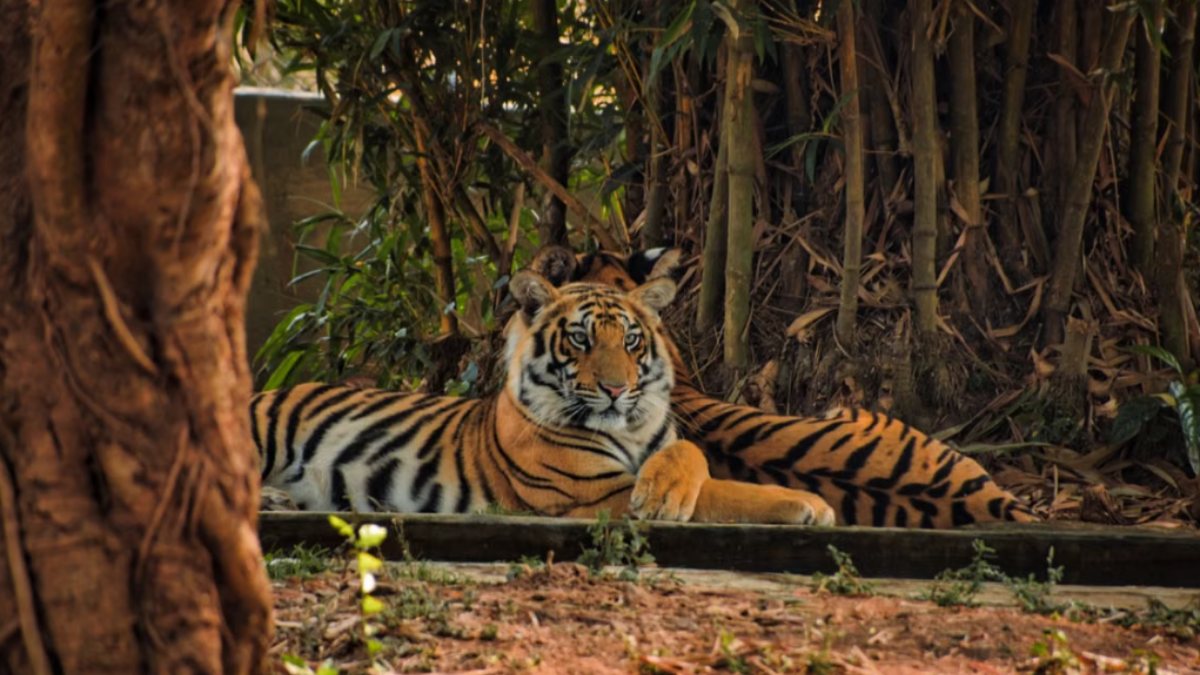
The reopening marks a big step for wildlife tourism in the state. The reserve has been difficult to access for tourists and even forest department personnel for years because of security challenges in the area. Better security conditions have now enabled authorities to increase patrolling and field activities in areas previously inaccessible in the reserve.
Indravati Tiger Reserve To Reopen From November 1
Indravati, with about 2,799 sq km, is one of the largest tiger reserves in Central India. The National Tiger Conservation Authority reports that its core or critical tiger habitat covers about 1,258 sq km, and another 1,540 sq km is the buffer area.
The reserve was established as a national park in 1981 and was part of Project Tiger in 1983. It is named after the Indravati River, which flows along its northern border. In the area, there are still a small number of wild buffaloes, and the reserve is one of the few areas left that has a forest.
According to recent reports, the Chhattisgarh Forest Department is already preparing for the reopening. Safari vehicles are being procured, and routes are being identified, with the first tourism circuit expected to cover two or three destinations inside the reserve.
The exact routes and the number of tourists and vehicles allowed per day have not yet been decided. Authorities are conducting a carrying capacity assessment in accordance with the reserve's conservation requirements.
Rare Wildlife Sightings Add To Indravati’s Appeal.
The reserve’s long history of limited accessibility has also meant that much of its biodiversity has not been well documented.
The recent field activities have already produced interesting wildlife records. A smooth-coated otter was recently observed in the reserve, and officials said this species had not been reported there before. The sighting has been cited as evidence of the biodiversity in the area.
Indravati is home to tigers, leopards, sloth bears, gaurs, chital, wild boars, and nilgai as well as several other species. The reserve's official wildlife documentation lists wild dogs, wolves, striped hyenas, sambar, barking deer, and freshwater crocodiles among its diverse fauna.
Wild buffaloes are also a key attraction. An internal census in February and March 2025 reported 14 to 17 wild buffaloes in the reserve. The tiger number at present is six at the state level, but the final tiger population will depend on the ongoing All India Tiger Estimation exercise and the scientific compilation of the data.
This is significant because earlier wildlife assessments were limited by the difficulty of accessing large parts of the reserve. More access for forest officials may provide a better picture of its wildlife population.
The security and conservation of biodiversity are core to our future, and that is to be done at all levels.
The reopening does not mean that the entire reserve will immediately be accessible to tourists. Security assessments will be carried out once the safari routes are set up and some stretches may still be left off-limits as a result of security and ecological reasons.
Tourism is also perceived by authorities as a source of livelihood for communities around the reserve. Residents could benefit from opportunities as guides, drivers, and hospitality providers, and homestays and local tribal products could also become part of the tourism ecosystem.
But conservation will be the priority, they are also emphasizing. Tourist zones, safari routes, and visitor limits are planned with ecological sensitivity and wildlife movement in mind. Measures are also being taken to protect vulnerable areas where there is human-wildlife conflict, such as fencing and cattle-proof trenches if necessary.
For travellers, the reopening could provide opportunities to sample a relatively unknown wildlife area in Bastar. But with the visitor infrastructure still being constructed, it is likely that the initial tourism experience will be much more controlled than that of India's tiger reserves.
Indravati is preparing to open up a window into one of Chhattisgarh’s most remote forests 40 years on. The November 1 reopening could thus mark not only a new chapter for tourism but also a new phase of wildlife monitoring and conservation in the region.