
Delhi’s winter pollution-control restrictions will come into effect from November 1, 2026, with major changes for commuters, office employees, vehicle owners, and construction companies. The measures are meant to reduce pollution during winter months when air quality in the national capital deteriorates.
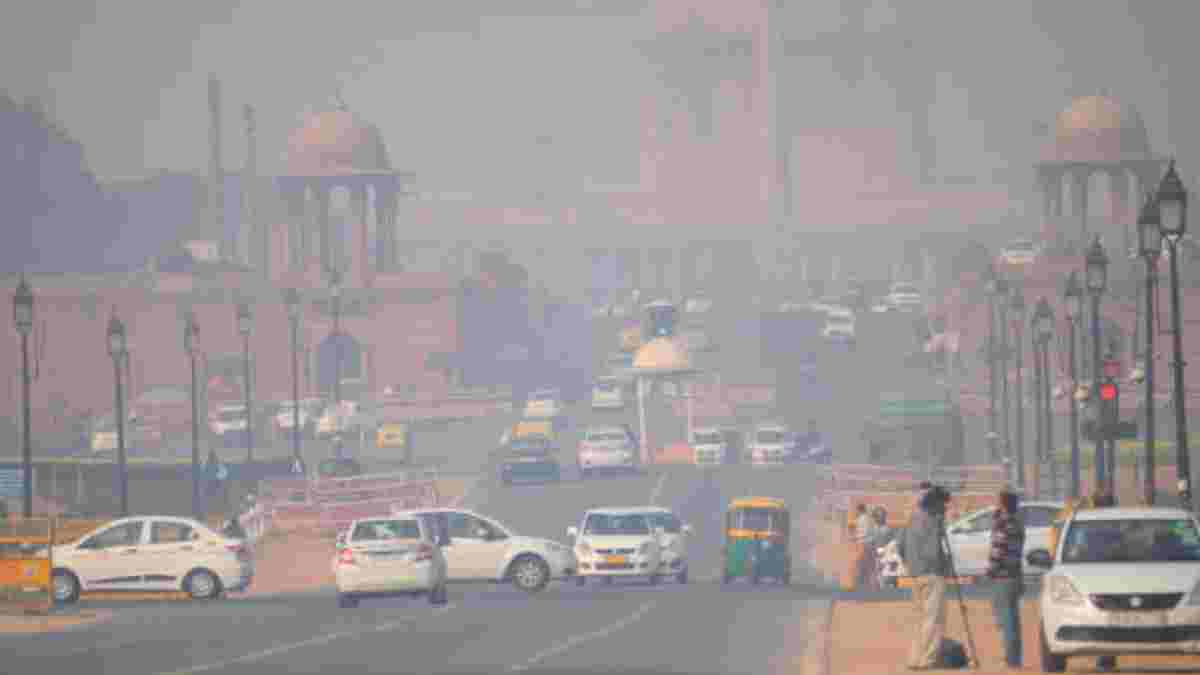
The new restrictions will cover vehicle entry, construction and demolition work, office attendance and parking charges. They will be alongside the Graded Response Action Plan (GRAP), but stricter emergency restrictions will take precedence where this is possible.
These measures are part of Delhi’s winter pollution-control framework and will be in force for different periods between November 2026 and February 2027.
1. Non-BS VI vehicles registered outside Delhi barred
Non-BSVI vehicles registered outside Delhi banned. Non-BS VI cars, buses and trucks registered outside Delhi cannot ply in the national capital from tomorrow (Wednesday). The decision was taken at a meeting of transport authorities chaired by Lt Governor Anil Baijal here today.
One of the most important changes relates to vehicles registered outside Delhi.
From November 1, 2026 to January 31, 2027, vehicles registered outside the national capital that do not comply with BS-VI emission norms will not be allowed into Delhi.
BS-VI vehicles, electric vehicles and CNG-powered vehicles will not be affected by this restriction. Ambulances, fire tenders, police vehicles and other specially exempted categories will also be allowed.
The rule could affect commuters travelling regularly from neighbouring NCR cities (Gurugram, Noida, Greater Noida, Faridabad and Ghaziabad).
Special enforcement teams, automatic number plate recognition cameras and an AI command centre are being used to monitor compliance. Violations will result in e-challans or other action under the regulations.
The government has also asked through-traffic to use peripheral expressways and other routes rather than passing through Delhi.
2. Construction and demolition activities are restricted
Construction dust is another major target of winter pollution control measures.
Dust-generating outdoor civil construction and demolition work will remain prohibited from November 1 to January 31 except for permitted essential public infrastructure projects.
The ban will be stricter between December 10, 2026 and January 20, 2027 when construction and demolition activities will be banned altogether (with some exceptions).
The Commission for Air Quality Management has also announced a separate NCR-wide construction and demolition restriction from November 5 to November 20.
Inspection teams will be deployed at construction sites. Violations can lead to stop-work notices, environmental compensation, sealing action, and legal action.
3. Government and Private Offices to Follow 50% Attendance
Government offices and private companies will have to follow suit with the government’s attendance policy of 50 per cent. The Labour Party’s pledge follows a poll showing that more than half of people did not believe that the current attendance policy for government offices was good enough.
The winter framework will also change workplace arrangements across Delhi.
Government and private offices should limit physical attendance to 50% between November 1 and January 31 (exceptions are essential and emergency services), with the rest of employees expected to work from home.
The government has also staggered timings for its offices to reduce peak hour traffic congestion.
Municipal Corporation of Delhi offices: 8:30 am to 5 pm
Delhi government offices: 10 am to 6:30 pm
Private employers are also being encouraged to adopt flexible working arrangements, carpooling and shared transport.
4. Parking Charges to Double
Parking will cost more during the winter pollution-control period.
Parking charges at authorised parking facilities across Delhi will be doubled between November 1, 2026 and February 28, 2027.
However, parking facilities owned and operated by Delhi Metro Rail Corporation are not subject to the increase in charges.
The idea is to discourage unnecessary private vehicle use and get commuters thinking about public transport.
5. No PUC Certificate, No Fuel
Another important rule is vehicles without a valid Pollution Under Control Certificate.
Under Delhi’s year-round pollution control framework, vehicles without a valid PUC certificate will not be supplied fuel at any fuel station.
This requirement extends beyond the November-to-January vehicle entry ban. Vehicle owners should therefore check PUC certificate validity before visiting fuel stations.
How Will These Rules Affect Daily Commuters?
People travelling into Delhi from neighbouring NCR cities need to check the registration location and emission standard of their vehicle before starting the journey.
Owners of non-BS-VI vehicles registered outside Delhi may have to use public transport, carpooling or another compliant vehicle during the restriction period.
Office workers may also have their weekly schedules disrupted because of the 50% physical attendance requirement. Those who continue commuting should factor in new office timings and higher parking costs.
The government has asked people to use buses and Metro trains, avoid unnecessary private vehicle trips, not burn open waste and report pollution violations.
Concerns Over the Vehicle Restriction
The vehicle-entry policy has also been criticized. Activist Amit Gupta asked whether older vehicles registered in Delhi were treated differently from similarly compliant vehicles registered in neighbouring NCR areas.
He said air pollution is a regional problem that affects the whole NCR and vehicle registration location should not be the only factor considered when deciding entry eligibility.
The debate is about how to implement pollution-control measures in a region where thousands of people travel daily between Delhi and neighbouring cities.
Now winter restrictions are in force commuters, employers and construction agencies will need to adapt their routines accordingly.




Comments