For decades, the journey to Sigandur, Karnataka’s Shivamogga district, was defined by a boat ride across the vast Sharavathi backwaters. The old Sigandur boat service was so much more than a mode of transport for people living near the reservoir and villages and families and pilgrims and vehicles that ran into the water generated by the Linganamakki Dam.
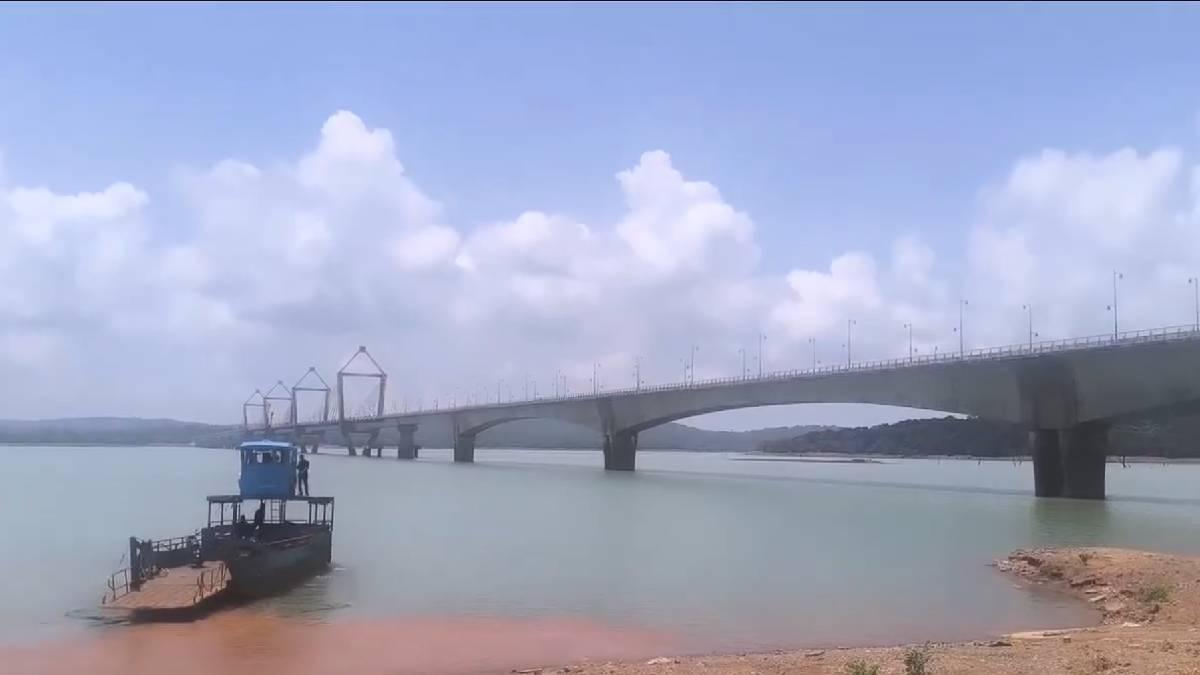
The ferry operated along the Holebagilu–Sigandur line carrying people and vehicles across the Sharavathi backwaters. Before a permanent bridge, travellers to Sigandur had to depend on the launch service, and often made their journey based on ferry timings and water conditions. In historical writings, the boat journey is called the key to connecting to communities that were cut off because of the Linganamakki project.
The ferry story is closely linked to the transformation of the Sharavathi Valley. Linganamakki Dam in the 1960s created a huge reservoir and inundated all land, forests and villages. Roads and land routes were destroyed by the rising waters, and many communities depended on boats to move.
Visitors, however, eventually absorbed the ferry trip into the experience of travelling to Sigandur and its famous Chowdeshwari temple. But for the local people, the boat was not only a tourist attraction but an essential link for everyday travel, transportation, and access to essential services.
The next chapter in that chapter started with the completion of the Sigandur Bridge, also known as the Ambaragodlu–Kalasavalli bridge. The bridge was inaugurated by Union Road Transport and Highways Minister Nitin Gadkari on July 14, 2025. It spans 2.44 kilometres from Sharavathi backwaters and provides a road connection from both sides.
The old Sigandur boat service in Sharavathi River was more than transport, it was a lifeline across the vast Linganamakki dam backwaters.
— Naveen Reddy (@navin_ankampali) September 10, 2026
Created after the Sharavathi project submerged roads and villages, the Holebagilu–Sigandur ferry carried people and vehicles across the… pic.twitter.com/Ea00AeiDKD
The new bridge has transformed the journey to Sigandur. Before the bridge was built, people usually had to wait for the ferry after long road diversions. The bridge has reduced travel time and made the ferry connection for regular road traffic obsolete.
But the landscape beneath and around the bridge is still quite large.
Linganamakki Reservoir is not only a lake in nature. It is a transformed valley of the Sharavathi River, with the backwaters spread over a deeply indented landscape of arms, islands and submerged terrain. At high reservoir level, the water spreads across a huge area, and the Sharavathi valley has a whole new look.
The reservoir’s immense size also explains why connectivity was such a challenge for decades. The road network that once connected communities across the valley was disrupted when the dam inundated the landscape. In many places, water replaced roads and turned a simple land journey into a boat journey.
The old ferry became a symbol of life around the reservoir. Vehicles would be loaded onto the launch, passengers would cross the water, and communities on opposite shores remained connected despite the geography created by the dam.
Today, the 2.44-km Sigandur Bridge is a new era for the area. It provides faster and more reliable connectivity along with tourism and easier access to Sigandur Chowdeshwari Temple. The bridge is also a key engineering landmark and has been described as one of India’s largest cable-supported road bridges.
But the ferry’s history will not end with better connectivity.
For generations, the Sigandur launch was part of daily life in the Sharavathi valley. And it was not only passengers and vehicles but also memories of a landscape that had been transformed by one of Karnataka's largest hydroelectric projects.
Today, the boats are not going to dominate the road journey to Sigandur, but their story is closely tethered to the history of the region. The ferry represents a time when water was a barrier and a highway— dividing communities in the same way that the only real way to connect them was the ferry.
The new bridge may have changed how people cross the Sharavathi backwaters, but the old Sigandur boat service remains an important chapter in the story of the Linganamakki reservoir, the Sharavathi valley and the communities that adapted to a landscape reshaped by water.