When we think of rainforests, Brazil or the Democratic Republic of the Congo are likely to come to mind.
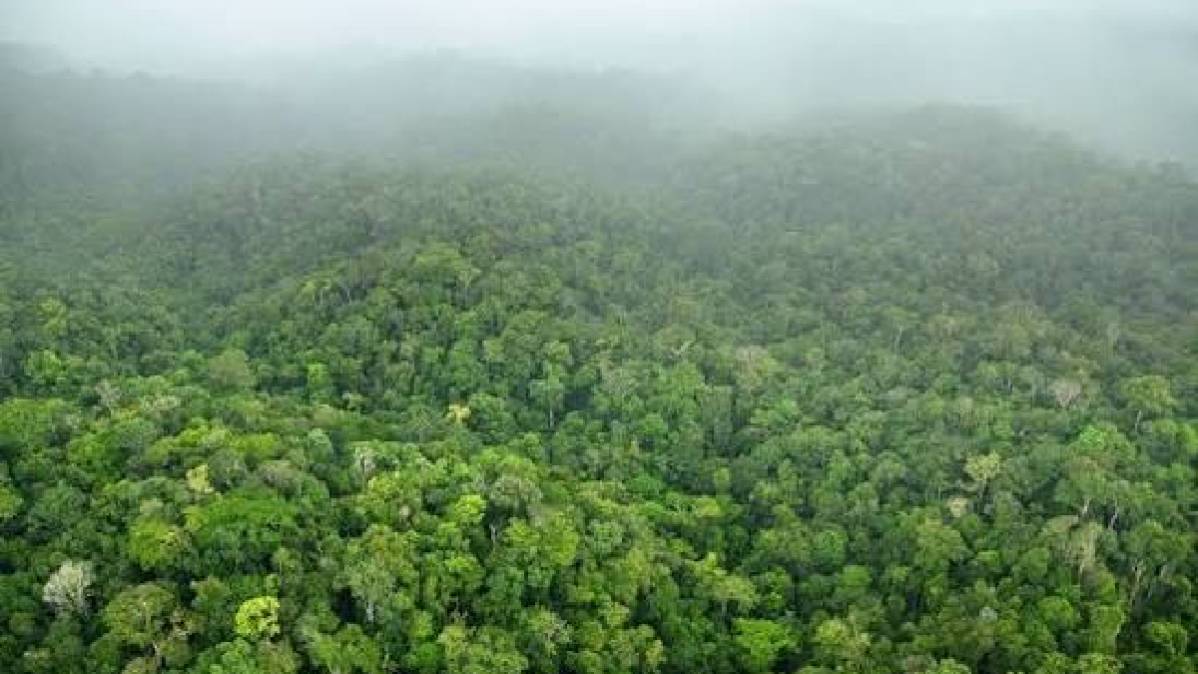
Yet the world's most forested country is Suriname, a small South American nation where an astonishing 93% of the land is tropical rainforest.
This extraordinary natural treasure makes Suriname one of the greenest and most environmentally significant countries on Earth.
Suriname borders Guyana, French Guiana, and Brazil on the northeast coast of South America. Despite being a very small country that has only 650,000 people, it's extremely rich in biodiversity.
Its forests are a safe haven for thousands of plant and animal species which are found nowhere else in the world.
Suriname's rainforest is part of the Guiana Shield, one of the oldest geological formations on Earth.
Its vast ecosystem is one of the world’s most pristine tropical forests and plays a vital role in regulating the planet’s climate as it absorbs huge quantities of carbon dioxide.
With global climate change at the forefront of everybody’s mind, Suriname is currently a good example of sustainable forest conservation.
A great deal of the reason Suriname has managed to preserve so much of the forest is that it has very low population density and very few industrial developments.
Logging and deforestation, in contrast to many other tropical countries, have gone relatively undisturbed with little or no large-scale logging and deforestation.
It has also established a number of protected areas, one of which is the Central Suriname Nature Reserve, a UNESCO World Heritage Site with a total area of nearly 1.6 million hectares of untouched rainforest.
The forests in the country are rich in biodiversity, including jaguars, giant otters, harpy eagles, tapirs, sloths, and hundreds of colorful bird species.
Scientists are finding new species in the countryside of Suriname all the time, highlighting the area’s ecological worth.
The rainforest is more than an environmental asset; it’s also a boon to Indigenous and Maroon communities who have been coexisting with nature for generations.
Their traditional knowledge of medicinal plants, hunting, and forest management contributes significantly to conservation efforts.
Eco-tourism is slowly becoming one of Suriname’s growing industries. Visitors can experience dense jungles, cruise along pristine rivers, encounter exotic wildlife, and engage with authentic cultural traditions while minimizing environmental impact.
Adventure travelers who wish to discover something different in a country that’s rarely visited are increasingly attracted to the land’s undiscovered natural beauty.
Suriname's commitment to protecting its forests has received recognition from around the world. The country is one of the few carbon-negative nations in the world, meaning its forests absorb more greenhouse gases than the country emits.
This success is proof that economic development and environmental protection can be achieved through careful planning and responsible policy.
Suriname is a lesson in nature being respected and protected.
Not only do rainforests protected from deforestation help to keep biodiversity alive, but they are the very heart of the planet’s future.