India’s architectural history extends well beyond grand forts and palaces and monuments. In villages and towns and in the older homes of the country, the country’s diverse climate, materials, communities and ways of life are reflected in traditional homes. Timber houses in the Himalayan mountains to courtyards in Rajasthan and sloping-roof homes in Kerala give travellers a window into how people actually adapted their homes to their surroundings.
Traditional houses can be destinations in their own right for travellers interested in culture and heritage. Many are still occupied, while others have been preserved as museums, heritage properties or cultural landmarks. And it is a chance to learn about local traditions and architectural techniques that have been developed over generations of people.
Kerala’s Nalukettu Houses
Hence Kerala’s traditional nalukettu house is very much associated with the architectural history of the state. Most of the homes built in Kerala surround a central open courtyard called the nadumuttam. In fact, the courtyard provides a natural way of getting the light in the house and also is very much a social space.
Traditional nalukettu homes in Kerala are usually tiled, sloping roofs designed to deal with Kerala’s heavy monsoon rainfall. Wooden pillars, carved details and open-air interiors are also characteristic features. Tourists in Thrissur, Palakkad and Kannur can see examples of Kerala’s traditional home architecture.
Rajasthan’s Historic Havelis
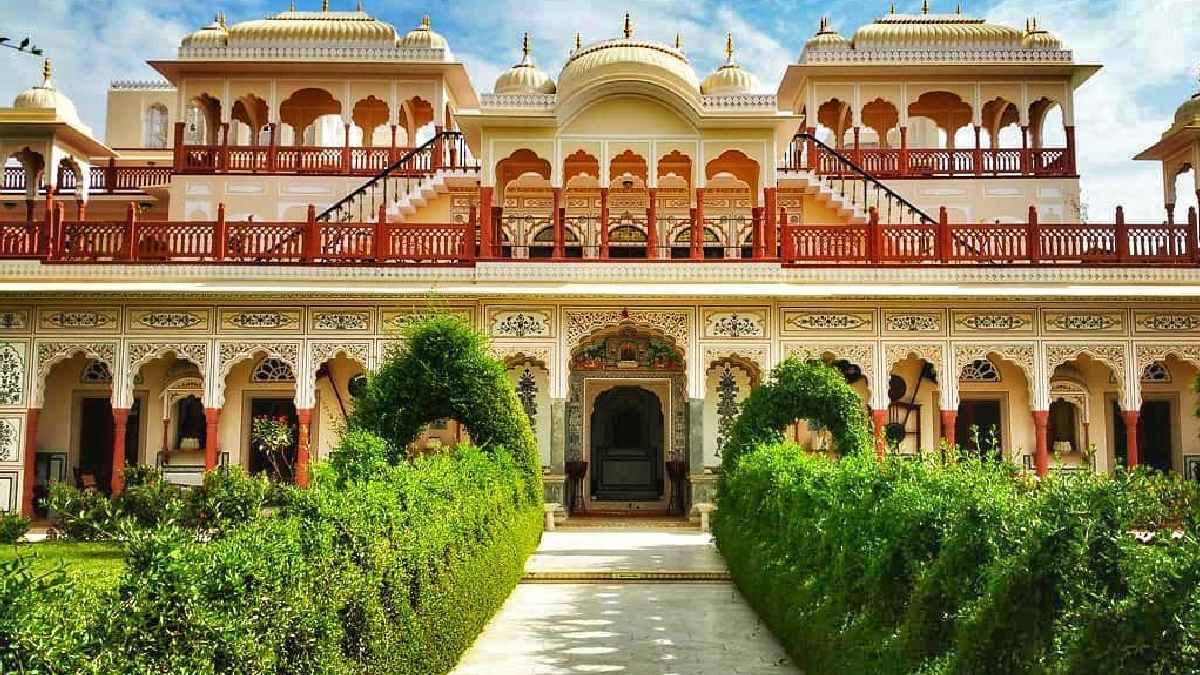
Rajasthan is famous for its grand havelis (see Jaisalmer, Jodhpur, Bikaner and Mandawa) and historical cities. These old mansions belong to wealthy merchant families and are usually heavily decorated with elaborate façades, balconies in the interior and large yards.
Jaisalmer’s golden sandstone havelis are especially distinctive. Their elaborate stonework shows the craftsmanship of earlier generations and the thick walls and shaded courtyards also helped homes cope with a hot and dry climate.
It is in the Shekhawati region that Mandawa and Nawalgarh are known for painted havelis with elaborate murals. Walking through these ancient villages can be like an architectural walk through the merchant history of Rajasthan.
Assam’s Stilt Houses
The traditional architecture in Assam reflects the state’s climate and geography. In flood-prone areas, chang ghars are raised up above ground on stilts. This elevated structure can also keep the living spaces from floodwater while allowing air to circulate underneath the house.
Bamboo and timber have been important construction materials in Assam because they are locally available and relatively lightweight. The architecture illustrates how communities came up with practical solutions to tough environmental conditions.
Himachal Pradesh’s Kath-Kuni Architecture
In parts of Himachal Pradesh, there is traditional kath-kuni architecture in the villages and mountain settlements. The technique is based on alternating layers of timber and stone to make strong walls.
The construction style is particularly suited to the Himalayan environment, where buildings need to withstand cold temperatures and, in some regions, seismic activity. Traditional houses and temples with kath-kuni construction can be found in parts of Kullu, Shimla and other Himalayan areas.
Goa’s Portuguese-Influenced Homes
Goa’s traditional houses reflect a mix of Indian and Portuguese architectural influences. Many older homes have colourful façades, decorative balconies, big windows and tiled roofs.
The balcao, a raised front seating area, is a signature of many traditional Goan homes. These houses were generally built around socialization, ventilation and protection from the tropical climate.
Travellers exploring villages and heritage neighborhoods away from Goa’s busiest beaches can find traditional homes that offer a different perspective on the state’s cultural history.
Gujarat’s Pol Houses
Ahmedabad’s historic pols are another fascinating case of traditional Indian urban architecture. A pol is a residential neighbourhood comprised of very close-packed homes interspersed through narrow streets.
Many houses have intricately carved wooden façades, interior courtyards and shaded spaces. The compact structure encouraged community interaction and provided shade in Gujarat’s hot climate.
The historic pols in Ahmedabad are particularly interesting for travellers who want to experience traditional architecture within a living urban environment rather than in a standalone monument.
Kashmir’s Traditional Wooden Houses
Kashmir has traditional homes, which are representative of the cold climate and rich history of the use of timber. Wooden structures, sloping roofs and decorative crafts are prevalent in traditional Kashmiri architecture.
Srinagar and surrounding areas are home to ancient buildings that are representative of local craftsmanship and the region’s traditional building traditions. Some of the traditional buildings display the same materials and techniques to withstand snow and cold.
Chettinad Mansions of Tamil Nadu
The Chettinad region in Tamil Nadu is home to some of India’s most impressive traditional residential architecture. In Chettinad and Karaikudi, large mansions were constructed by the Nattukottai Chettiar community.
These homes have open courtyards, ornate pillars, colourful tiles and elaborate woodwork. Some of the mansions also had elements from India and abroad, in line with the historic trade links of the community.
Today, several restored Chettinad properties also function as heritage hotels, allowing visitors to experience the architecture while staying inside these historic buildings.
What are traditional houses and why do people need them for travelling?
Traditional houses are more than beautiful photographs. They show how architecture responds to climate, geography, materials and social customs. Courtyards can provide ventilation, raised structures can respond to flooding, sloping roofs can keep heavy rain off and thick walls can help manage extreme temperatures.
Visiting these homes can, if done right, also help to preserve heritage for travellers. Choosing heritage stays and visiting museums and supporting local guides and craftspeople is key to preserving traditional knowledge and architecture.
As a result, India’s traditional houses are an integral part of the travel landscape. From Rajasthan’s ornate havelis and Kerala’s courtyard homes to Assam’s elevated houses and Himachal Pradesh’s timber-and-stone structures, each region has a different architectural story to tell. Looking at these homes can transform a regular trip into an exploration of India’s cultural and architectural heritage.