
Winter holidays allow us to visit snow-covered mountains, experience chilly weather and see destinations in a different way. But travelling in colder months is more difficult than going on holiday any other time of year – what you pack will make all the difference between comfort and safety.
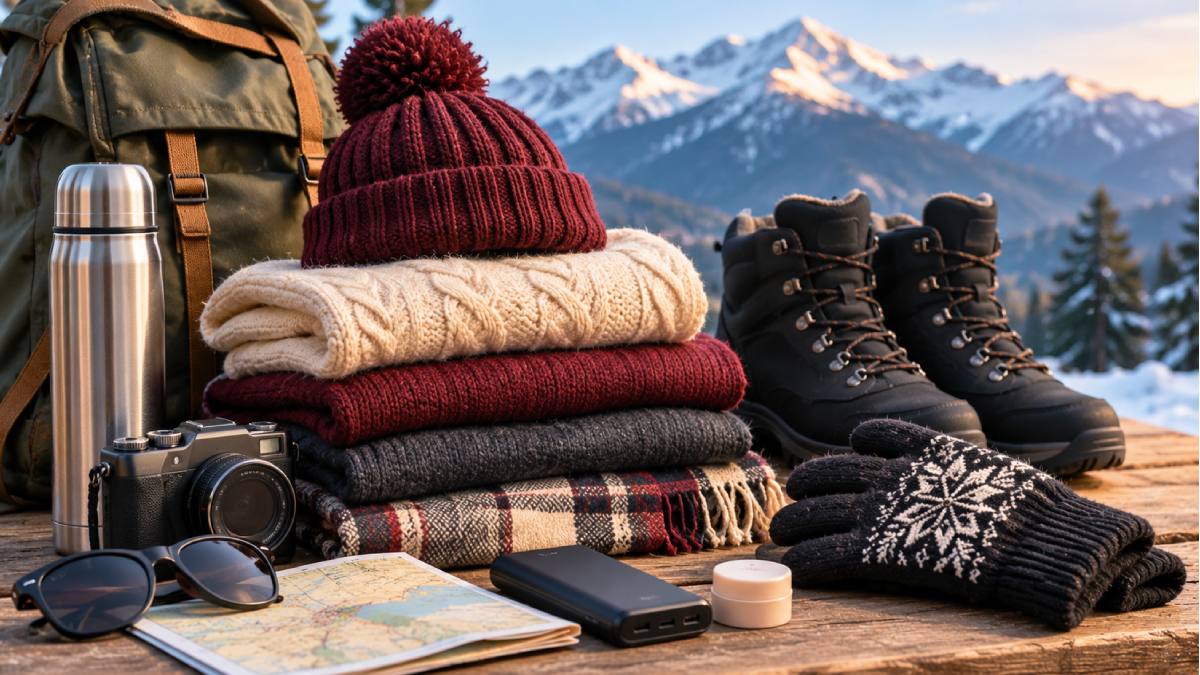
So whether you’re off on a mountain break, city break in winter or holiday to snowy destination here is a practical checklist of things travellers should carry.
1. Warm Clothing for Changing Temperatures
Warm clothing should be the first thing travellers think about when planning a cold weather holiday. Rather than bringing only bulky sweaters with them, travellers can layer up for the day so they don’t overheat.
Essential clothing includes:
- Thermal tops and leggings
- Sweaters, hoodies or fleece jackets
- A warm winter coat or insulated jacket
- Comfortable trousers and jeans
- Woollen or thermal socks
- Warm nightwear
- Extra clothes for unexpected weather changes
A three-layer system clothing works well for many cold weather trips a base layer manages moisture, a middle layer provides insulation and an outer layer protects against wind, rain or snow.
2. Winter Accessories to Keep You Warm
Small accessories can be very useful when temperatures drop (early morning/evening).
Remember to pack:
- Woollen caps or beanies
- Gloves or mittens
- Scarves or neck warmers
- Ear covers
- Thick socks
- Hand warmers, if required
Travellers visiting places with snowfall or freezing temperatures should pay extra attention to protecting their hands, feet and head.
3. Comfortable and Weather-Appropriate Footwear
Footwear is another thing to bear in mind (especially if you’re going sightseeing, trekking or doing outdoor activities).
Bring comfortable walking shoes or insulated boots with good grip. Waterproof footwear is handy if you are going somewhere rainy (rain/snow/slushy roads), also avoid wearing new shoes during the trip as they may make long walks uncomfortable.
A lighter pair of shoes or slippers can also be useful for indoor activities.
4. Skincare and Personal Care Products
Cold weather and low humidity can dry out skin and lips. Travellers should carry basic personal care products to keep their skin comfortable during the journey.
Useful items include:
- Moisturiser or body lotion
- Lip balm
- Sunscreen
- Hand cream
- Face wash
- Shampoo and conditioner
- Personal hygiene products
- Hand sanitiser and tissues
Sunscreen is still necessary in snowy destinations because sunlight reflected from snow increases exposure to ultraviolet radiation.
5. Medicines and a Basic First-Aid Kit
A small medical kit is useful when travelling (especially if visiting remote mountain destinations where pharmacies may not be easily accessible).
Consider carrying:
- Regular prescription medicines
- Basic pain and fever medication
- Bandages and antiseptic wipes
- Motion sickness medication, if needed
- Any personal allergy medication
- Prescriptions and relevant medical information
Travelers with existing medical needs should consult their doctor before departure and carry enough prescribed medication for the entire trip.
6. Gadgets and Travel Accessories
Electronic devices help travellers find their way in new places, remember memories and stay connected but cold weather can affect battery performance so protect devices.
Do not forget:
- Smartphone and charger
- Power bank
- Camera and spare batteries
- Headphones
- Universal travel adapter for international trips
- Charging cables
- Offline maps and downloaded travel documents
Keep phones and cameras out of the rain and extreme cold whenever possible.
7. Important Documents and Travel Essentials
Before you leave make sure all documents are in order and easily accessible.
Carry:
- Government-issued identity proof
- Flight, train or bus tickets
- Hotel booking confirmations
- Travel insurance documents
- Driving licence, if required
- Emergency contact details
- Cash and debit or credit cards
Digital copies of important documents can also help if physical copies are misplaced.
8. Snacks, Water and Emergency Supplies
Long journeys, weather delays and unexpected delays can make basic supplies especially useful. Long journeys, weather delays and unexpected delays can make basic supplies particularly useful. Long journeys, weather delays and unexpected delays can make basic supplies particularly useful.
Pack a reusable water bottle, snacks (packaged), dry fruits and energy bars. If travelling through remote or snow covered areas extra food, drinking water, warm clothing and a flashlight should be carried as well.
People going on a winter road trip should check their vehicle before they go and carry a first aid kit, spare tyre torch etc. emergency equipment with them.
9. Check the Weather Before Packing
Not every winter destination is the same. A trip to a relatively mild winter city will require different clothing than a holiday in high altitude region with snowfall.
Before packing, check:
- Expected daytime and nighttime temperatures
- Rainfall and snowfall forecasts
- Local weather warnings
- Road and transport conditions
- Accommodation availability
- Clothing requirements for planned activities
People trekking, skiing or doing other outdoor activities should also check if specialised equipment is needed.
Final Thoughts
A comfortable winter holiday starts with packing well. Warm clothes, suitable footwear, toiletries, medicines and travel documents should all be on every cold-weather packing list.
Pack for your destination and activities rather than what you think you’ll need. A bit of preparation can help travellers stay warm, deal with weather changes and have a winter holiday without worry.



Comments