The new Dacia Spring was launched in Europe which is a major update of the brand’s small electric car and a glimpse into what the Renault Kwid EV will look like in India. Renault has not officially confirmed the electric Kwid in India, but the very close relationship between Renault and Dacia and the common electric vehicle architecture makes the new Spring a good reference point for the buyers who are waiting for an affordable Renault EV.
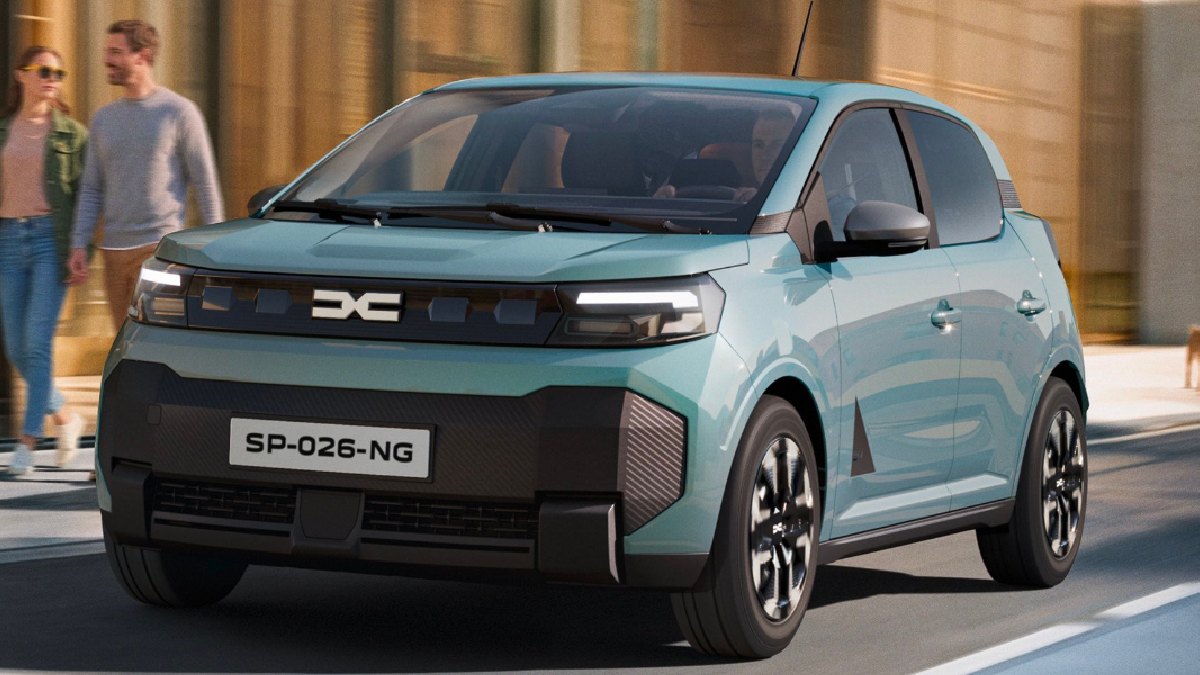
The second generation Dacia Spring is based on Renault Group’s RG-EV small-car platform and features a wider body, more modern design, a larger battery and longer driving range. The model has been designed for urban mobility so it is very suited to the Indian market and the affordable, compact electric car could appeal to city commuters.
The new Spring has an increased width that’s been one of the most significant changes. The EV is 18 mm wider than the original vehicle which is better for road presence and possibly offers the space in the cabin. The car will be produced in Dacia’s Novo Mesto plant in Slovenia, highlighting its European manufacturing base.
Under the hood, or rather under the body, the new Dacia Spring has an electric motor with 80 hp and 175 Nm of torque. It can go from zero to 100 km/h in 12.1 seconds and has a claimed top speed of 130 km/h. These numbers may not make it a performance-focused EV, but they are just right for the vehicle to be a small urban electric car.
The Spring is powered by a 27.5 kWh LFP battery pack and has up to 250 km range in the WLTP testing cycle. If a future Renault Kwid EV were to have similar specifications, it would provide a practical balance between battery size, range and affordability. But the India-spec Kwid EV could be based on a different battery pack, motor calibration or equipment package.
Charging is another area where the new Spring gives us useful clues. Depending on the charging setup, the battery can take about nine hours to charge using a standard home socket. With a 50 kW DC fast charger, a 15-80 per cent top-up can take about 28 minutes. Such fast-charging capability could make a much more affordable electric hatchback more convenient for Indian buyers who may not always have access to overnight home charging.
Inside, the Spring has modern technology to make everyday life easier. A 7-inch digital instrument cluster is available, with higher variants like the Journey trim getting a 10.1-inch touchscreen infotainment system with wireless Apple CarPlay and Android Auto. The vehicle also has connected navigation services for up to eight years so you’ll have what could be a very important feature for the budget EV market.
The car’s small dimensions should also be a positive factor for India. The Spring is designed to be manoeuvrable in very narrow urban cities and in tight parking spaces, with a turning radius of 4.95 metres. These features could make the underlying concept particularly suitable for Indian cities where compact dimensions and ease of driving are often crucial factors to drivers.
The connection with the Renault Kwid EV has attracted considerable attention because test vehicles similar to the Dacia Spring have been spotted on Indian roads. This has fuelled speculation that Renault could use the Spring’s platform and basic architecture as a starting point for an India-specific electric model carrying the Kwid name.
Reports have even suggested that the Renault Kwid EV could eventually be priced within the Rs 7 lakh to 11 lakh range and compete with affordable electric models such as Tata Tiago EV and MG Comet EV. If Renault manages to localise production as well as battery costs and put it into India it will be one of the more affordable electric options on the Indian market.
However, Renault has not formally announced the Kwid EV's final specifications, launch date or price for India. So the Dacia Spring’s 27.5 kWh battery, 250 km WLTP range and 80 hp motor should not be considered as confirmed figures for the Indian car. Renault could have to upgrade the battery, motor, equipment and charging system to meet the local customer requirements and price targets.
The company might also be more focused on localisation in India. The local sourcing and manufacturing would help Renault reduce production costs and possibly lower its production cost in line with price. In addition, India-specific suspension tuning, ground clearance, battery thermal management and cabin features could also result in a car that is different from the European Spring in some aspects.
The new Dacia Spring is therefore better viewed as a technical and design indicator, rather than as a confirmation of the Renault Kwid EV for Indian EV buyers. Its platform, battery chemistry, motor output and urban-focused dimensions offer an indication of what Renault Group’s affordable electric technology can deliver in a compact package.
If Renault brings a similarly priced electric Kwid to India with strong localisation, practical range and competitive charging capabilities it could be a key model in the country’s growing affordable EV market. For now, however, buyers will have to wait for Renault to officially reveal the India-specific Kwid EV and confirm its final specifications.