
Renault will launch the Duster Hybrid in India on October 17, 2026 and it will be a strong-hybrid vehicle. The new model will appeal to those who want more mileage but not a fully electric car. The hybrid version will be able to compete with the Maruti Suzuki Victoris, Grand Vitara and Toyota Urban Cruiser Hyryder with 29 kmpl ARAI mileage.
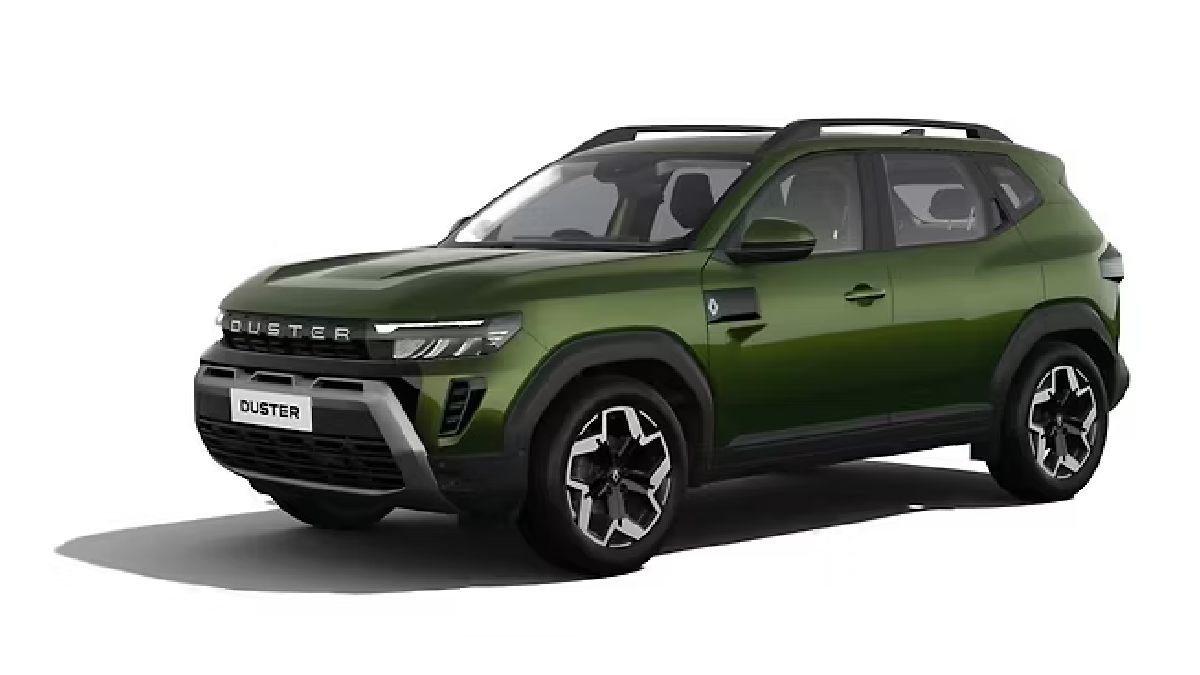
This is significant as Duster already has turbo-petrol engine options (no diesel powertrain) and this will be an alternative for customers who value fuel economy (not least in city traffic). Bookings have already opened for a small amount of Rs 21,000, but Renault has yet to announce the official price, variant list/set-up and equipment details. What are some tips for prospective buyers?
1. The Hybrid Will Become the Third Engine Option
Renault Duster is currently available with 1.0-litre and 1.3-litre turbo-petrol engines. A strong hybrid powertrain will give customers a third choice for engines other than petrol engines.
The hybrid will be an especially attractive option for users who drive frequently in urban environments and want to cut back on fuel consumption. And since the Duster does not have a diesel engine, the new powertrain could be the driver’s choice for long distances or frequent stop-and-go traffic. The market performance will depend on the final price, real-world efficiency and the features offered across variants.
2. ARAI-Certified Mileage Stands at 29 kmpl
One of the largest talking points is the claimed fuel efficiency of 29 kmpl. As per the figures, the Renault Duster Hybrid will be in a group with the Maruti Suzuki Victoris with 28.65 kmpl and the Maruti Suzuki Grand Vitara and Toyota Urban Cruiser Hyryder with 27.97 kmpl.
The Duster's certified figure is 0.35 kmpl higher than the Victoris and 1.03 kmpl higher than the Grand Vitara and Hyryder. While Renault has a numerical advantage on paper, this may not translate into the same result on the road.
Renault India has also said that the hybrid system can cover up to 80% of city driving in electric mode. This is a manufacturer claim rather than a separate certified mileage figure. Actual fuel economy will depend on traffic conditions, driving style, road conditions, air-conditioning use and other factors.
3. The 1.8-Litre Hybrid System Produces 160 hp
The Duster Hybrid uses a naturally aspirated 1,789cc four-cylinder petrol engine with two electric motors. The system consists of a 20 hp generator and a 49 hp electric motor driving the wheels. A 1.4 kWh battery is used and the combined system output is 160 hp and 172 Nm.
Unlike the battery electric vehicle, the Duster Hybrid does not need an external charging connection. Its battery is replenished as we drive through the hybrid system, including energy recovery during deceleration. The petrol engine and electric motors can be used in different ways according to the car’s driving conditions and the system’s requirements.
This is to improve efficiency while still providing petrol-based vehicle convenience. But in a test drive, the customer should check the performance and refinement of the vehicle and not just its output numbers.
4. Its Automatic Transmission Differs From Rival Hybrids
The Renault Duster Hybrid has a multi-mode automatic transmission with fixed ratios and is different from e-CVT systems for Toyota-based strong hybrids. The difference could alter the driving experience, especially when accelerating or switching between electric and petrol power.
An e-CVT generally gives a smooth, step-free feel while Renault's transmission makes changes in engine speed and operating mode more obvious. For every driver, neither arrangement is automatically better, so a test drive will be important for customers comparing the Duster with the Grand Vitara or Hyryder.
The Duster's 1.4 kWh battery is also larger than the 0.60 kWh battery cited for the Toyota hybrid system. But the battery capacity alone does not determine the overall efficiency, because the full powertrain, vehicle weight, energy management and driving conditions all play a role too.
5. Bookings Are Open, but the Final Price Is Awaited
Renault has launched the Duster Hybrid online and in dealerships for Rs 21,000. But the firm has not announced the price or the full range of variants.
For comparison, the existing Duster range is priced between Rs 10.49 lakh and Rs 18.69 lakh. The hybrid is expected to cost more and estimates come in an Rs 18 lakh to Rs 23 lakh range. This is only an indicator, not an official price announcement.
Before booking, customers would need to know the dealership terms before paying the token amount. They should check if the booking payment is refundable, whether the price will be guaranteed, if a variant can be reserved and when it will be delivered. It is also worth waiting for the final variant-wise feature list and on-road price before comparing with rival hybrid SUVs.
Renault Duster Hybrid: What Buyers Should Consider
The Renault Duster Hybrid is a competitive vehicle with 29 kmpl efficiency, a 160 hp combined powertrain and a battery that doesn’t require external charging. That could make it the one to buy for an SUV with strong hybrid technology.
But the final verdict will depend on pricing, equipment, real-world fuel economy, transmission behaviour and ownership costs. To the best of our knowledge, buyers should first compare the official specifications and on-road prices and take a test drive before booking a Duster Hybrid. An announcement on the launch date will be made on October 17 so we will soon know more about the Duster Hybrid.






Comments
Leave a Comment