As preparations for Ganesh Chaturthi gather momentum across Karnataka, a quiet art tradition is coming alive in Magadi town of Ramanagara district. Here, local artisans are forging clay into ornamental idols of Lord Ganesha, with the family tradition that has been passed down through three generations. And their work epitomizes not only the festival spirit but also the durability of traditional craftsmanship.
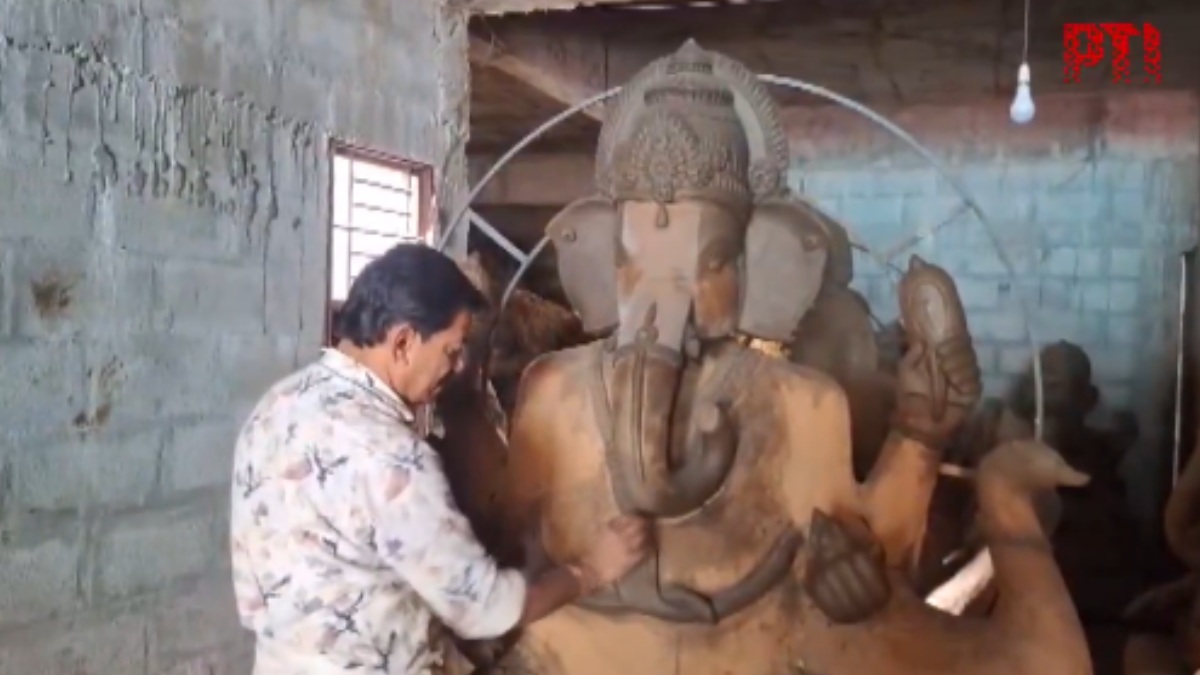
In workshops and small workshops across Magadi, artisans begin making and shaping clay and then we see that clay is made into recognizable forms of Lord Ganesha. What appears to be a simple lump of earth becomes an intricate idol with time, skill and experience. All curves and facial features are carefully sculpted by hand and artisans are following techniques from the past.
The craft is intimately linked with local planning for Ganesh Chaturthi, one of the most celebrated festivals for Lord Ganesha. The demand for idols increases before the festival, as families, neighbourhood groups, temples and community organisations get ready for celebrations. For Magadi’s traditional artisans it is a cultural event and a huge part of their annual income.
The artisans who are still following this tradition of traditional clay use pure clay and the use of pure clay is very much critical. Clay has long been used for idol-making for craftsmen to make it easily mouldable and allows them to create a detailed clay idol. Traditional clay idols can also be as eco-friendly as idols made of an ordinary material that is difficult to break down (or less so, when it’s made without harmful chemical additives).
The process of making a Ganesha idol takes a great deal of patience. Craftsmen must understand the clay’s consistency, the right amount of pressure to apply when shaping different sections and how to ensure the stability of the structure. The basic shape is slowly developed and small details are added to each idol. Facial expressions, ears, trunk, hands and other details need to be perfectly formed, and each idol is unique in its own right to be a character.
For families involved in the craft the knowledge is not just a professional skill but part of their heritage. The three generations of idol-making in Magadi illustrates how traditional crafts survive when knowledge is passed down from parents and grandparents to younger generations of the family. Each generation learns by watching and practicing and gradually develops the confidence to work independently.
The artisans’ work also shows the link between festivals and local economies. A traditional festival creates seasonal opportunities for craftspeople, potters, decorators, flower sellers, musicians and many more small businesses. And Ganesha idol-making is more than an art form in itself; for families who engage in the craft it can also be a lucrative source of income during the festival period.
At a time when mass-produced festival idols are widely available, handmade clay idols are still very compelling. Each idol reflects the artisan’s individual craftsmanship (from the proportions of the figure to the smallest decorative details). Buyers who purchase such idols not only receive a symbol of the festival but also support traditional craftsmen and their families who are trying to keep it alive.
The story of Magadi’s artisans is also a reminder that cultural heritage is generally preserved in ordinary workshops and not big institutions. Skills that have survived decades may be dependent on continued demand and younger generations taking interest and communities recognising the utility of traditional methods.
Ganesh Chaturthi is a particularly meaningful platform for this heritage to be shown. As devotees prepare to welcome Lord Ganesha into their homes and communities, the idols made by Magadi’s artisans carry with them the effort and knowledge of generations. The festival is therefore not only a celebration of faith but of craftsmanship and community traditions.
The quiet activity in Magadi shows a living tradition. Artisans are slowly and methodically moulding clay into Ganesha idols and their techniques are still applicable to the next generation. Their art connects the present with the past and is a part of the festive atmosphere of Karnataka.
VIDEO | Ramanagara, Karnataka: Magadi artisans carry forward age old tradition of making Ganesha Idols with pure clay.
— Press Trust of India (@PTI_News) September 2, 2026
In a quiet corner of Magadi town in Karnataka, the festive spirit of Ganesh Chaturthi is taking shape in the hands of artisans moulding clay into Lord Ganesha… pic.twitter.com/lZYGPpwCEY
As Ganesh Chaturthi approaches, the clay workshops in Magadi will continue to be busy with artisans completing idols for families and communities. Their dedication shows how traditional craftsmanship can still thrive when cultural practices and local skills come together. In every handmade idol, the artisans preserve a small piece of their family history while helping devotees celebrate one of India’s most cherished festivals.