Smartwatches are still a big thing but a much newer category of wearables, screenless wearables, are now being used as they are able to provide a lot of functionality without a screen. The difference may be obvious but it is two completely different approaches to the wearing of wearables.
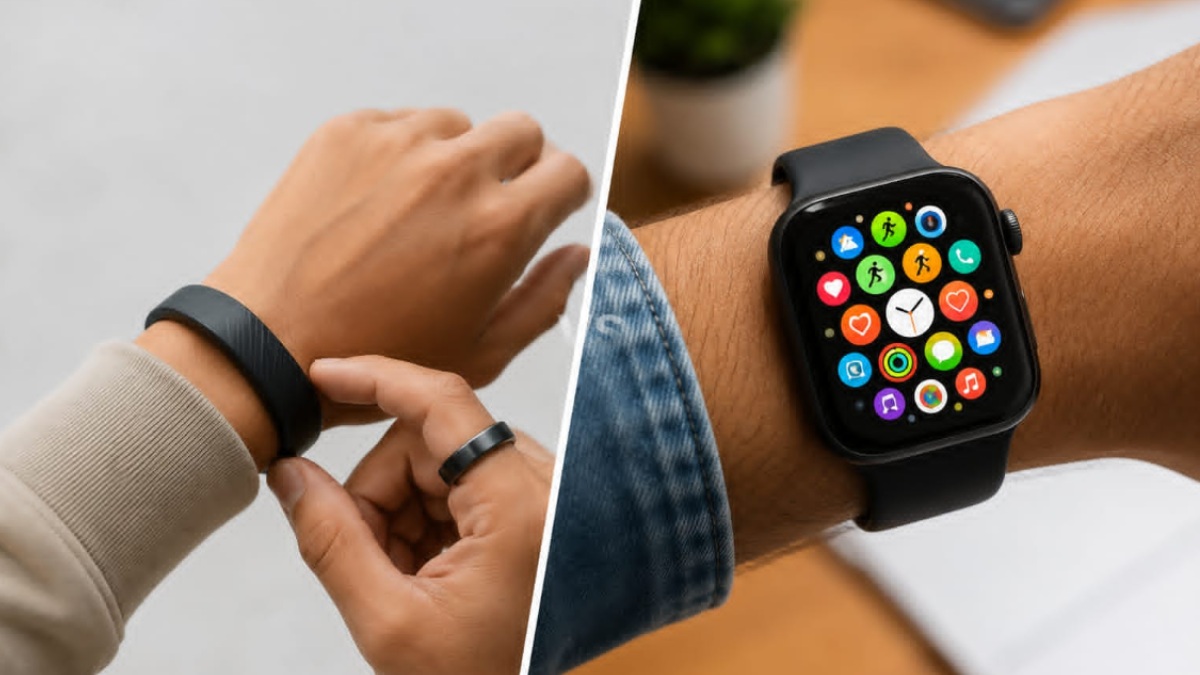
App and function wise, a smartwatch is a small (connected) computer on your wrist. It usually has a touchscreen or other platform to access apps, notifications, fitness information and settings. A smartwatch can show incoming messages, calls, weather updates, navigation directions, calendar appointments and health information depending upon the model. Many models also support music controls, contactless payments, voice assistants and third party apps.
Screenless wearables are the opposite. Instead of a screen that they would like users to look at, they usually communicate through vibration, audio, lights, gestures or smartphone-connected applications. In general, the goal is to reduce the distraction of wearing wearable technology but still provide data and/or alerts. Smart rings, certain fitness bands, smart earbuds, etc. could be some of the compact connected devices.
At the end of the day, the information is on your wrist. With a smartwatch, information is available straight to your wrist. Users can look up at the screen to check a notification, read the short message, check your heart rate data or find out what workout is going on. A screenless wearable typically requires users to use another device (e.g., phone) for a lot more information.
This distinction can make screenless devices especially attractive to people who want technology that stays out of the way. Without a bright display constantly demanding attention, a screenless wearable can give a quieter experience. Rather than forcing users to keep checking a screen for anything new or helpful, it can provide notifications or passively gather information. This approach may also be attractive to people who already have a smartphone and don’t need another display on their wrist.
Smartwatches have a big advantage of convenience and independence. A smartwatch can provide information immediately without a smartphone to be taken out for every interaction. Depending on the model and connectivity options, users may be able to make calls, respond to messages, navigate, or access other services directly from their wrist.
Health and fitness tracking is another area where both categories overlap. Smartwatches often come with a sensor to monitor things like heart rate, activity levels, sleep patterns and workouts. Some of the most advanced devices even have health-related measurements in addition. Screenless wearables can also have sophisticated sensors despite a lack of a screen. A smart ring, for example, can continuously measure some health and exercise and show it through a smartphone app.
Battery life may also differ greatly. A device without a power-hungry screen might be able to operate for longer periods between charges, but battery life will depend on the sensors, connectivity and functions included. Smartwatches require more frequent charging due to the high computational power needed in displays, processors and connectivity features.
Design is also key. Smartwatches are usually designed to look like a traditional watch while integrating digital components. Screenless wearables can be much more discreet. A smart ring can look like an ordinary piece of jewellery while other screenless devices can be made into small accessories that blend into everyday clothing or personal items.
Privacy and attention will increasingly become as important in wearable technology as well. Smartwatches clearly show information immediately, and that is convenient but can also encourage frequent interaction. Screenless devices reduce the amount of information visible at the point of use. Detailed health or activity information can instead be kept in a companion smartphone application.
Neither category is better than the other. The choice depends on how someone wants to use wearable technology. A smartwatch is better suited to users who want one device that is an all-in-one wrist-based device with a display, apps and an easy way to get information. Screenless wearables may serve the users who favour simplicity, discreet design, passive tracking, and less screen interaction.
The two categories will continue to complement each other rather than replace each other as well. Someone may need a smartwatch for notifications and navigation but another one for specialized health or fitness tracking. As sensor technology is reduced and more efficient, manufacturers are now able to build connected devices that perform functionality and not have a screen.
And the difference is in the display. Smartwatches put information right on your wrist and you can interact with it right away. Screenless wearables move that interaction away from the wearables themselves and to sensors, subtle alerts, and smartphone experiences. With the increase in awareness of screen time and digital distractions, screenless technology could be one of the most prevalent technologies in the next generation of wearables.