
In a rare and complex medical feat, doctors of Ballari Medical College and Research Centre (BMCRC) have successfully operated to remove the foetus from the abdomen of a two-month-old baby boy.
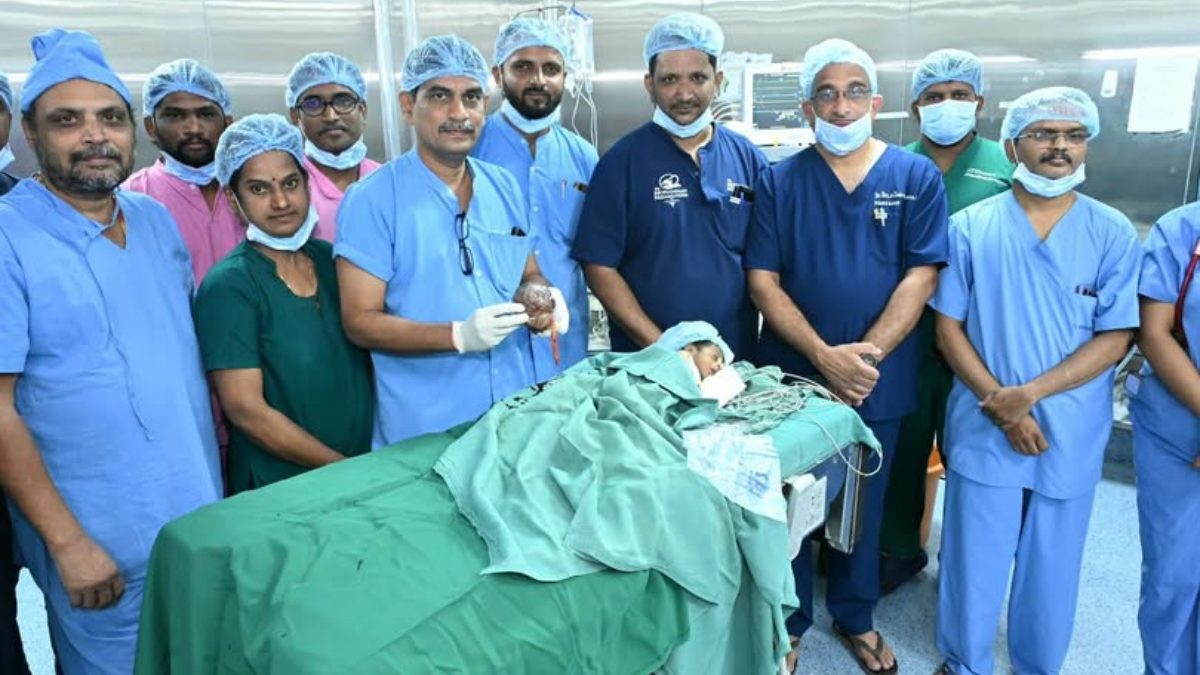
The condition, medically known as ‘Foetus in Fetu ’, is an extremely rare congenital abnormality that has surprised medical professionals all over the world. This operation is a big achievement for the medical team and also shows the hospital's expertise in complicated paediatric surgical cases.
The rare condition was spotted even before the baby was born by a team led by Dr Sadashiv Gowda, Head of the Department of Radiology at BMCRC, when, during the mother’s pregnancy, detailed medical tests were done to detect an unusual foetal structure inside the developing baby’s abdomen.
As the condition is serious and rare, they closely monitored the pregnancy and prepared for further medical intervention after delivery. The baby was born in the same hospital two months ago. After birth, doctors did all examinations and assessments to understand the condition in detail and to find out the safest way of treatment.
After evaluation, the hospital's paediatric surgery team planned the complex operation under Dr Gaddi Divakar, Head of the Department of Paediatric Surgery. The operation was done, and doctors removed the undeveloped foetus from the infant’s abdomen. Specialists from different departments worked together to make sure that the procedure was carried out safely.
Sanjeev Joshi, Ram Mohan and Ashwita were part of the surgical team; anaesthesia department head Balasubrahmanya was present along with Parimala, Nizamuddin, Raghunath and Madhushree; nursing staff Pushpalatha and Saleem Pasha supported the operation too.
What Is Foetus in Fetu?
Foetus in Fetu is an extremely rare congenital condition where one twin develops abnormally and becomes encased within the body of the other twin early in pregnancy so that instead of developing independently, one twin remains inside the body of the normally developing baby.
It is thought to occur because of an abnormal process during the separation and development of identical twins in the womb. It is usually found in the abdomen but may also be seen on routine prenatal scans. Medical literature puts it at one out of every 500,000 births; this makes it one of the rarest developmental abnormalities reported in medical practice.
While this sounds scary, timely diagnosis and surgical treatment can help affected babies recover. Doctors usually use ultrasound, CT scans and MRI to find the unusual structure, where it is located and plan the operation. Early detection is crucial because the enclosed foetal mass may grow and put pressure on nearby organs. Some doctors also recommend ongoing medical monitoring after surgery (in some cases), so there are no complications or signs of recurrence.
BMCRC medical team also has experience in advanced paediatric surgeries. Dr Gaddi Divakar is the head of the department, which has been doing specialised children’s surgery for the last 22 years. The hospital had earlier done a similar rare case at Vijayanagara Institute of Medical Sciences (VIMS) in 2008 too. This experience helps BMCRC to know and understand unusual congenital conditions which require special surgical intervention.
The doctors thanked the hospital administration for their continuous support. They thanked Dean and Director Dr Mariraj, Principal Dr Mallikarjun M., Medical Superintendent Dr Arun, Chief Administrative Officer Dr Nayana and Finance Adviser Mahesh. Radiology, paediatric surgery, anaesthesia and nursing departments worked together to make the complicated operation possible. Removal of foetus from two-month old baby has brought BMCRC medical expertise into focus and is an important achievement in paediatrics surgery.



Comments