
At Belagavi, Karnataka, a roadside encounter has raised serious questions about traffic enforcement techniques, police identification, and the transparency of traffic challan payments.
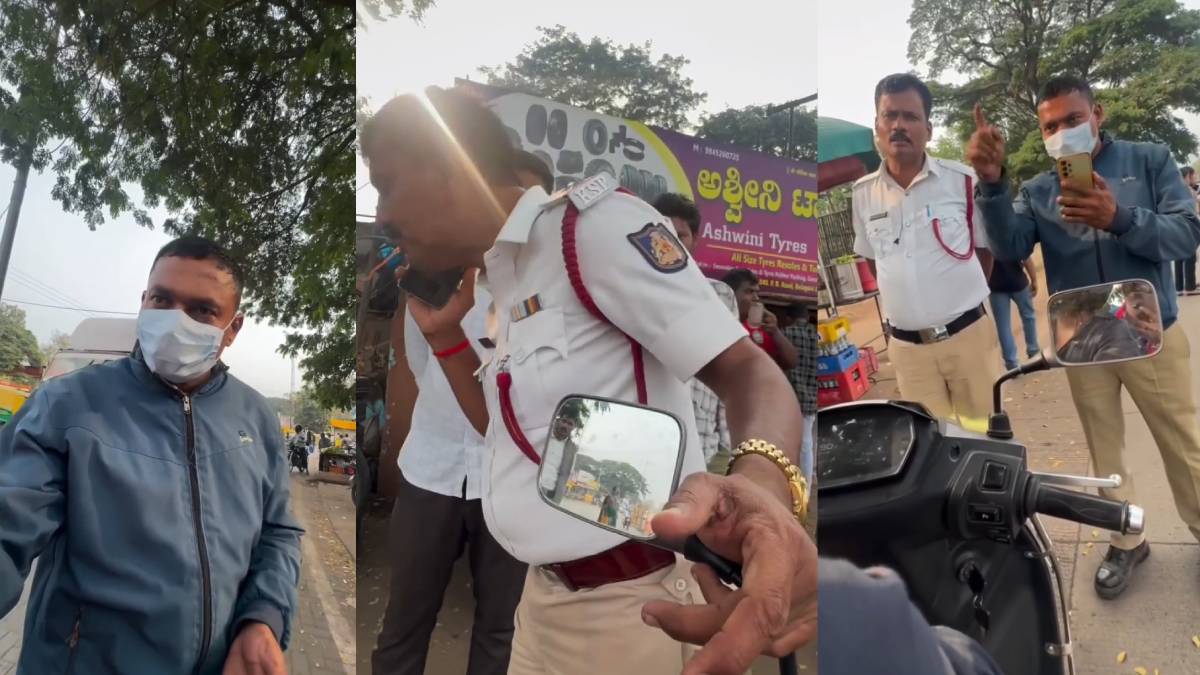
A vlogger filmed the incident from his phone and spoke to people who appeared to be traffic officers. Questions about traffic challans, who was driving, who actually delivered them, and how much offline payment was made were raised. The video has raised questions about whether the people involved were in the right place to enforce the traffic rules and whether the correct procedure was followed.
However, the information does not independently support that they were impersonating police officers. The identities, official roles, and the situation of the encounter would have to be confirmed before concluding that the incident involved fake traffic police.
Questions Over Police Identification
The most serious issue is the identity of the people involved. One of the viewers has wondered why one of the people was wearing a mask and why his identity was not disclosed during the interaction.
Though wearing a mask doesn’t by itself constitute misconduct or impersonation, citizens should be able to check the identity and authority of the officers enforcing traffic rules. An official clarification from the Belagavi police would be appreciated as to whether the individuals were authorised officers and how their conduct was in line with departmental procedures.
The whole incident also raises questions about whether the individuals had the authority to issue challans and if the driver or vlogger was given clear information about the alleged traffic violation.
Why was offline payment being demanded?
Another issue is the demand for offline payment. Traffic fines should be collected through authorised procedures, with appropriate documentation and a verifiable payment record.
Karnataka provides official online services for checking and paying traffic challans. The Karnataka State Police e-challan portal allows citizens to check pending violations using their vehicle registration details and access the relevant payment facility. The central government e-challan system also advises citizens to use official channels and remain alert to fraudulent payment requests.
But a request for offline payment alone does not prove that a transaction was illegal. The circumstances, the payment method requested, and whether an official receipt or challan was issued would need to be established.
The question is whether the payment request was in accordance with an authorised procedure and whether the amount could be verified against an official challan.
What really happened in Belagavi?
This raises several questions by various online users such as:
- Why was one of the people involved seen in this incident wearing a mask?
- Why was his identity never disclosed?
- Were the individuals responsible for enforcing traffic rules?
- Was the challan procedure done properly?
- Why was offline payment required?
- Were the payment methods officially approved and transparent? And why were DigiLocker verifications denied as valid documents for identification??
These questions should be answered with real verification rather than assumptions based on a viral video. The whole recording, official challan records, and an explanation by the Belagavi police would help to establish what happened.
The Need for Transparent Traffic Enforcement
Traffic enforcement should be lawful, transparent, and accountable. People should know their rights, who is enforcing the traffic rules, and what the process is to pay a traffic fine.
At the same time, traffic violations need to be handled through established legal procedures, and allegations against public officials or individuals need to be supported by evidence.
The Belagavi incident is a reminder of why clear identification, proper documentation, and verifiable payment systems are so critical in policing today. If everyone involved were properly authorised officers, then an official explanation could help address the public's questions. Any irregularities must be addressed.
Until we have the facts independently verified, we don’t know if it was improper traffic enforcement, a misunderstanding, or something more serious.
The public deserves answers based on evidence, not speculation.




Comments
Leave a Comment