
The Earth is always moving, but a new study has helped to reveal an interesting part of the planet's long history: Its geographical poles have changed dramatically over four massive events in the past 320 million years. This phenomenon is called true polar wander and happens when the Earth's solid outer layers slowly tilt in the opposite direction to the planet's rotation axis.
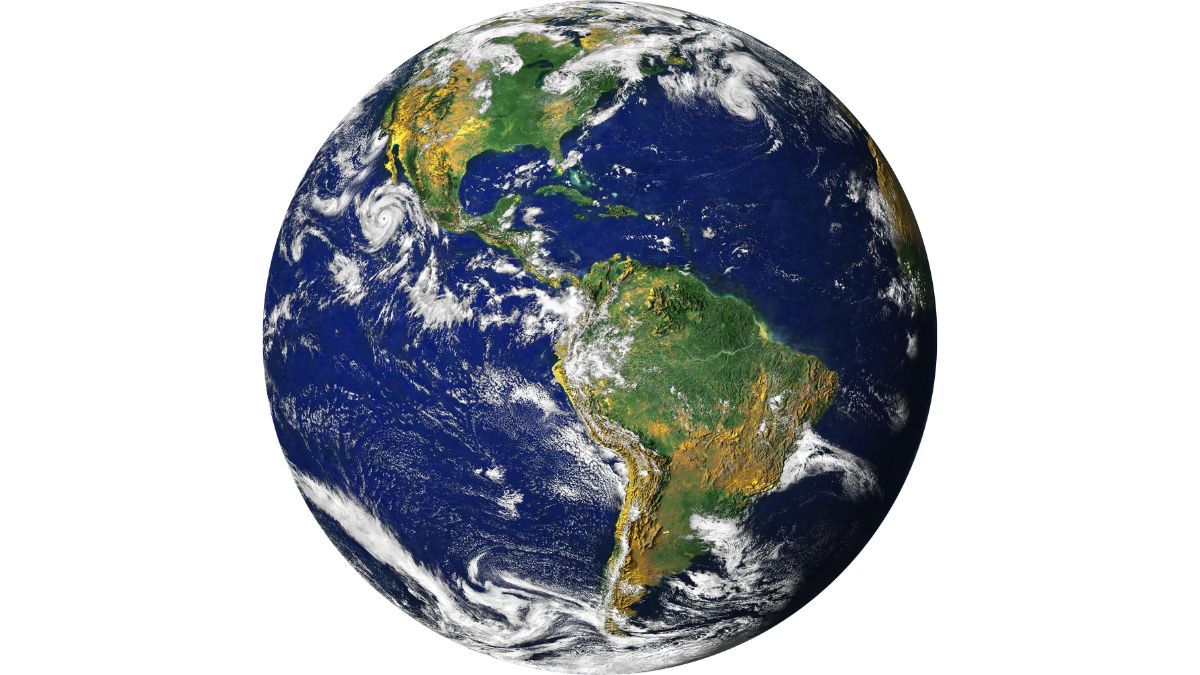
The study, which will appear in the 1st October 2026 issue of Science, sheds new light on how the Earth's crust and mantle move along with sea levels and climate and environmental conditions over geological time. The findings were reported in Smithsonian Magazine on October 19 and raised the question of whether Earth's geographic poles are in place in the present time.
The authors included Mathew Domeier, Leandro C. Gallo, Chloé M. Marcilly and Trond H. Torsvik. Their study examined geological evidence covering the last 320 million years to discover periods at which Earth's solid outer layers experienced unusually rapid reorientation.

Scientists have long known that tectonic plates cross the planet's surface, and Earth's magnetic poles can also change over time. But whether the entire solid Earth has changed its orientation relative to its spin axis is a more difficult scientific problem. By using reconstructions of past sea-level patterns, the authors were able to help look for true polar wander, leading to an additional way of exploring the geological history of Earth.
Four major periods during time show evidence of true polar wander, which were around 190-200 million years ago during the Early Jurassic, 140-150 million years ago during the Late Jurassic and the Early Cretaceous, 90-100 million years ago during the mid-Cretaceous and 20-30 million years ago during the transition from the Oligocene to the Miocene.
These results show that the reorientation of the Earth has not always happened at a slow rate. At times, the process has been more pronounced over geological time. The results also debunk some of the earlier interpretations of how Earth's orientation changed in the distant past, although we still need to understand the reasons behind the individual episodes.
One of the most important aspects of the research is the method used to identify the shifts. Paleomagnetic evidence from ancient rocks has been used to study it. However, tectonic plates move, which makes the interpretation of this information difficult. To this end, for the study, the researchers looked at reconstructions of the sea levels at the beginning of history and the pattern of areas that were flooded or exposed.
Because the Earth is slightly bulging around its equator, the orientation of its solid outer layers can change the distribution of centrifugal potential from the surface. This can produce distinctive, large-scale patterns of relative sea-level change. Computer simulations and statistical analysis helped the team identify patterns consistent with major episodes of true polar wander.
The findings have implications for sea levels and the global environment. When Earth's solid outer layers reorient in response to its rotation axis, the distribution of land and water in relation to the planet's rotational geometry changes. This could influence relative sea levels in different regions, making certain areas more likely to be flooded or exposed to water. It may also impact ocean circulation and climate systems and the biological environment over long periods of time.
But research indicates that sea level changes can have many causes, such as global ice volume, thermal expansion, tectonic activity, and ocean basin shape. So it would be wrong to attribute every ancient flood, climate shift or natural disaster to polar wander alone. The study identifies a crucial geological process, not a single explanation for all environmental changes.
Another interesting fact is that polar wander is still happening today. The research team estimates that the process is currently happening at a rate of about 10 cm per year. The North Pole and South Pole are not moving away from the Earth to a new location, and the planet is not going to overturn. It is the slowly moving orientation of the solid Earth with respect to the rotation axis.
The movement is very slow on a human timescale, although it can become significant when measured over hundreds or thousands or even millions of years. Researchers have also mentioned that the exact causes and extent of individual episodes still need to be investigated further. The current rate should not be taken as a clear sign of another major reorientation to come.
The discovery adds another chapter to scientists' understanding of how Earth evolved over millions of years. By drawing on old sea level reconstructions and geological modelling, scientists have discovered evidence that the planet’s orientation might change in different episodes and not simply in one simple, consistent pattern.
The findings may help scientists to better understand connections between Earth's deep interior, its rotation and ocean levels and long-term environmental development. And the most important thing for the public is that the world's geographic poles are not always fixed over geological time and that they move slowly and are scientifically distinct from magnetic pole reversals. More research will be needed to understand why such important episodes occurred and how much the planet’s climate and ecosystems are affected by these events.






Comments
Leave a Comment