
Bengaluru is ready for a dramatic transformation, and proposed 10-year development roadmap to support it with a capital investment of ₹1 lakh crore.
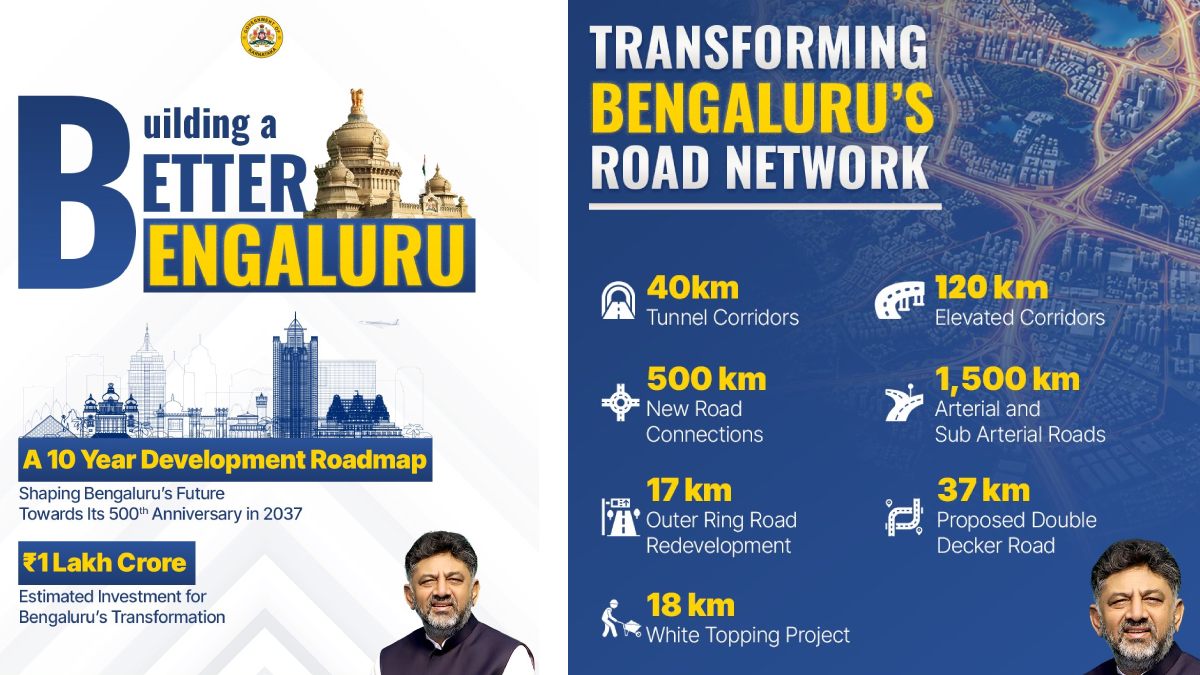
The vision is to enhance the road network in Bengaluru and public transportation, provide well-maintained water supply to all and a clean environment and better living conditions for people living in the city, as it approaches the city’s 500th anniversary in 2037.
Bengaluru is by far one of the world’s leading technology and innovation centres and its future will depend on it addressing urban problems, such as traffic congestion and the need to adapt to it.
The proposed roadmap places infrastructure development at the centre of Bengaluru’s future. Roads, public transport, water management and neighbourhood services are crucial to keeping a rapidly expanding city functioning.
Bengaluru’s growing population and growing business districts have increased pressure on its transport networks and civic infrastructure. Traffic congestion, long commutes, uneven road conditions and the need for reliable water supply continue to shape residents’ day-to-day lives.
A long-term investment strategy could provide an opportunity to address these issues in a more team-based manner rather than from a single project. Hence, the road network, tunnels and elevated roads are to be built, to overcome traffic congestion.
One of the key elements of the roadmap is the growth and enhancement of the road network of Bengaluru. The plans are about 500 km of new road connections to be connected to road networks (and approximately 1,500 km of arterial and sub-arterial roads are to be upgraded).
Namma Bengaluru is a city of immense potential, and our responsibility is to build a future that lives up to its promise. Our 10-year roadmap, with an estimated investment of ₹1 lakh crore, sets out an ambitious vision for Bengaluru as it approaches its 500th anniversary in 2037. From better roads and expanded public transport to reliable water supply, improved civic infrastructure and cleaner neighbourhoods, we are working towards a Bengaluru that is easier to live in, better connected and ready for the future. Our commitment is to ensure that Bengaluru’s growth translates into a better quality of life for every citizen.
— DK Shivakumar (@DKShivakumar) October 29, 2026
A 40 km tunnel network and a 120 km elevated road network will be created as well to help to improve connectivity and reduce the pressure on busy roads. A 17 km stretch of Outer Ring Road is also being planned as part of the infrastructure plan.
These projects would be important for commuters on their commute between residential neighbourhoods, commercial centres and Bengaluru's technology corridors.
However, the actual benefits will depend on project approvals, funding, construction timelines and effective coordination between the agencies that will be responsible for the implementation.
Residents will surely be anxious to see if the proposals lead to shorter trips, safer roads and more reliable travel times. Namma Metro and Public Transport Expansion. Public transport is also another key component of Bengaluru's long-term development vision.
The state government aims to expand the Namma Metro network from 96 kilometres to 170 kilometres by 2027. The plan also includes the addition of 4,500 buses to the city’s fleet and the creation of 150 kilometres of suburban rail connection by 2030. These are announced targets and are attainable but will be determined only by the progress of construction and operations and the availability of funding.
Public transport expansion could reduce reliance on private vehicles and not just on people who work day-to-day at the office or at a school. Greater integration of Metro stations, bus lines and suburban rail services would also make it easier for people to travel around the whole city.
In order for the plan to work, first-and last-mile connections, service frequency, accessibility and transfer to different modes of transport will all need to be considered. Water Supply, Waste Management and Better Civic Services. The roadmap also focuses on citizens’ core civic services that directly impact their quality of life.
As Bengaluru's urban footprint expands, reliable drinking water, efficient sewerage systems, cleaner streets and better waste collection are key. 65 urbanised gram panchayats outside Greater Bengaluru Authority limits will be upgraded into urban local bodies to be provided drinking water, sewerage and road infrastructure in phases, the government has said.
Waste management is another area that is being tackled. New garbage collection contracts and GPS tracking for waste collection vehicles have been announced. These are all measures designed to enhance monitoring and accountability.
However, they will only succeed if we have a consistent collection schedule and supervision and if the contractor does not do the job. Bengaluru's Road to 2037: What Residents Can Expect. The ₹1 lakh crore roadmap is an ambitious initiative to prepare Bengaluru for its next phase of growth as the city nears its 500th anniversary in 2037.
The proposals are on transportation, roads, water supply, sanitation and other civic infrastructure and the development of cities needs to be coordinated.
The most important measure of success for residents will not be how much money is there or how many projects are announced. It will be whether roads get easier to drive along, public transport becomes reliable, water supply increases and neighbourhoods remain clean and well maintained.
Transparency and regular updates on progress will be required in order to translate the vision into measurable results.
As Bengaluru prepares for its historic milestone, the proposed roadmap is a chance to tackle current urban problems and build infrastructure for future generations. The ambition is big but implementation is key to whether the plan will deliver.
If the investments are made well-managed, it could make Bengaluru a better-connected, more sustainable and more liveable city for the millions of people who call it home.


Comments