
Bengaluru Police have arrested a 25-year-old man from Bihar for allegedly uploading an AI-generated video on Instagram that falsely depicted a bomb blast at Vidhana Soudha, Karnataka’s state legislature building. The video depicted a fabricated explosion that appeared to destroy the prominent government complex, raising concerns about the potential misuse of artificial intelligence to spread misleading information and create public alarm.
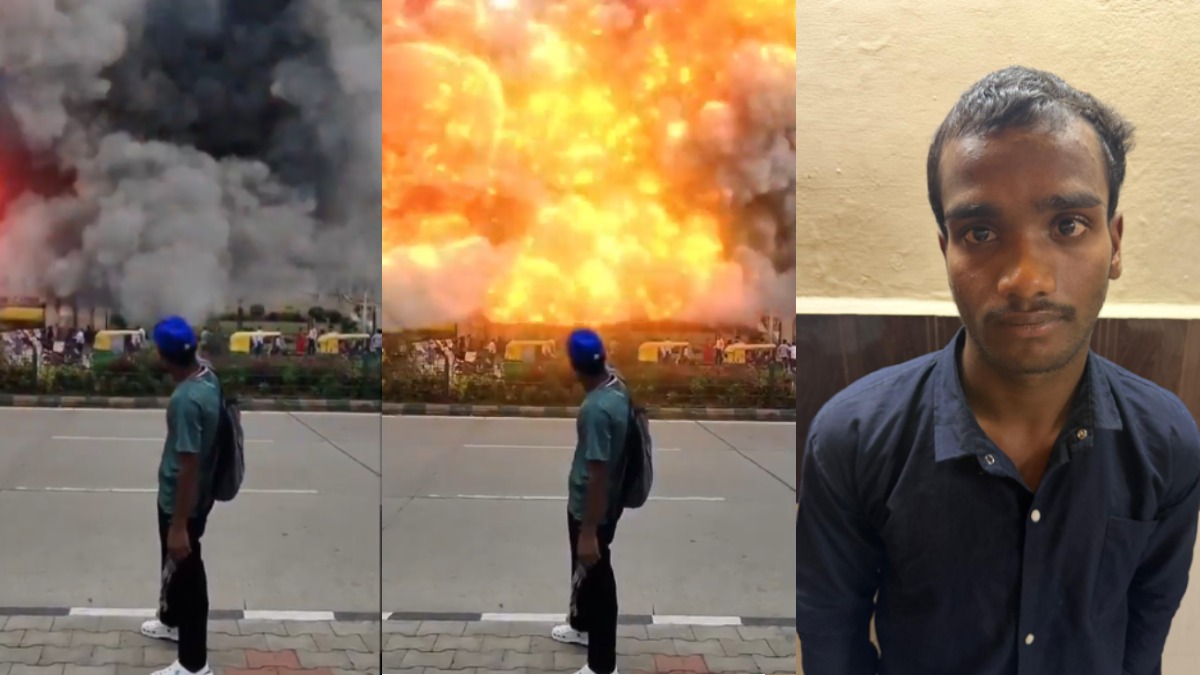
The accused, identified as Hazrat Ali, presented real footage of a man gesturing outside Vidhana Soudha with digitally generated explosion effects. The video's caption said the Assembly building had been blown up, but that was not the case.
The situation highlights the growing challenges faced by law enforcement agencies as AI-based tools make it more attainable to make fake videos that can mislead the viewer. Fabricated pictures of big public buildings and government buildings can get posted quickly on social media; it’s easy to get folks’ minds confused before authorities are even given a chance to verify the information.
How police reportedly traced the Instagram account
According to the details above, investigators began with internet protocol (IP) logs to trace the account associated with the video and identify the alleged uploader. The investigation led police to Ali, a migrant worker from Bihar who is 25 years old.
The police took him into custody to investigate the circumstances of the video's creation and publication, they said. The report also says that charges were filed under the Bharatiya Nyaya Sanhita (BNS) of causing alarm.
The specific legal provisions, the formal allegations and the status of the investigation would need to be confirmed through an official police statement or court records. The accused's motive has also not been established in the supplied information. Investigators would need to determine whether the video was created as a prank, for online attention or with an intention to mislead the public.
Why a fake Vidhana Soudha blast video raises concerns
Vidhana Soudha is one of Bengaluru’s most recognizable landmarks and houses key government offices such as Karnataka Legislature. False claims of an explosion at such a location could trigger unnecessary fear, particularly if viewers believe the footage shows a genuine security incident.
Videos that imitate breaking news or show apparent attacks on public infrastructure can be especially misleading if they are posted without context. Viewers will send the video to friends, family and other social media accounts before checking whether the incident was reported by reliable news organisations or confirmed by officials.
Even if no actual damage or attack was done to the video, fabricated content of this nature may lead to confusion, waste police time and create a barrier to the communication of genuine emergency information. Realistic visual effects can make it even worse because viewers may not immediately realize that a video is manipulated or generated using artificial intelligence.
AI-generated misinformation presents a growing challenge
Artificial intelligence tools are now capable of generating convincing images, audio and videos. These technologies can be used for filmmaking, education, entertainment and other legitimate purposes but are also used to make false portrayals of real-world events.
A fake video of an explosion, public disturbance or attack can seem credible if it includes real landmarks or real footage. Adding a dramatic caption might also help users to interpret the material as evidence of an actual event.
The Bengaluru case, as it is explained, underlines the importance of the context in which AI-generated content is shared. Labelling synthetic footage and avoiding captions that present fictional events as real can reduce the risk of misinformation spreading online.
Social media users can also take real steps to verify alarming videos before posting them. Checking official police updates, looking for confirmation from established news outlets and examining whether the footage has been published elsewhere can help in identifying misleading claims. A lack of immediate confirmation is not proof that a video is fake but it is a reason not to forward it as fact.
Hazrat Ali, 25, from Araria’s Koshkipur in Bihar, was arrested in Bengaluru for allegedly posting an AI-generated video falsely showing an explosion at Vidhana Soudha. He had moved to the city months ago and worked as a pipe fitter. https://t.co/93eAYbKvhw
— هارون خان (@iamharunkhan) October 22, 2026
Police investigation and public awareness
The reported arrest has brought back the responsibility of social media users when posting content on very sensitive public locations. The authorities should establish what happened and the circumstances in which the video was posted and if any laws were violated.
The case also serves as a reminder that digitally generated footage can’t be taken as proof of a real incident just because it looks convincing. Government buildings, transport hubs and other important public places can become targets of viral misinformation, so very careful verification is needed.
For now, all we know is that the explosion depicted in the Instagram video was fake and no actual blast took place at Vidhana Soudha. As the investigation progresses, we hope for notifications on the allegations, the legal framework in place and how the video was created.



Comments
Leave a Comment