
For decades, India’s neighbourhood shops worked on trust, memory, and handwritten accounts. A small grocery store owner knew which customer had bought groceries on credit, how much was owed, and when payment was expected. Some kept detailed notebooks; others relied mainly on memory to keep track of daily transactions.
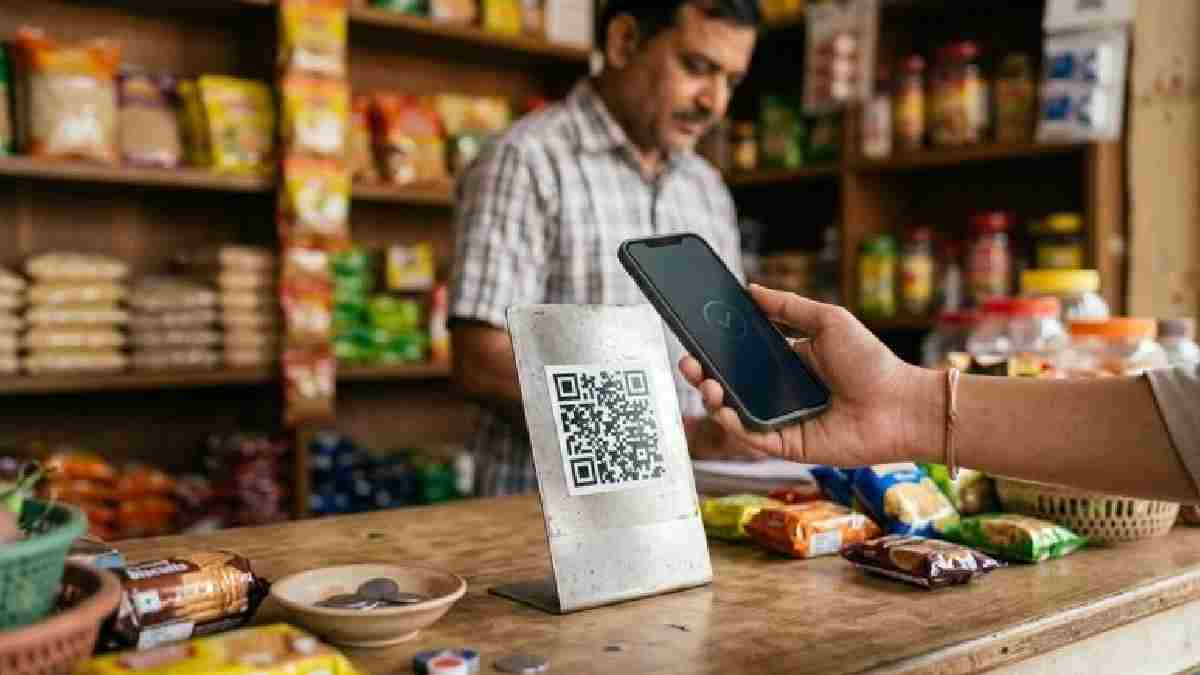
UPI has changed this familiar system. Now a customer can buy a packet of milk, vegetables or household essentials and pay instantly by scanning a QR code (Unified Payments Interface). The shopkeeper gets a payment notification, and the transaction is recorded digitally.
What once took mental calculations, handwritten entries, and follow-ups over and over again can now happen in seconds.
From handwritten ledgers to digital payment records
Traditional neighbourhood businesses have always depended on informal credit arrangements. Customers bought goods during the month and paid later. Shopkeepers kept accounts in notebooks (khata books).
The system worked because people knew each other: shopkeepers knew their customers, remembered how they paid and often extended credit based on years of familiarity.
UPI changed the way payments were handled. Instead of counting cash and manually recording every transaction, shopkeepers now get money into their bank accounts through QR-code payments.
Every successful transaction creates a digital record that can be checked for payment amounts, dates and transaction histories. This has reduced dependence on cash handling and made payment reconciliation easier for many small businesses.
Digital transaction histories do not replace traditional credit ledgers. Shopkeepers still need to keep separate records when customers buy goods on credit and promise to pay later.
How UPI transformed everyday shopping
UPI’s biggest impact is in the simplicity of everyday transactions. Customers no longer need to carry exact change or withdraw cash for small purchases.
For shopkeepers, the benefits include:
- Faster payments: Customers can complete transactions by scanning a QR code.
Reduced cash handling: Businesses don’t need to keep large amounts of physical cash on hand for daily sales. - Digital transaction records: Payment histories help shopkeepers check incoming payments.
- Convenience: Customers pay using supported UPI apps linked to their bank accounts.
- Easier reconciliation: Digital records can be used to compare payments received with daily sales.
The change also changed expectations of customers. Digital payments are commonplace even for small purchases (from roadside tea stalls to local grocery stores).
The rise of QR codes in neighbourhood shops
One of the most obvious symbols of India’s digital payment revolution is the QR code on shop counters.
A small printed QR code can enable a business to take payments without buying a card payment machine. Customers open an app that supports UPI (Unified Payment Interface), scan the code, enter the amount, and authorise the transaction.
For small merchants, this has made digital payment acceptance easier. It’s also brought businesses that used to operate largely in cash into the digital payments ecosystem.
The widespread use of smartphones, low-cost internet access and interoperable payment systems have further driven this trend.
Has UPI replaced the traditional khata system?
Not quite. UPI has changed how customers pay, but the credit system is still in many neighbourhood businesses.
A customer might still say to a shopkeeper, “Add it to my account” and pay at the end of the week or month. In these cases, the shopkeeper continues to keep a separate credit record.
The difference is important: UPI tracks completed digital payments but does not track goods bought on credit or unpaid balances unless the merchant uses a separate accounting application.
In this sense, the old ledger has not disappeared. It is more like sharing space with digital payment records and business management tools.
Challenges that come with digital payments
UPI is convenient but it also poses some problems for small merchants. Network connectivity issues, failed transactions, delayed payment confirmations, and digital fraud can cause difficulties.
Shopkeepers need to make sure that money has actually gone into their accounts (not just a customer’s screenshot or payment sound). They need to also be alert for fraudulent collect requests and fake payment messages.
For businesses that have a lot of transactions, accurate records and separating personal payments from business receipts may also be extra work.
UPI has changed more than the way India pays
UPI doesn’t just replace cash with digital transfers. It has changed the relationship between customers, shopkeepers and money.
The handwritten ledger was a shopkeeper’s memory, trust and understanding of the neighbourhood. Today payment notifications and transaction histories add another layer to financial information.
Yet the old practice of giving credit to a trusted customer hasn’t disappeared. In many shops, the old khata and the new QR code still co-exist.
India’s digital payments revolution has therefore not erased the shopkeeper’s ledger. It has changed what that ledger records, how payments are settled, and how small businesses manage their everyday finances.


Comments