
A bomb threat call to the Bank of Baroda branch in Parliament Street, New Delhi, today triggered a major security alert as police and fire department teams rushed to the spot after information was received that there may be an explosive inside the bank premises.
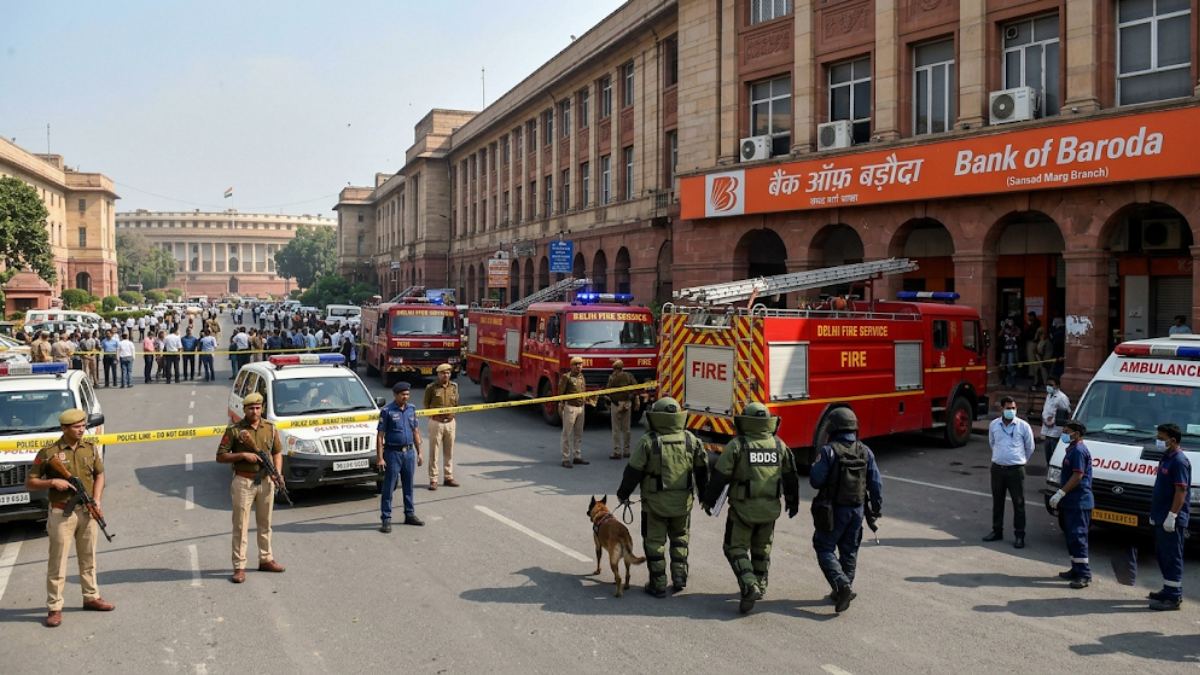
Police and firemen reached the spot and conducted a search operation for suspicious objects and explosives. The incident created fear in the area, so security agencies inspected the bank building and its surroundings thoroughly, but no suspicious object was found during the initial search.
The bomb threat was received around 11:35 am. Police and the fire department were alerted of the threat immediately, after which emergency teams rushed to the Bank of Baroda branch on Parliament Street. Since it was a sensitive location and there was a serious bomb threat involved, security teams moved quickly to assess the situation and make sure people weren’t in immediate danger.

When police and fire department staff got to the bank, they began inspecting it. They searched inside the building as well as outside (security teams looked for suspicious objects, bags that had been left unattended or materials that could have been an explosive device). The inspection was done on a precautionary basis because they wanted to rule out any possibility of threat and protect employees, customers and people around.
The threat alert made authorities take the situation seriously because the bank is on Parliament Street (an important area of the national capital). Any security-related alert in a prominent part of New Delhi needs to be responded to by all concerned agencies. Police teams went to the spot and gathered information about the threat while fire department teams helped with emergency response.
Officials checked inside the bank and outside the building but did not find any suspicious objects or explosives, they said. So the initial inspection didn’t turn up evidence of an explosive device at the location. But because no suspicious material was found during the search, it does not mean that the threat call can be ignored; authorities are still trying to determine who made the call and whether it is credible.
Police are looking into who made the bomb threat call. They want to find out who it was and why they were warning people of a bomb attack. They will look at information about the call itself and any other relevant evidence that may help them track down who made it. Police will establish whether the call was made to panic people, disrupt normal operations or be linked to real security concerns.
Bomb threat calls are taken very seriously because even an unverified call can trigger emergency response and safety checks. Business activity will be disrupted, employees and customers will be anxious, and resources will have to be diverted until the threat is assessed; security agencies generally follow precautionary procedures so no potential danger is overlooked.
The incident at the Bank of Baroda branch reminds us once again how important it is for police, fire services and other emergency response teams to arrive promptly and inspect the spot so that authorities can assess the situation without delay. The search operation also ensured that bank premises as well as nearby areas were checked for suspicious materials.
The investigation is ongoing, but the key thing at this point is to find out who made the threat and why. No details about who called, what was said, or the motive have been given in the information released so far. Authorities should take action based on the results of the investigation.
Though the initial search turned up no suspicious objects, the incident has focused attention on security preparedness at public-facing institutions in the national capital. Police are still trying to trace who made the call, but for now the main priority is to save lives and prevent any security risk.


Comments