
Bengaluru: BJP Mahila Morcha in Bengaluru staged a protest against the Congress Member of Parliament from Inner Manipur, Angomcha Bimol Akoijam, who was removed from JNU for sexual harassment complaints involving female students.
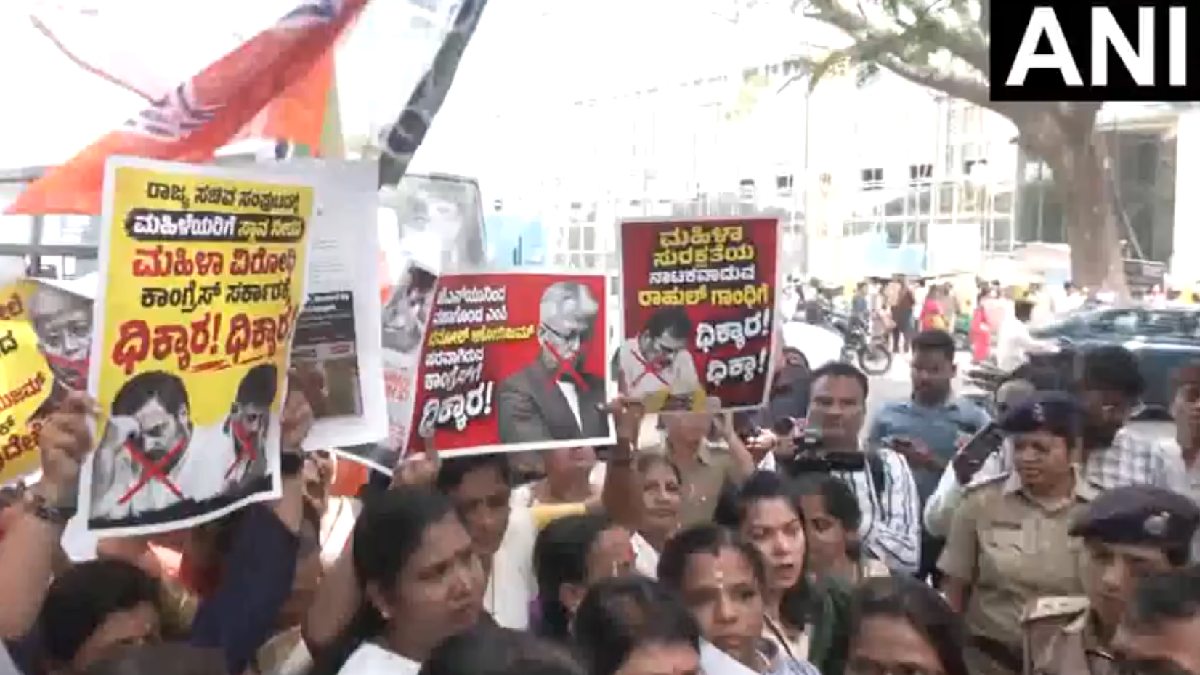
The protest has made the matter of allegations against the Congress leader a lot more political and raised questions about accountability, the safety of women in educational institutions, and political parties in the face of such serious allegations against their elected representatives.
Bengaluru's demonstration is also happening as the political situation is boiling following JNU’s decision to terminate Akoijam’s services as a professor immediately. The university took action on October 9th, 2026, after its Internal Committee had conducted an investigation into allegations of sexual harassment against him. According to media reports, 11 female students had filed complaints against him.
The university said the decision was made after considering the committee’s findings and following the applicable service rules. Political reactions are heating up as the BJP has asked Congress to take responsibility for the allegations against its MP.
BJP Mahila Morcha’s protest in Bengaluru is a show of the party’s demand for action in a case that has become a political issue beyond the university campus. The protesters want the Congress leadership to be held accountable and to take steps regarding the allegations of sexual harassment against Akoijam. The BJP is also concerned about the party’s response to allegations of misconduct involving one of its parliamentarians.
The protest places the responsibility on political parties to address complaints of women’s safety and ensure that allegations of sexual harassment are taken seriously and transparently.
Akoijam served as a professor at the Centre for the Study of Social Systems at JNU and also represented the Inner Manipur constituency in the Lok Sabha. The university’s action was followed by an investigation by its Internal Committee, which reportedly recommended major disciplinary punishment.
The dismissal order was issued by JNU Vice Chancellor Santishree D Pandit. Akoijam’s case has attracted national attention regarding his dual role as an academic and an elected representative, as well as the allegations and the system of disciplinary action, and what is expected of a person in public service.
But Akoijam has contested that decision and described his dismissal as a “witch hunt” in media reports. He has questioned the process taken by the university and indicated that he intends to challenge the decision. His response brings another element to the controversy - concerns about the inquiry process and calls for accountability.
The allegations, the findings reported in relation to the university inquiry, and the MP’s objections are now central to the wider public debate surrounding the case. Any further legal or institutional proceedings will be crucial for the next steps.
#WATCH | Karnataka: BJP Mahila Morcha protests in Bengaluru, demanding action against Congress MP from Inner Manipur, Angomcha Bimol Akoijam, following his dismissal from Jawaharlal Nehru University (JNU) over allegations of sexually harassing female students. https://t.co/CJpWL5vmIx
— ANI (@ANI) October 12, 2026
The controversy has also intensified political exchanges between the BJP and the Congress. BJP leaders have attacked the Congress leadership’s reaction to the case, and the dismissal decision by the university has raised the issue of whether institutions need to probe complaints of sexual harassment through established procedures.
The Bengaluru protest is part of a larger political movement to tackle the matter, and it is the BJP Mahila Morcha who are calling for action and accountability. The case has revived the debate about whether political parties apply consistent standards when allegations of misconduct are made against their own members.
As a university, it is important to take allegations of sexual harassment seriously while following the proper rules and procedures. At the same time, public debate surrounding such cases should distinguish between allegations, findings reached through an inquiry, and any subsequent legal proceedings.
With the BJP demanding further action and Akoijam contesting his dismissal, the case is likely to remain a subject of political and institutional scrutiny. The response from the Congress leadership and any further developments concerning the university’s decision will be closely watched.



Comments