
A social media debate on marriage customs in Karnataka’s Malnad region has highlighted the different social attitude towards dowry. A post shared by X user Sajith Gowda says demand of dowry is shameful in parts of Malnad and men asking a bride’s family for money or property may be socially disapproved.
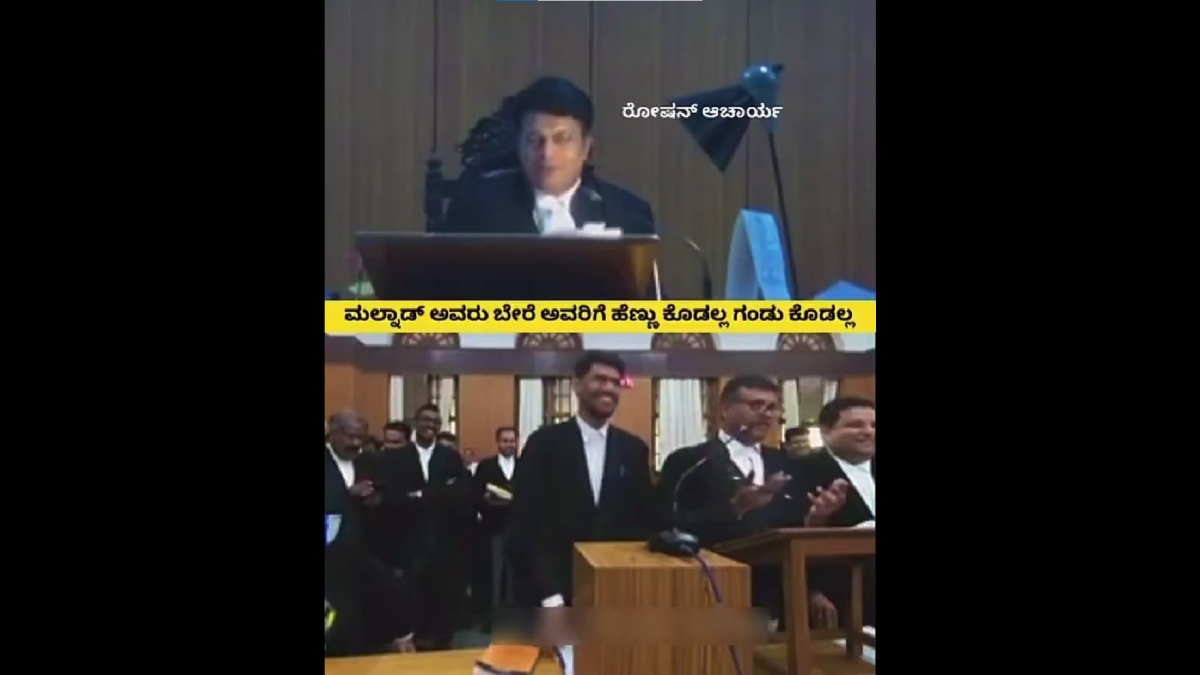
The post says that such men are sometimes called ‘ಕೈಲಾಗದವನು’ (Kannada: incapable or incompetent person) because a man who asks for money from the bride’s family is incapable of establishing himself on his own.
This is correct. Dowry is considered shameful act in Malnad. Men who demand dowry are looked down upon and referred to as ಕೈಲಾಗದವನು (useless). Dowry is extremely rare and considered only in rare cases, such as when the girl has a disability.
— ಸಜಿತ್ (@SajithGowda) November 10, 2026
The post also says dowry is an extremely rare practice in the region but does not provide any statistical evidence as to how widespread or uncommon it is.
The discussion has led to wider conversation about regional marriage customs, social expectations and why one should not accept financial demands during marriage.
Why is demanding dowry reportedly looked down upon in Malnad?
“In parts of Malnad people feel that a man should be able to build his own life not expect the bride’s family to give money or property as a condition of marriage,” reads the social media post.
Under this model demanding dowry is not a sign of financial status or social achievement; it can be interpreted as a sign that the man cannot support himself.
The Kannada expression ‘ಕೈಲಾಗದವನು’ has a negative connotation and is used here to question a man’s capability and self-respect.
This reported social attitude is an interesting contrast to communities where dowry continues to be seen as expected in marriage negotiations.
But remember Malnad is a broad cultural and geographical region where social practices can vary between communities, families and generations. Views in one social media post cannot establish attitudes of every household in the region.
What is Malnad and what makes its social traditions different?
Malnad is the hilly and forested region along the Western Ghats in Karnataka. It is known for rainfall, agricultural landscapes, plantations, forests and local cultural practices.
Parts of Shivamogga, Chikkamagaluru, Hassan and Uttara Kannada are commonly associated with Malnad but the boundaries of the region can vary from context to context.
The region has different communities, languages, customs and marriage practices. Family ties, community traditions and local social expectations continue to influence marriage decisions.
The social media discussion about dowry illustrates one particular point of view: that a marriage is not financial transactions between families but the relationship between two people.
The claim that dowry is rare needs broader evidence but the idea that demanding money from the bride's family should cause social criticism is an interesting topic for discussion.
Is Dowry Really Rare Across Malnad?
The claim that dowry is extremely rare across Malnad should be treated with caution.
There is no official dataset available that measures dowry practices separately in Malnad region or individual communities. National and state crime statistics cannot tell us how often dowry is exchanged in a particular cultural region either.
Furthermore dowry related practices are not always reported to the police. Some financial demands may happen in private during marriage negotiations whereas others may be disguised as gifts or customary arrangements.
So the social media post is best read as an account of local social attitude rather than proof that dowry has disappeared from Malnad.
It is also important to distinguish between voluntary wedding gifts and demands connected with marriage. What was bought, what was expected of it and whether the items were demanded all matter when deciding if something amounts to dowry under law.
What Does Indian Law Say About Dowry?
Dowry is prohibited under the Dowry Prohibition Act, 1961 (which applies throughout India).
Dowry is property or valuable security given (directly or indirectly) by one party to a marriage to the other party or their families or another person in connection with the marriage. Section 2 defines dowry as property or valuable security given or agreed to be given (directly or indirectly) by one party to a marriage to the other party or their families or another person in connection with the marriage.
Law also provides penalties for giving, taking or demanding dowry.
The distinction between voluntary presents and dowry is important. A gift given voluntarily (no demand or expectation of marriage connected with it) is not the same as an unlawful dowry transaction; circumstances and applicable law also matter.
The law says that demanding financial or material benefits as a condition of marriage is not okay.
Karnataka's Dowry Statistics Show the Problem Has Not Disappeared
While the social media post talks about negative attitude towards dowry demands in Malnad, the broader picture in Karnataka is that dowry problems still exist.
In August 2025 Deccan Herald reported that Karnataka registered 2,912 dowry harassment cases in 2024 (as against 2,960 in 2023). It also reported 112 dowry-related deaths in 2024 (against 158 in 2023).
Separately reporting on the NCRB’s 2024 data Bengaluru had 878 cases under the Dowry Prohibition Act (about 87% of all cases recorded across India’s metropolitan cities).
These figures show that dowry complaints and deaths are a serious problem in Karnataka but do not establish prevalence of dowry in Malnad specifically nor should they be confused with number of cases registered (which is the total number of dowry transactions or incidents).
Why Dowry Should Never Be Justified by a Woman's Disability
The original social media post also says dowry may be considered in rare cases (e.g. when bride has disability).
That part of the claim needs to be distinguished.
A woman’s disability should never be used as a basis for demanding or accepting dowry her health, physical condition or support needs don’t make her less than human or force her family to pay money to get married.
Marriage should be based on respect, consent and compatibility; financial demands for a person with disability reinforce discrimination not challenge it.
A supportive marriage is one in which people understand what each needs and is responsible for not turning it into financial conditions imposed on one family.
A Wider Conversation About Dowry-Free Marriages
The discussion around Malnad’s reported social attitude raises an important question: can social disapproval discourage dowry demands?
Laws are necessary but community attitudes also shape what people think is acceptable. If demanding dowry is considered embarrassing rather than prestigious then that’s one way to challenge social expectations that allow the practice to continue.
Families, communities and young people can also play a role by refusing financial conditions in marriage negotiations; supporting couples who choose dowry-free marriages; not normalising expensive demands.
The broader message is not that one region has eliminated dowry. It’s about recognising that social respect can be attached to independence, equality and responsible behaviour rather than financial extraction from the bride’s family.
Conclusion
The post on social media about Malnad has brought to light a reported cultural attitude where men demanding dowry may be criticised and socially embarrassed. The Kannada expression קִיאֵלָגַדְּבֶן translates the disapproval described in the post (although usage and meaning differ from community to community).
Whether dowry is really rare across the region needs more evidence. What does matter is the principle behind it marriage shouldn’t be a financial transaction and no family should be pressurised to provide money or property for a relationship.
A social environment where people are respected for their character, independence and equality rather than their financial demands can be important in challenging dowry practices.



Comments