
At least 10 people have died in a massive road accident involving about 50 vehicles on Bulgaria’s Trakia Motorway near the southeastern city of Yambol this morning, police said. The pile-up took place in dense fog and slippery road conditions in two major chain-reaction collisions on opposite sides of the highway.
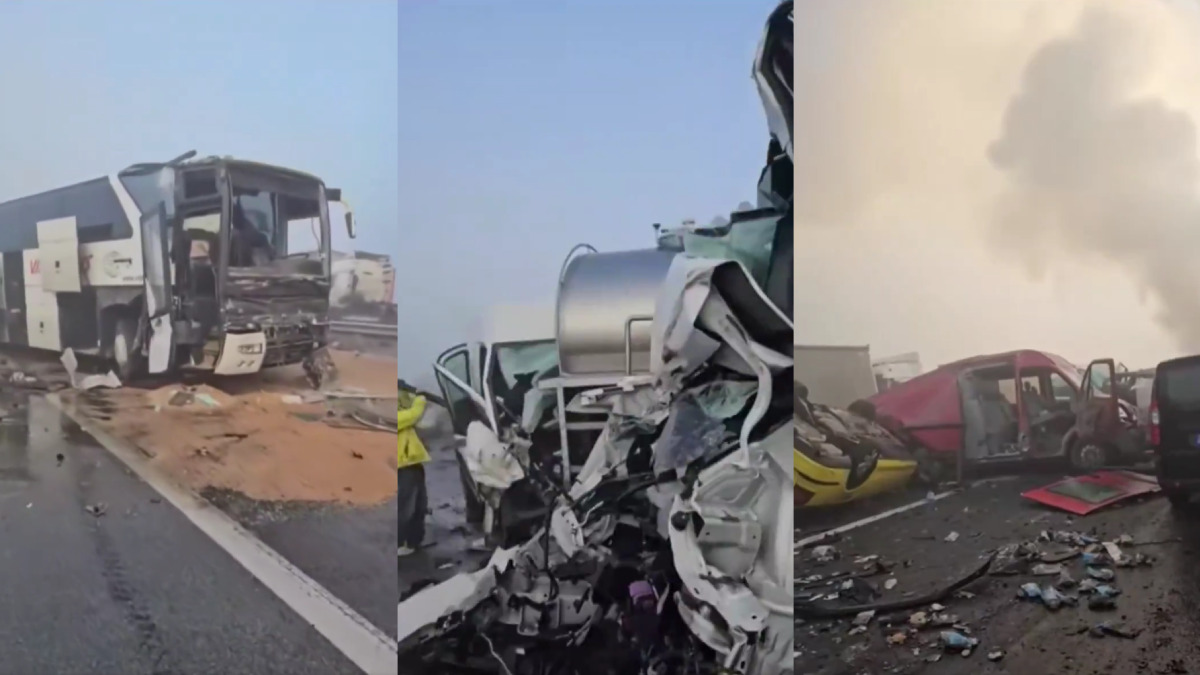
Several other people were injured, and emergency crews went to the scene to rescue those trapped inside damaged cars. The scale of the accident led to a large-scale emergency response by police, firefighters, ambulance services and military personnel.
Bulgarian authorities said that two major collisions involved around 50 vehicles (passenger cars and heavy goods trucks). The accidents took place at separate locations along the motorway, so there was a massive traffic emergency in the Yambol region. Several vehicles were reported to have been crushed, overturned or thrown off the road after impact. Photos from the accident site showed badly damaged cars and trucks scattered across the highway, a stark reminder of the scale of the collisions.
Yambol Regional Governor Georgi Chalakov said at least 10 people had died in the accidents (Bulgarian news agency BTA and Reuters). The death toll was said to be “evolving”, with authorities saying the situation was still serious. Rescue workers also had the difficult task of getting people trapped in wrecked cars out and taking injured people to hospitals nearby; reports from the scene said some victims needed help being freed from damaged vehicles.
Dense fog and slippery roads are thought to have caused the accidents. The first emergency call was received at around 7:10 am on Tuesday morning about a serious multi-vehicle collision (one pile-up near kilometre 289 on the carriageway towards Burgas, another near kilometre 294 in the direction of Sofia near the Zimnitsa junction). Two separate collisions hit both directions of the busy Trakia Motorway.
The poor visibility created dangerous driving conditions, especially for motorists travelling at highway speeds. When vehicles collide in such conditions, drivers approaching the scene may have very little time to react, and so there is a greater chance of further collisions. Heavy vehicles among the wreckage also made rescue difficult. Authorities will now investigate the exact sequence of events and find out what caused the two major pile-ups.
Emergency personnel were mobilised from several regions (Yambol, Sliven, Burgas and Stara Zagora). Police officers, firefighters and ambulance crews reached the injured, emergency medical aid was given, and access to sections of motorway affected by the accident was cleared. As there were many wrecked vehicles, ambulances could not quickly reach every point but rescuers reportedly removed parts of the highway barriers to create additional access routes.
BREAKING: November 10, 2026 - Several people died in a large-scale accident involving about 50 cars on the Trakia highway near the Bulgarian city of Yambol Source: Radio 999 BG / Facebook #BREAKING #BreakingNews #crash #accident #road #cars #Bulgaria https://t.co/WyroMdBsF1
— Календар News (@KalendarNews) November 10, 2026
Bulgarian military forces were also brought in to assist with the emergency response. A Spartan military transport aircraft landed at Burgas Airport and was on standby to take critically injured patients from there to hospitals in Plovdiv and Sofia if needed. The use of military resources showed just how serious the situation was and that additional support was needed beyond the regular emergency services.
About 27 injured people had been taken to regional hospitals. Medical teams were on standby to receive patients (including those with serious injuries). Authorities were coordinating transport of victims and making sure hospitals had the resources to deal with the emergency. The number of injured and their medical conditions could change as rescue and medical operations continued.
The Trakia Motorway was closed in both directions along the affected stretch, and traffic restrictions were put in place so emergency teams could carry out rescue work and remove damaged vehicles. Drivers were told to follow police instructions and use alternative routes through the Sliven region. Bulgaria's BG-ALERT emergency warning system was activated in Yambol, Sliven and Burgas regions to inform drivers of dangerous conditions and traffic diversions.
Chief Inspector Todor Mishinev from the Yambol Regional Directorate of the Ministry of Internal Affairs said some people were still in vehicles and rescue work was the priority at the moment. Investigations would follow once emergency response is completed. Authorities are expected to visit the accident sites, gather evidence and establish how the collisions happened.
The tragedy has highlighted road safety problems during dense fog, particularly on high-speed roads because visibility is reduced and surfaces are slippery. Chain reaction crashes can occur when there is a reduction in speed, safe distance and lighting. Emergency workers continued their work, but immediately the focus was on rescuing survivors, treating the injured and finding out why one of the major highway accidents reported so far in Bulgaria happened.

Comments