
The Karnataka Youth Congress has launched a poster campaign against social media giant Meta and its CEO Mark Zuckerberg alleging political bias in the company’s content moderation policies.
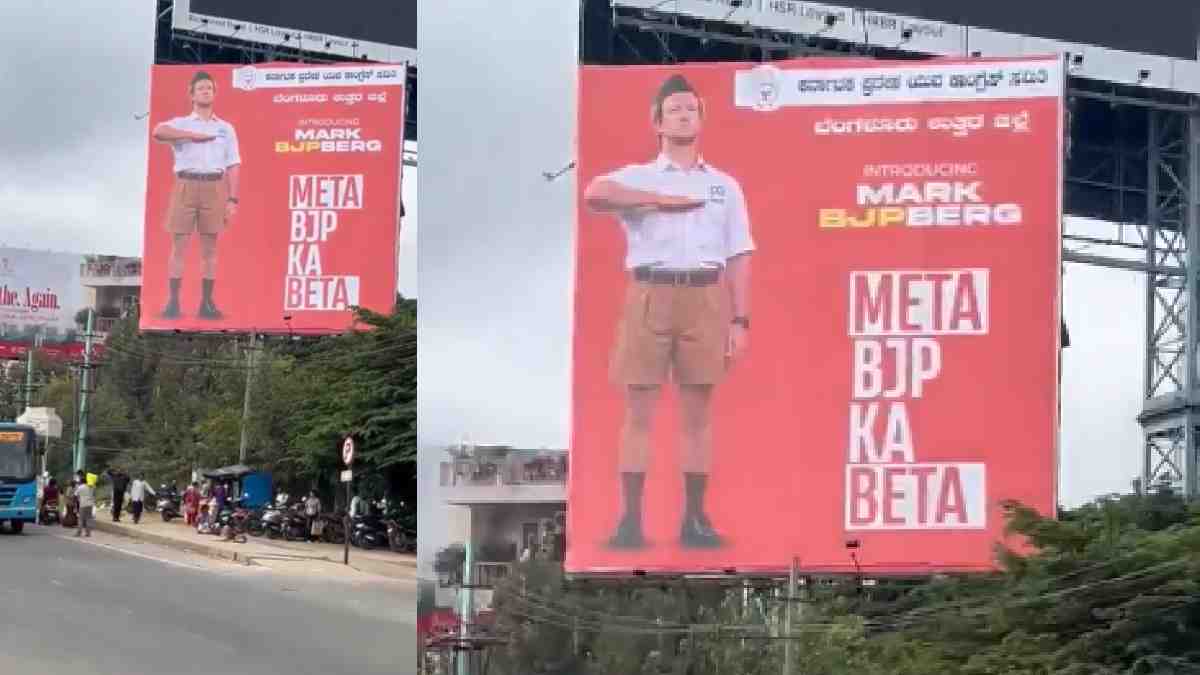
The poster campaign, which has been widely circulated on social media carries the sharp slogan “Meta BJP Ka Beta” along with an image of Zuckerberg wearing clothes similar to those worn by members of Rashtriya Swayamsevak Sangh (RSS).
The posters have been reportedly put up in Bengaluru as part of the Youth Congress campaign against Meta. Similar posters were also put up near ITO foot overbridge in Delhi to take the political message beyond Karnataka.
The campaign attacks Meta directly with a visual and verbal assault: it questions whether the company has a relationship with the ruling Bharatiya Janata Party (BJP) by having Zuckerberg dressed up in RSS garb posters show him in RSS garb trying to draw attention to allegations of political favouritism and bias on social media.
Meta BJP Ka Beta has become the tagline of the campaign. It is a politically charged slogan to question Meta’s neutrality in India’s political environment. The campaign also brings up policies of the company and its influence over online political discourse into focus.
Social media platforms like Facebook and Instagram shape how political parties, leaders and citizens communicate with one another. They are used for election campaigns, political announcements, public debates and sharing information so questions about neutrality and content moderation decisions often attract public and political attention.
BENGALURU: Karnataka Youth Congress workers have launched a poster campaign targeting Meta, featuring CEO Mark Zuckerberg dressed in RSS-style attire with the slogan “Meta BJP Ka Beta”. Similar posters were also put up near Delhi's ITO foot overbridge. The campaign accuses the social media company of political bias and questions its policies.
— indiainlast24hr (@indiain24hr) November 24, 2026
The Youth Congress campaign seems to be about these things that certain political viewpoints are treated differently on social media; satire and political messaging rather than a traditional protest format.
Meta (which owns Facebook, Instagram and WhatsApp) has been asked questions in many countries about misinformation, political advertising, content moderation and the role of technology companies in public debate. In India where social media is part of political communication that still matters a lot.
The poster campaign has also drawn attention to the larger debate around responsibility of large technology companies. Millions of Indians use Meta-owned platforms so decisions about which content is promoted, restricted or removed can shape public conversations.
Allegations of political bias made through the campaign need to be distinguished from findings independently established. Posters are Youth Congress’ political criticism; they do not establish that Meta favours any particular political party.
Targeting Zuckerberg personally and using a provocative slogan means the Karnataka Youth Congress has chosen a campaign strategy to get people talking attention is being drawn, discussion is possible. The fact that posters like this one have also appeared in Delhi gives it national dimension too.
The development again brings politics and social media in India into sharp focus questions about platform neutrality, transparency and accountability are still part of public discourse.




Comments