NGO Compliance Updates: Form 112 and Step-by-Step Compliance Process.
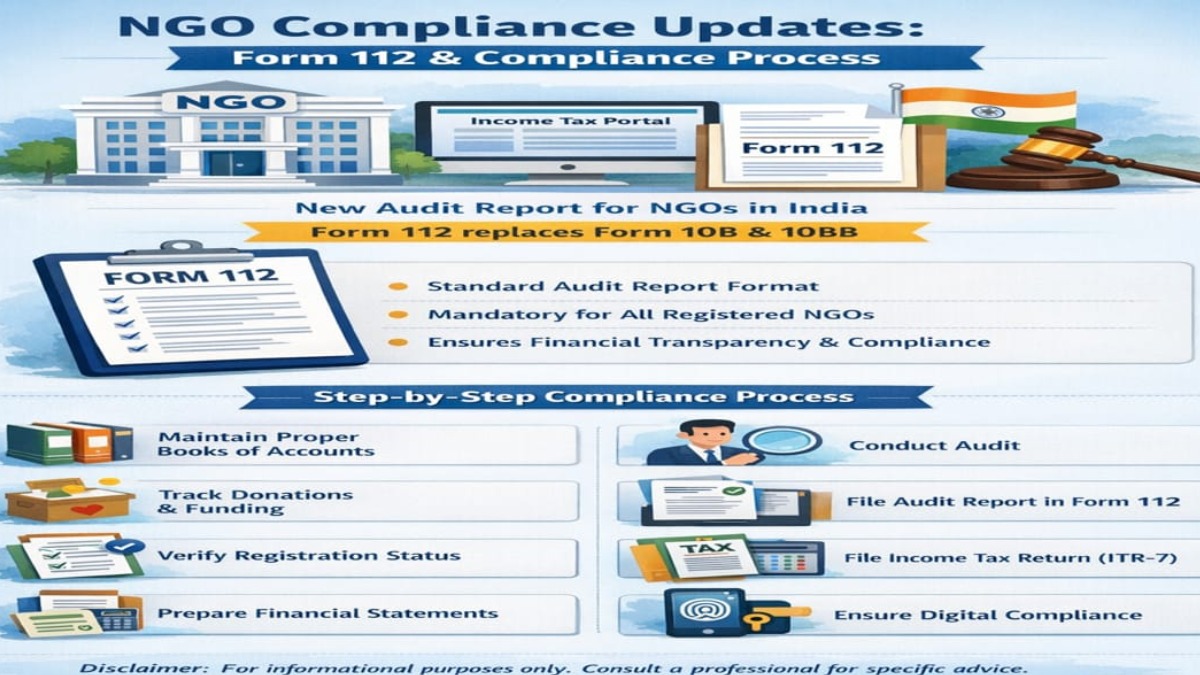
The compliance framework for Non-Profit Organizations (NGOs) in India has undergone a lot of changes for transparency, accountability, and reporting. Most notably, the audit report formats of Form 10B and Form 10BB have been replaced with one Form 112 now. Moreover, NGOs have been placed on the list of regulations that need to be followed in order to stay tax-exempt.
Form 112 is now the standard audit reporting format for every registered NGO - charities, institutions, and societies - that are required to be audited under the Income Tax Act. Formerly, organizations would have to choose between Form 10B and Form 10BB based on certain criteria, and this was confusing. The new Form 112 was introduced to simplify this process by providing a standardized audit reporting format for accounting information so financial disclosure is consistent.
In addition, NGOs must also comply with periodic re-registration under Sections 12AB and 80G. These registrations are only valid for a limited period and need to be renewed within a certain time period in order to apply for tax benefits.
All filings must be completed online through the Income Tax portal with a Digital Signature Certificate or Aadhaar-based verification. NGOs have also been required to fill out reports about income, expenses, and the application of funds to authorities. Cash donations have been restricted, and digital transactions are preferred to increase transparency.
Proper handling of corpus funds and investing wisely is also important. Non-compliance could lead to penalties or loss of tax exemptions. NGOs should also file their Income Tax Return using ITR-7 within the due date and conduct audits as necessary.
Compliance Process for NGOs
To comply with the new regulations, NGOs can follow it in a step-by-step fashion by following these steps:
Maintain Proper Books of Accounts. Record all financial transactions accurately and clearly, accounting for donations, expenses, and investments. Track Donations and Funding Sources. Ensure all donations are properly documented, with donor details and mode of payment clearly recorded. Verify Registration Status. Assess the validity of the registration of 12AB and 80G and apply for renewal if necessary. Prepare Financial Statements. Compile income and expenditure statements, balance sheet, and supporting schedules. Conduct Audit. Get accounts audited by a qualified Chartered Accountant if necessary. File Audit Report in Form 112. Present the audit report using the new Form 112 through the Income Tax portal. File Income Tax Return (ITR-7). Complete and file ITR-7 within the prescribed due date. Ensure Digital Compliance. Use Digital Signature Certificate or Aadhaar OTP for verification of filings. Review Compliance Regularly. Periodically review financial and legal compliance to avoid penalties. Conclusion
The introduction of Form 112 and similar compliance updates reflects a push for a more structured and transparent compliance system for NGOs in India. With clear processes and accurate records, organizations can ensure compliance, retain tax benefits, and build greater trust with stakeholders.
Disclaimer: This content is for general informational purposes only and should not be considered legal or tax advice. Readers are advised to consult a qualified professional for guidance based on their specific situation.