
Both the Sensex and Nifty opened down badly enough that investors and traders alike were staggered at first. The decline was connected to a rise in geopolitical tensions in the Middle East that caused panic sell‑offs and a flight to safer assets.
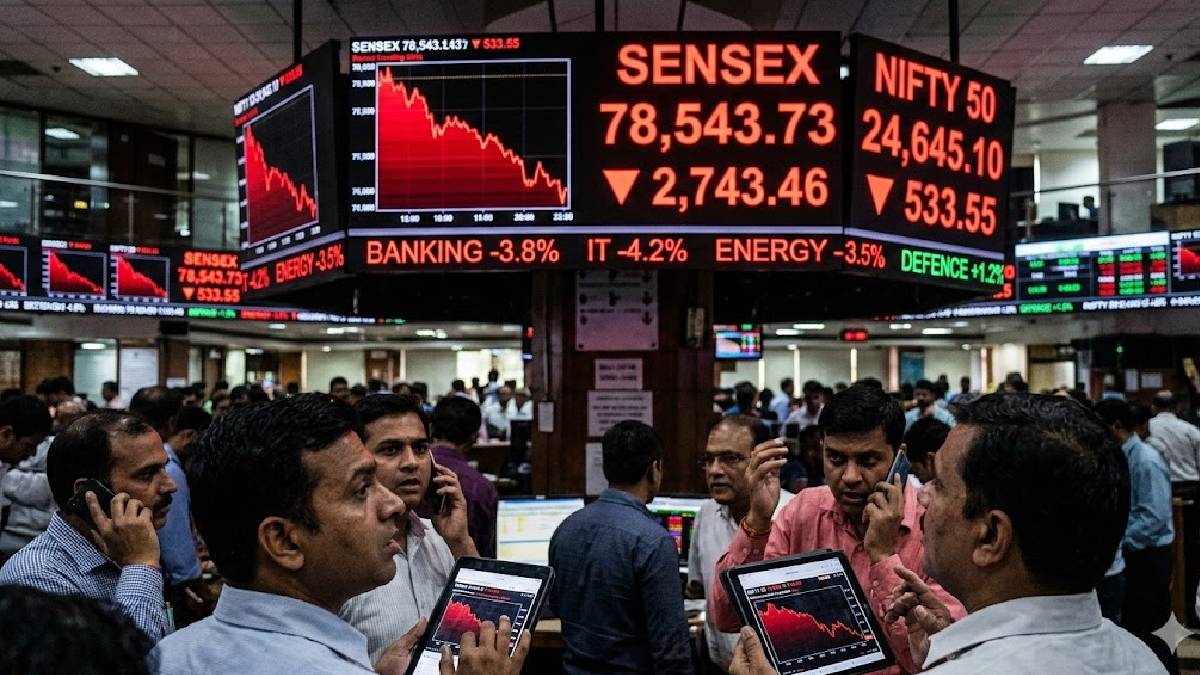
The Sensex was down 2,743.46 points in early trade, to 78,543.73. The Nifty 50 dropped 533.55 points, to 24,645.10. That steep decline was one of the largest intraday declines of recent months. Banking, IT and energy stocks, which can be the most sensitive to global uncertainty, led the sell‑off. Foreign institutional investors (FIIs) were also selling shares, which exacerbated the pressure on the market. Domestic investors were among those on the selling spree, fearful of what global tensions might do to India’s economy and corporate profits as well.
Sector Impact
- Banking and Financials: Stocks took large losses with investors nervous about the rise in global credit‑market risks.
- IT Services: Tech stocks tanked on fears that demand would fall for tech products from overseas customers.
- Energy Stocks: Oil price volatility was an added burden, squeezing companies reliant on imports.
- Defence and Safety Stocks: Defence‑related stocks like Bharat Electronics also posted gains, as traders turned to safer bets in a less safe environment.
Although the morning trade was extremely volatile, the Nifty later recovered some ground and was seen being traded close to 24,958, still down but off its lows. This partial recovery suggests that some traders were willing to buy low in order to feel more stable when global markets are calmer.


The crash underscores the extent to which India’s markets are linked to global events. Even though the nation’s economy is sturdy, sudden geopolitical shocks can abruptly shift investor sentiment. This, for ordinary investors, is a reminder that stock markets can not predict the future and that variables, beyond what is considered domestic policy, play great roles in shaping them.
The crash for March 2 was a wake‑up call to investors. If that didn’t occur, markets will rebound in the coming days but the episode was a reminder to be careful and diverse. Worldwide tensions can resonate through financial systems in milliseconds, and India is no different. Investors will now monitor the progress at the world and home markets as they determine their direction.










Comments