In a major strategic move, the Reserve Bank of India (RBI) has quietly shifted most of the country’s gold reserves back to Indian soil as the global geopolitical atmosphere soured.
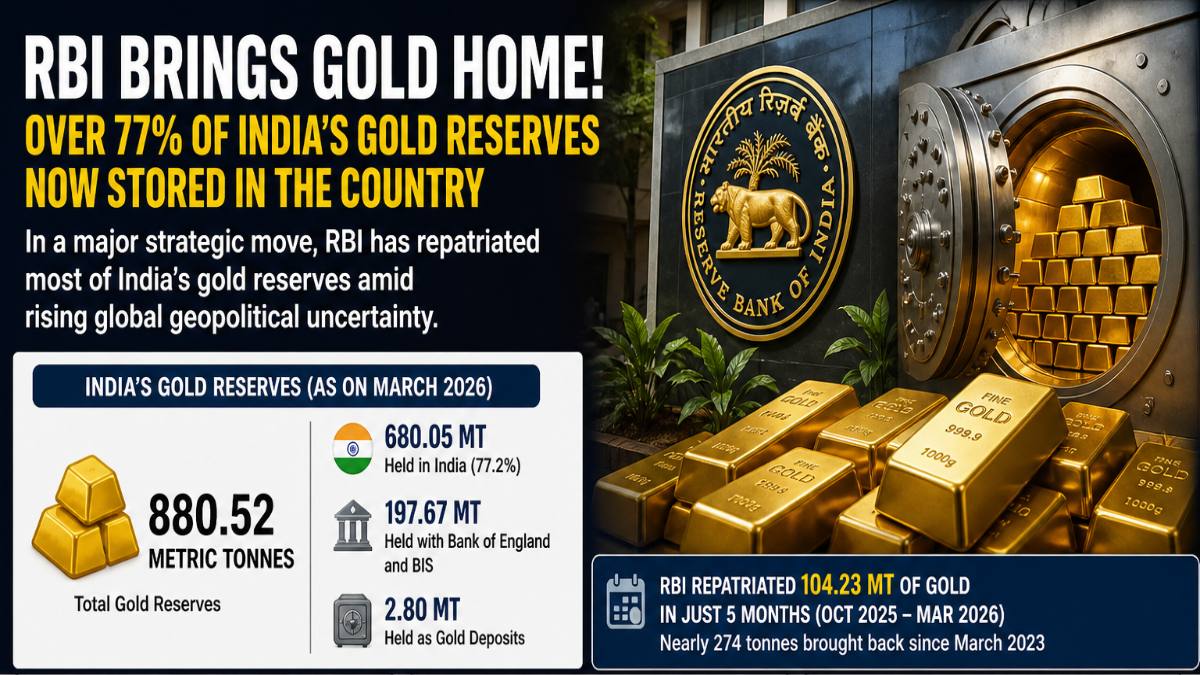
India holds in the country more than 77% of its gold reserves in the country (relative to 37% three years ago) in the latest Half-Yearly Report on Foreign Exchange Reserves published by RBI, which was released on April 30, 2026. India’s Gold Rush Back Home. Up to March 2026, India holds a total of 880.52 metric tonnes (MT) of gold reserves. Out of which:
The Indian state now holds 680.05 MT. 197.67 MT remains with the Bank of England and the BIS. 2.80 MT are held as gold deposits. What shocked analysts the most was the velocity of the move. In less than half a year, from October 2025 to March 2026, the RBI repatriated 104.23 MT of gold to India. The central bank has repatriated nearly 274 tonnes since March 2023, in fact.
Why Is RBI Returning Gold Suddenly?
The answer, experts say, lies in increasing global uncertainty. When Western countries froze Russia’s foreign reserves after the Russia-Ukraine war, many began to ask if the assets held in foreign companies or other assets overseas are ever really safe in the event of geopolitical conflicts. The freezing of Afghanistan's reserves post Taliban takeover left them more concerned that there might be any threat left in it after the war. That has sparked a global rethinking among central banks. A line now running around financial circles reads:
“If your gold is not in your possession, it may not fully be under your control.” Gold Becomes India’s Financial Protection. Gold is not just a backup asset for India. It now accounted for a massive share of India’s foreign exchange reserves:

11.7% in March 2025. 13.92% in September 2025. 16.7% in March 2026. India’s overall forex reserves in March 2026 stood at some $688 billion, with gold amounting to around $113.5 billion. By April, total reserves rose to more than $703 billion.
Global Trend: Countries Seek Physical Control
India is not alone. As sanctions, economic fragmentation and increasing reliance on Western financial networks raise concerns, they have led several nations to increase their gold purchases, pulling bullion a degree closer to home. Though the RBI still retains a portion of gold overseas to continue trading overseas and providing liquidity, the latest statistics tell one tale:
India desires tighter control over its strategic resources in a world of greater uncertainty. The step marks a deep-seated change in how countries are thinking about how they will weather emerging economic and geopolitical risks.