Global trade tensions rose again after U.S. President Donald Trump warned trading partners — including India — not to retreat from trade obligations with the United States. His message is one of increased import duties under other U.S. trade laws, reinstating new worries for global supply chains and export-driven economies. The stakes for India are, also, high. What Triggered the Shift? The crux was delivered by the U.S. Supreme Court, which overturned Trump’s previous global tariffs under the International Emergency Economic Powers Act (IEEPA), and held that the administration did not have the power to use emergency powers like Trump had.
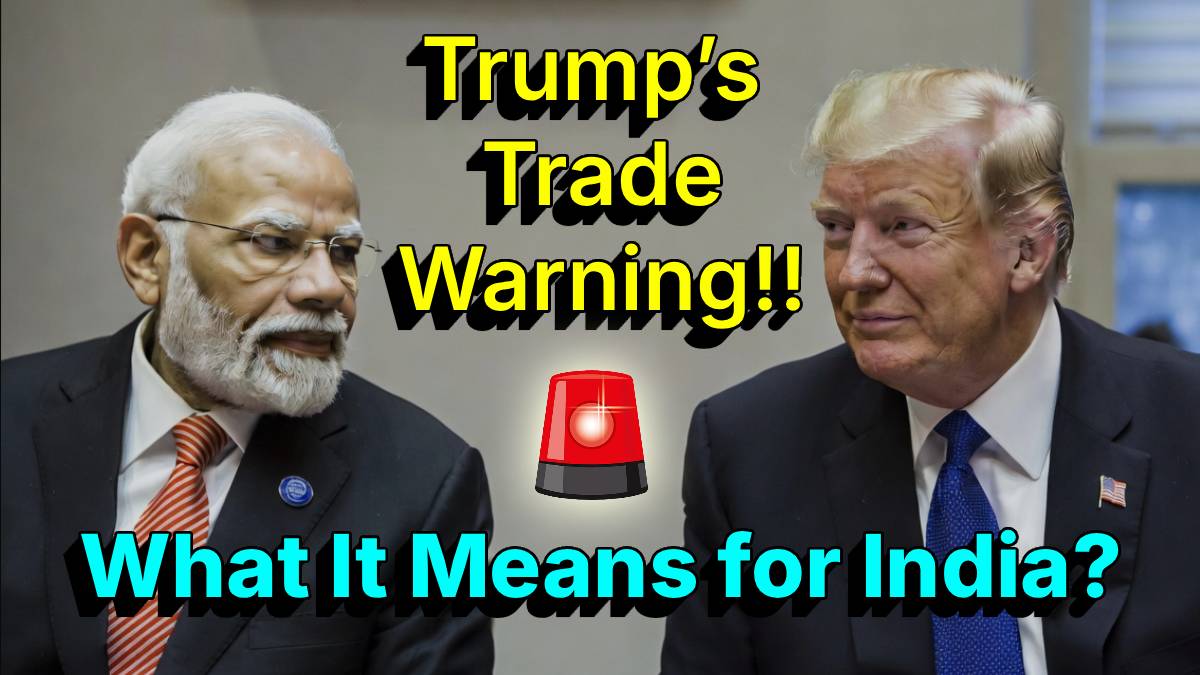
Trump imposed a 15% world tariff with respect to imports as a step in the right direction of enforcing on trade. He further proposed other legal devices (including Section 232 national security tariffs and Section 301) to impose duties as necessary that were country-specific. Its message is clear: it will monitor trade compliance closely, and infringements will bring heightened tariffs. India’s $86 billion Exposure. The U.S. is the greatest export destination of India, where bilateral goods exports of some $86.5 billion annually is expected to be taken into account. A 15% tariff on all goods could hurt price competitiveness in the United States. Most Vulnerable Sectors. Numerous Indian industries depend on thin margins and American demand:
Textiles & Garments. Gems & Jewellery. Marine Products (Shrimp). Carpets & Handicrafts. Pharmaceuticals. If tariffs remain the same or surge, volumes exported could sink. Exports to the United States are said to see declines to as little as nearly $50 billion by 2026 if tariffs are imposed for too long and hard. Supply Chains Under Stress. Higher tariffs increase landed costs for American importers and maybe force them to: Transfer buying to other countries. Renegotiate contracts. Reduce order volumes. This has knock-on effects across Indian manufacturing hubs, impacting job creation and manufacturing exports. Textile and handicrafts and other sectors--where jobs in these industries are open to all, particularly in rural and semi-urban areas--may feel the pressure more personally.
India’s Strategic Pause India has also postponed a major trade delegation to Washington this month in the hope of defining the shape and duration of the new global surcharge. Instead of quick response, New Delhi is:
Taking stock of US law developments Assessing long-term trade position. Confirming whether the 15% tariff is permanent or temporary. Policy stability must be maintained before going deeper into negotiations. Potential Risks — and Openings. Risks. Declining export competitiveness. Job pressures on jobs in labor-intensive sectors. Investor uncertainty. Disrupted global supply chains. Potential Opportunities. If the 15% tariff are evenly applied in all countries, India might be competitive more widely within the sector than in countries with higher country-specific duties. It could lead to a strategic repositioning in certain categories. India’s push to diversify its exports, particularly towards emerging economies — electronics, engineering goods and value-added processed products — also could help blunt some of the impact, the analysis says. The Bigger Picture. This represents a more comprehensive shift in trade dynamics worldwide.
The two largest democracies in the world — India and the United States — are economically deeply interconnected. However, trade relations are shaped by domestic political and legal developments in Washington. The situation remains fluid. Whether the 15% tariff is a stopgap measure or assumes a much broader protectionist form will determine long-term effects for India’s export economy. Conclusion. Trump’s new trade warning adds a sense of uncertainty at a critical time for global business. The worry for India isn’t just tariffs — it also jeopardizes export competitiveness, workers, investors’ confidence and their strategic economic position. But as policy makers and exporters watch, one thing is certain: adaptability and diversification will become paramount in a constantly evolving world of trade. It will be several months before a full policy jolt — or the beginning of something much greater: a realignment in India–U.S. trade relations.