
Running advanced AI services is expensive and Elon Musk has admitted that financial challenge for his AI business. He recently said the cost of running Grok Bot was unsustainable relative to revenue from the service.
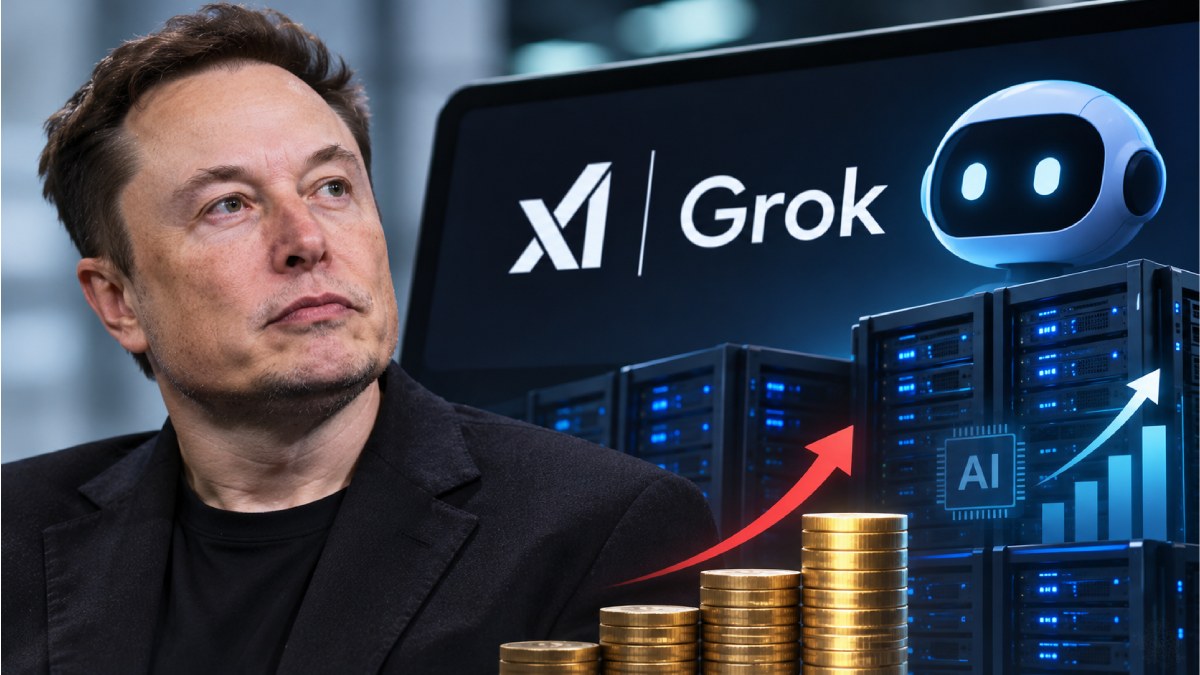
Musk was making these comments after subscribers complained that their weekly usage allowances were running out much faster than expected and some users had hit limits even though they hadn’t used the service very much at all.
Musk responded to a user asking for a usage reset on November 1 by writing on X “The cost of serving Grok Bot was unsustainably high relative to revenue”.
His point has been that for AI companies the bigger problem is not just that more users mean higher profits because the technology needs so much computing power to run it.
Why did Elon Musk say Grok Bot is too expensive to run?
The immediate concern is with Grok Bot which is an AI agent built by xAI. A chatbot (a traditional one) responds to a single prompt whereas an AI agent can perform multiple steps to complete a task.
Launched in August 2026, Grok Bot can navigate through a computer environment, navigate websites and applications, research information and perform tasks in the background.
These capabilities take more computing power than many simple chatbot interactions. An agent has to process several instructions, search the internet, interact with different applications and use AI models multiple times before it can complete a single task.
So a user’s request can involve multiple rounds of computing rather than one response from one prompt.
Musk says that the cost of providing this level of service is too high relative to the revenue it generates.
Why do AI agents cost more than traditional chatbots?
The cost of operating an AI service depends on several factors: how complex its models are, the number of requests it receives, computing hardware needed and how long the system runs for.
Traditional chatbots usually process a prompt and produce a response. It also takes a lot of computing power but the interaction is usually short (at most a few minutes).
AI agents do things differently. They can break a task down into smaller steps, use external tools, search websites, analyse information and repeat actions until the task is completed.
For example, asking a chatbot to suggest travel destinations may only require one response. Asking an AI agent to compare hotels, check websites, organise information and put together a complete itinerary may involve several operations.
Each additional operation consumes computing resources. More complex tasks and longer sessions can thus increase the cost of serving individual users.
Grok Bot Reached Around 800,000 Weekly Paying Users
Despite the cost issue, Grok Bot has reportedly grown rapidly.
On SpaceX’s October 20 earnings call, company president Gwynne Shotwell said the service had about 800,000 weekly paying users earlier in the month. That was more than double the number of users reported in September.
Musk also called Grok Bot one of the fastest growing products he had ever seen. He said users were using the service more as capabilities improved.
But more engagement also means greater demand for computing resources. If users do more tasks but subscription revenue does not increase with them, the cost of serving them can rise faster than income.
That’s a hard balance for companies that sell advanced AI services on fixed price subscription plans.
Why Are Grok Users Facing Weekly Usage Limits?
Musk’s comments came after subscribers complained that their weekly Grok Bot allowances had been used up earlier than expected.
Some users said their usage meters had shot up (some accounts were hitting limits when there was little activity), others asked the company to reset their weekly allowances.
Musk acknowledged the financial strain but did not announce a usage reset or explain what was happening on an account level.
He also didn’t say how much it cost to run Grok Bot, how much revenue the service made or how much individual users cost the company.
So for subscribers this means availability of the agent is still subject to usage allowances. If subscription prices, limits or additional usage charges change then that would need to be communicated by the company.
AI Infrastructure Is Adding to Operating Expenses
The cost of running an AI platform is not just the development of the software.
Companies need powerful processors, specialised chips, data centres, electricity, cooling systems and networking infrastructure to run large AI models at scale.
If the number of users increases and tasks become more complex companies may need to increase their computing capacity. To build and maintain that infrastructure it takes money.
SpaceX has also been spending a lot of money on its AI infrastructure. According to financial disclosures from its third quarter filed with the SEC, Fortune reports that its AI-focused Super Intelligence division made about $7.56 billion in revenue and $431 million in operating profit.
However, the company also reported $16.4 billion in AI capital expenditure during the quarter. These figures include not only Grok Bot but also the rest of the AI business and infrastructure.
This is important. The financial performance of the wider AI division cannot be taken as Grok Bot’s standalone profitability.
What Does This Mean for the Future of AI Services?
Musk’s comments point to a problem that could impact the wider AI industry as companies move from conversational chatbots to autonomous agents.
AI agents can do increasingly complex tasks but their operating costs can be very different depending on how much computing power each task requires.
Companies may need to look at different approaches to make these services financially sustainable:
* They may have to create new products or offer new services (e.g., subscription models);
* They may have to change the way they sell and market their current products (e.g., bundling with other products);
* They may have to change the way they pay for advertising space on their websites (e.g., charge per click rather than CPM).
- Revising usage limits: Subscription plans may have stricter allowances for compute intensive tasks.
- Usage-based pricing: Heavy users could be charged according to the computing resources they consume.
- Better computing efficiency: Better models and infrastructure could lower the resources required for individual tasks.
- Offering different subscription tiers: Companies could separate basic chatbot access from more expensive agent-based services.
- Optimising AI workloads: Providers could use smaller or more efficient models for tasks that don’t need the most powerful systems.
These are possible approaches for the industry not confirmed changes announced by xAI.
The Bigger Challenge: Making Advanced AI Profitable
The explosion of AI has driven strong demand for increasingly capable services but companies need to make sure that the revenue from subscriptions and enterprise customers can cover the cost of running those services.
Grok Bot is a case study for how user growth doesn’t necessarily translate into financial sustainability. A service can have hundreds of thousands of paying users but still struggle if its most active customers are paying for computing resources at a cost greater than their subscription revenue.
Musk has acknowledged the problem but hasn’t given details on how to fix it. What the company does next (usage allowances, pricing and infrastructure efficiency) will shape how Grok Bot develops.
The challenge is not limited to Grok. As AI agents get smarter and do longer, more complicated tasks the economics of providing AI services will become an increasingly important part of the technology industry’s growth.






Comments