
Tamil Nadu Chief Minister C Joseph Vijay has urged Prime Minister Narendra Modi to take steps for a Bench of the Supreme Court of India to be set up in Chennai and revive the long-pending demand which would make access to the country’s highest court easier for people across southern India.
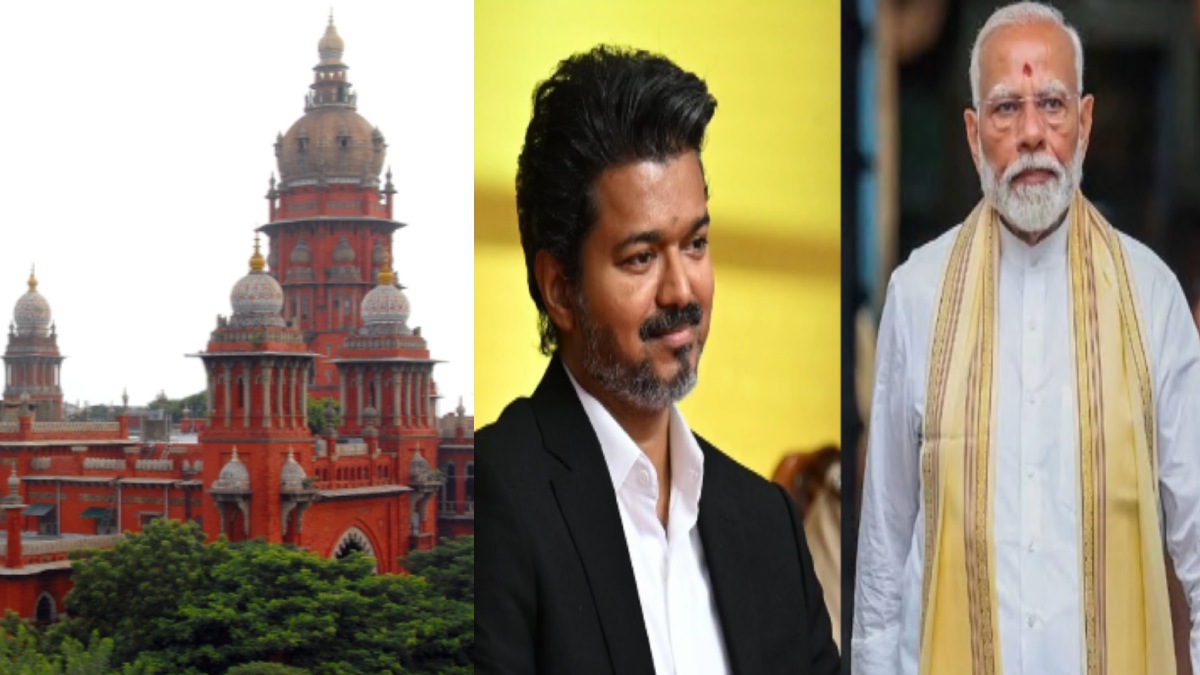
In a letter sent on Today to the Prime Minister Vijay requested him to “take up afresh with the Supreme Court and work towards getting approval for regional Bench in Chennai”.
Vijay said litigants from Tamil Nadu and other southern states have to travel all the way to New Delhi to approach the Supreme Court and hence geographical and financial burden on them was huge. A Bench in Chennai will reduce geographical and financial burden on litigants while strengthening access to justice, he added.


Vijay said the demand has been long standing (Tamil Nadu first put forward this proposal in 1980), that it was discussed at a conference of Chief Justices held in 1979 where the need for improving access to Supreme Court by people living far from Delhi had been discussed.
Chennai is an important judicial and administrative centre in southern India and could be used as convenient location for litigants from several neighbouring states, he said. A regional Bench would not only benefit Tamil Nadu but also people from other parts of southern India who have to travel long distances to take cases before country’s highest judicial institution today.
Tamil Nadu CM Vijay urges PM Modi to take steps to set up Supreme Court Bench in Chennai: Report https://t.co/Pxxx8ha1Xr
— 🚨Indian Gems (@IndianGems_) November 4, 2026ALSO READ


Part of Vijay’s argument is Article 130 of the Indian Constitution. It provides that “the Supreme Court shall sit in Delhi or at such other place or places as the Chief Justice of India may, with the approval of the President from time to time appoint”.
Referring to this constitutional provision the Chief Minister said the Constitution itself allows the Supreme Court to function from locations other than Delhi provided prescribed procedure for approval is followed. A Bench in Chennai would be in accordance with the constitution and would make judicial system more accessible to ordinary citizens.
The Chief Minister also referred to the professional status of Madras High Court and legal community in Chennai. Established in 1862, Madras High Court is one of India's oldest High Courts with a long judicial history. Vijay said that the city has enough legal expertise and professional environment for Supreme Court Bench to function there.
Vijay also recalled that Tamil Nadu had earlier assured the authorities that it would provide infrastructure (including residential accommodation for judges of Supreme Court) but that a Full Court meeting of the Supreme Court held on August 7, 2007 found no reason to change its earlier position on the proposal.
Vijay also referred to the Supreme Court order dated July 13, 2016 in V. Vasanthakumar versus H.C. Bhatia and Others wherein the question of a Supreme Court Bench was referred to five judge Constitution Bench headed by Chief Justice of India.
With this he sought consideration of the matter again and requested Prime Minister to facilitate discussions with judiciary.
Regional Supreme Court Benches have been demanded for several decades. Supporters say that concentrating the country’s highest court in Delhi makes it difficult for litigants from distant states (who cannot afford repeated travel, accommodation and other legal expenses) to access justice; a regional Bench would improve access and reduce practical problems faced by individuals and organisations seeking justice. Vijay also said decentralisation of judicial sittings reflected India’s federal character but “independence and authority” of the Supreme Court should not be lost.
The Chief Minister cited recommendations made by Parliamentary Standing Committees in 2004, 2006, 2008 and 2021 as well as Law Commission reports which have talked about the need for permanent regional Benches. He said this arrangement would not compromise judicial independence because administrative and institutional control will remain with the CJI.
However, the proposal is not an automatic decision for the Union government to take. Article 130 says nothing about a role for the CJI but presidential approval is required if the Supreme Court has to sit at another place; any move to create a Bench in Chennai would be constitutional and judicial process. Vijay’s letter is not one announcing that a Chennai Bench has been approved.
The latest appeal has once again put regional access to the Supreme Court on the agenda. If it is taken seriously it could have ramifications for litigants in Tamil Nadu and neighbouring southern states. What happens next will be seen from the Prime Minister’s Office and whether Centre takes up long pending demand with SC.
The proposal also asks how India’s highest court can become more accessible to citizens across the country without changing its constitutional structure or judicial independence?







Comments