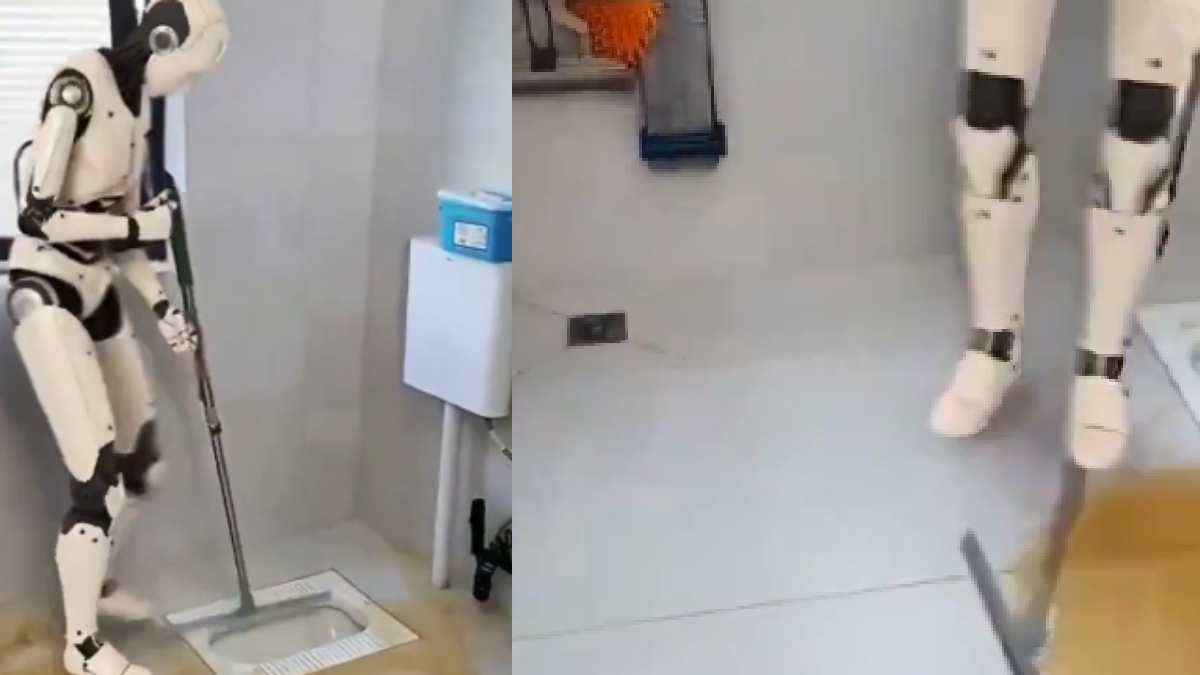
If you walked into a public bathroom, you would see a humanoid robot cleaning the floor and you would look at this as just another tech demonstration, but maybe it is also a glimpse into the future of work.
Robots are increasingly being designed to take on these repetitive and physically demanding and often unpleasant tasks that many businesses are currently unable to do with human employees.
For instance, a recent video of a robot mopping up a public restroom. It moves back and forth, tirelessly scrubbing the floor without showing any sign of fatigue.
It might be very impressive and a good example of the future of jobs in the cleaning industry, but it also raises important questions about the future.
For companies, the attraction of robots is mostly financial. A commercial cleaner at $17 an hour is a pricey job, $35,000 a year of wages alone for a company as well as benefits and training and all the things that a company needs to spend. With turnover in employees, businesses must constantly recruit and train new people and that is a huge and time-consuming job.

Cleaning jobs often have grueling work environments, making it hard for workers to retain them. Frequent repetition and hostile environments cause burnout. If a company is repeatedly hiring and rehiring for the same job it can be very expensive.
Humanoid robots are here to change the game, and humanoid robots might just change the game. Robots such as Unitree’s G1 are bringing humanoid technology closer to the real world with price tags ranging from tens of thousands of dollars depending on the model and features.
THIS ROBOT JUST FIRED A $35,000-A-YEAR CLEANING WOMEN
— Forem (@0xForem) August 16, 2026
and it took the worst job in the building - the public toilet.
look at the floor before you look at the robot. brown water. a squat toilet. the kind of restroom you hold your breath in.
no gloves. no mask. no gagging. it… pic.twitter.com/jiGx7SXrbW
The biggest draw for companies
Once purchased, companies can just ignore salary because these robots don’t need to pay; they’re not a one-time investment. If they can actually work for years, companies can make a return on that investment and keep labor costs down; business returns on those dollars in the long run, if they work well for years to come.
But just because a video shows a robot mopping doesn’t mean it’s ready to replace human cleaners completely.
Cleaning has more than mopping in reality. Human workers have to keep on hand, empty trash cans, pick up spills, respond to unexpected events and interact with the public. Robots have to deal with unpredictable situations of the real world.
We can expect humans in the future to take care of these cleaning robots. Rather than spending the entire shift on one repetitive job, a single person could oversee multiple machines and put his hand up in case human judgment is needed. That would increase productivity and change the kind of jobs available in cleaning.
What will happen to the savings made by automation
Will workers find new jobs in robot maintenance, supervision and technical positions, or will companies simply reduce their workforce.
Cleaning is one of the most simple tasks many people think should be automated. As technology proponents have argued for years, machines are well-suited to the dangerous, dirty and monotonous tasks that human beings would rather avoid.
So maybe the public restroom should just be an unexpected symbol of the next robotics evolution not because robots will take over all jobs, but rather because they are beginning to perform the tasks that humans have long wished machines could carry out.