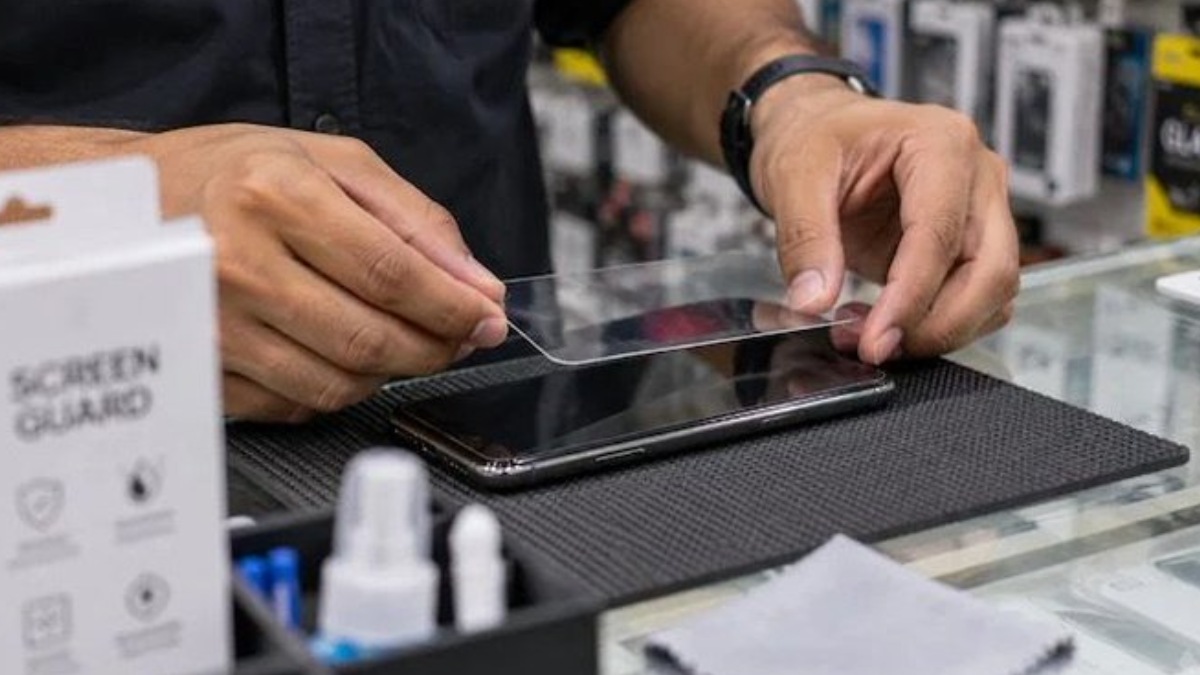
India will have a mandatory quality standard for smartphone screen protectors starting April 1, 2027, which will see the commonly used accessory come under the BIS compulsory registration framework. This is to ensure that screen protectors that are sold in India are in line with the quality, strength, clarity, and other product characteristics of the product.
The government has not, however, ruled out the use of a ban on all smartphone screen protectors. Products that do not comply with the standard will not be allowed to be sold under the new requirements once the new requirements are in place.
The Ministry of Electronics and Information Technology (MeitY) added “Screen Protectors for smartphones” to the schedule covered by the Electronics and Information Technology Goods (Requirement of Compulsory Registration) Order, 2021, through the notification on September 21, 2026. The applicable Indian standard is IS 19348:2025, which is called "Glass Screen Protector – Specification." The Bureau of Indian Standards' own compulsory-registration listing lists smartphone screen protectors as the 66th product category added under the framework.
With the new system, manufacturers and importers will have to demonstrate that their products satisfy the Indian Standard before they are legally available for sale as screen protectors in India from April 1, 2027. To prepare them for this new requirement, the government has provided businesses with a transition period of more than six months. This period will help manufacturers, importers, and other participants with testing, certification, and other compliance-related processes.
How do the new BIS rules cover that?
The IS 19348:2025 standard defines requirements regarding a number of glass screen protector features, including size, glass quality, strength, optical clarity, and visible defects. The standard also covers adhesives, anti-shatter films, oleophobic coatings, anti-glare properties, blue-light filtering, and privacy films, depending on the product. Packaging requirements are also part of the framework, as manufacturer details, batch information, and product thickness need to be provided.
In the eyes of the consumer, the most noticeable change would be more consistent screen protector quality in the market. At the moment, there is a large variety of products available for sale, from branded accessories to inexpensive tempered glass protectors that are unbranded. Quality can be very different in terms of clarity, fit, durability, and surface finish.
The government’s decision is going to affect manufacturers and importers who sell products without complying with the new requirements. If the mandatory system becomes effective, then non-compliant screen protectors will not be manufactured, stored for sale, imported, sold, or distributed in India under the notified requirements.
Could Screen Protectors be more expensive?
The new regulations could have implications for manufacturers as compliance may involve additional testing, registration, and quality-control costs. The government notification does not specify a specific increase in retail prices. So far, it would be wrong to say that all screen protectors will be more expensive from April 2027.
The eventual effect on prices will be based on costs of production, certification, import, and the competition among compliant manufacturers. One may imagine that the low-cost products could vanish from the market if the manufacturers decide that meeting the new standards is not commercially viable.
The move may also encourage more domestic manufacturing. Industry representatives have said India’s screen-protector demand is huge, with industry estimates of more than 500 million units annually. The India Cellular and Electronics Association says mandatory BIS certification would support a quality-oriented domestic manufacturing ecosystem, and industry participants have flagged opportunities for investment and employment.
For smartphone users, the date to remember is April 1, 2027. Businesses now have time to prepare for the new framework until then. After that and after the successful implementation date, screen protectors sold through the regulated market will more realistically correspond to the BIS requirements for consumers.
The policy marks a move from a largely fragmented screen protector market to a more uniform system. By bringing the category under mandatory BIS registration, the government is trying to set minimum quality requirements while addressing concerns over substandard products.
The new rules therefore do not mean that consumers will no longer be able to buy screen protectors; rather, they aim to ensure that products sold legally in India meet the applicable quality standards.